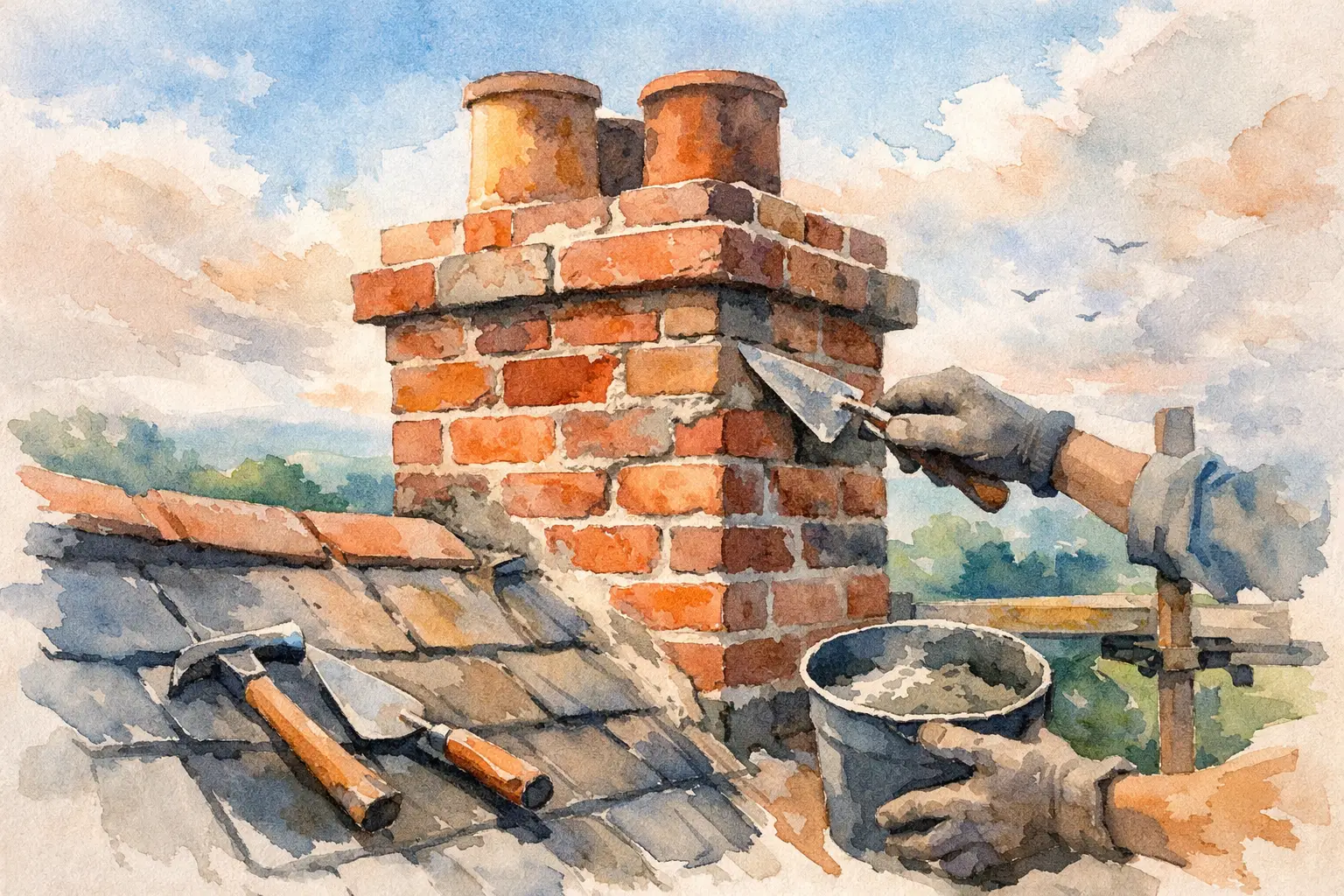
Chimney Repointing Cost: What to Expect
When mortar starts falling from a chimney, the question usually comes quickly: what is the chimney repointing cost, and is it something that can wait? In most cases, waiting only makes the job larger. Loose or weathered joints let in water, and once moisture gets into the brickwork, the chimney can deteriorate far faster than many homeowners expect.
Repointing is one of those repairs that often looks minor from the ground but tells a different story up close. A chimney takes the full force of wind, rain and frost all year round, so the mortar tends to wear before the bricks do. Catching that wear early can save a much more expensive rebuild later.
What affects chimney repointing cost?
The biggest factor in chimney repointing cost is the condition of the stack itself. If the mortar joints are simply worn and need raking out and replacing, the work is relatively straightforward. If the chimney is leaning, the pots are loose, the flaunching is cracked or bricks have started spalling, the price rises because the repair becomes more involved.
Height and access also matter. A chimney on a single-storey extension is very different from one on a two-storey house with limited access around the property. In some cases, safe access can be managed with ladders and roof ladders. In others, scaffolding is the right option, and that can form a significant part of the total cost.
The amount of repointing needed changes the price too. Some chimneys only need work on the most exposed elevations. Others need full repointing on all faces. If the mortar has failed deeply, more preparation is required before new pointing can be applied properly.
Material choice plays a part as well. The right mortar needs to suit the age and type of the property. Older buildings may require a more appropriate mortar mix than newer homes, particularly where breathability matters. Using the wrong mortar can create future problems, so the cheapest option is not always the best value.
Typical price ranges for chimney repointing cost
As a general guide, chimney repointing cost for a smaller stack with good access may start from a few hundred pounds. A more typical range for standard residential work is often around £600 to £1,200, depending on access, condition and how much of the stack needs attention.
Where scaffolding is required, costs can move higher. If the chimney also needs repairs to bricks, flaunching, lead flashing or chimney pots, the total can rise into the £1,200 to £2,000 plus range. That does not mean repointing is overpriced. It usually means the chimney has moved beyond simple maintenance and now needs broader repair work to make it safe and weather-tight.
These figures are only rough working estimates, not fixed prices. A proper inspection is the only reliable way to price the job accurately. Two chimneys that look similar from street level can be in very different condition once inspected at close range.
Why some quotes are much lower than others
If you receive widely different prices, it is worth asking what is actually included. One contractor may be pricing for patch repointing, while another may be allowing for full raking out of failed joints, replacement of damaged mortar throughout, and making good around pots and flashing.
Access is another common reason for price differences. A low quote may not include scaffolding or may assume access methods that are not suitable once the work starts. That can lead to extra cost later.
There is also a difference between cosmetic patching and proper repair. Mortar should be removed to a suitable depth before repointing. If new mortar is simply pressed over failing joints, it may look tidier for a while but it will not last as it should. For homeowners and landlords, that can turn an apparently cheaper quote into false economy.
When repointing is enough and when it is not
Not every chimney with worn joints needs rebuilding. If the brickwork is still sound and the stack remains stable, repointing is often the right repair. It restores weather protection, improves the chimney’s strength and helps stop water penetration.
However, repointing is not a cure for every issue. If bricks are badly damaged, if the stack is loose, or if the top of the chimney has failed around the pots, extra work may be needed. That could include brick replacement, new flaunching, lead flashing repairs or partial rebuilding.
This is where an honest assessment matters. A good contractor should tell you whether repointing will solve the problem or whether the chimney needs more substantial repair. Paying for repointing on a stack that is already structurally compromised is not money well spent.
Chimney repointing cost versus the cost of delay
Many property owners put off chimney repairs because the stack is out of sight and not causing an obvious leak indoors. The trouble is that chimneys rarely improve by themselves. Once mortar joints open up, rain gets in. In winter, that moisture freezes and expands, which can loosen more mortar and start breaking down bricks.
Over time, a repointing job can become a rebuild. Water can also track down into the roof structure, damage internal finishes or affect nearby flashing and masonry. What starts as a maintenance repair can become a far more expensive problem.
That is why chimney repointing cost should be looked at in context. The real comparison is not just today’s quote against doing nothing. It is today’s quote against the likely cost of wider repairs in a year or two if the deterioration continues.
What to expect during the work
A professional repointing job begins with inspection and safe access. The failed mortar is then raked out carefully to the required depth, without damaging surrounding brickwork. Dust and loose material are removed, and the joints are prepared for the new mortar.
The fresh mortar is then applied and finished to suit the chimney. The exact finish can vary depending on the property and the condition of the brickwork. The aim is not only to improve appearance but to create a durable, weather-resistant joint.
If other issues are found during the work, such as cracked flaunching or unstable pots, these should be discussed clearly before anything extra is carried out. On older chimneys especially, hidden defects can appear once failing mortar is removed.
Getting value, not just a low price
The best value in chimney repairs usually comes from accurate diagnosis, proper access and workmanship that lasts. A competitive quote is important, but so is knowing the repair has been done safely and to a good standard.
For homeowners in places such as Falkirk and the surrounding area, weather exposure is a real factor. Chimneys in Central Scotland deal with persistent rain, cold snaps and strong winds, so repairs need to be more than cosmetic. A neatly finished job means little if the mortar is unsuitable or the underlying defects have been ignored.
It also helps to choose a contractor who can deal with related external repairs if needed. Chimneys are rarely isolated problems. Flashing, roof coverings, ridge work and masonry can all be connected, so a broader understanding of roofing and building repairs often leads to a better long-term result.
How to know it is time to get a quote
You do not need to wait for chunks of mortar to fall into the garden. Earlier signs include visible gaps in joints, small pieces of mortar on the roof or ground, damp patches near the chimney breast, vegetation growing from joints, or white staining on the brickwork caused by moisture movement.
If the chimney looks uneven, if bricks seem loose, or if there has been storm damage, it is sensible to have it checked sooner rather than later. Even where the repair turns out to be minor, a proper inspection gives clarity. That alone can save a lot of guesswork.
FK Roofing often sees chimneys where a modest repair would have been enough months earlier, but delay allowed the problem to spread. A clear quote based on the actual condition of the stack is the best way to understand cost and avoid paying for the wrong repair.
A chimney does not need to be collapsing to justify attention. If the mortar is failing, dealing with it early is usually the more straightforward and more cost-effective choice, and it gives you one less thing to worry about every time the weather turns.