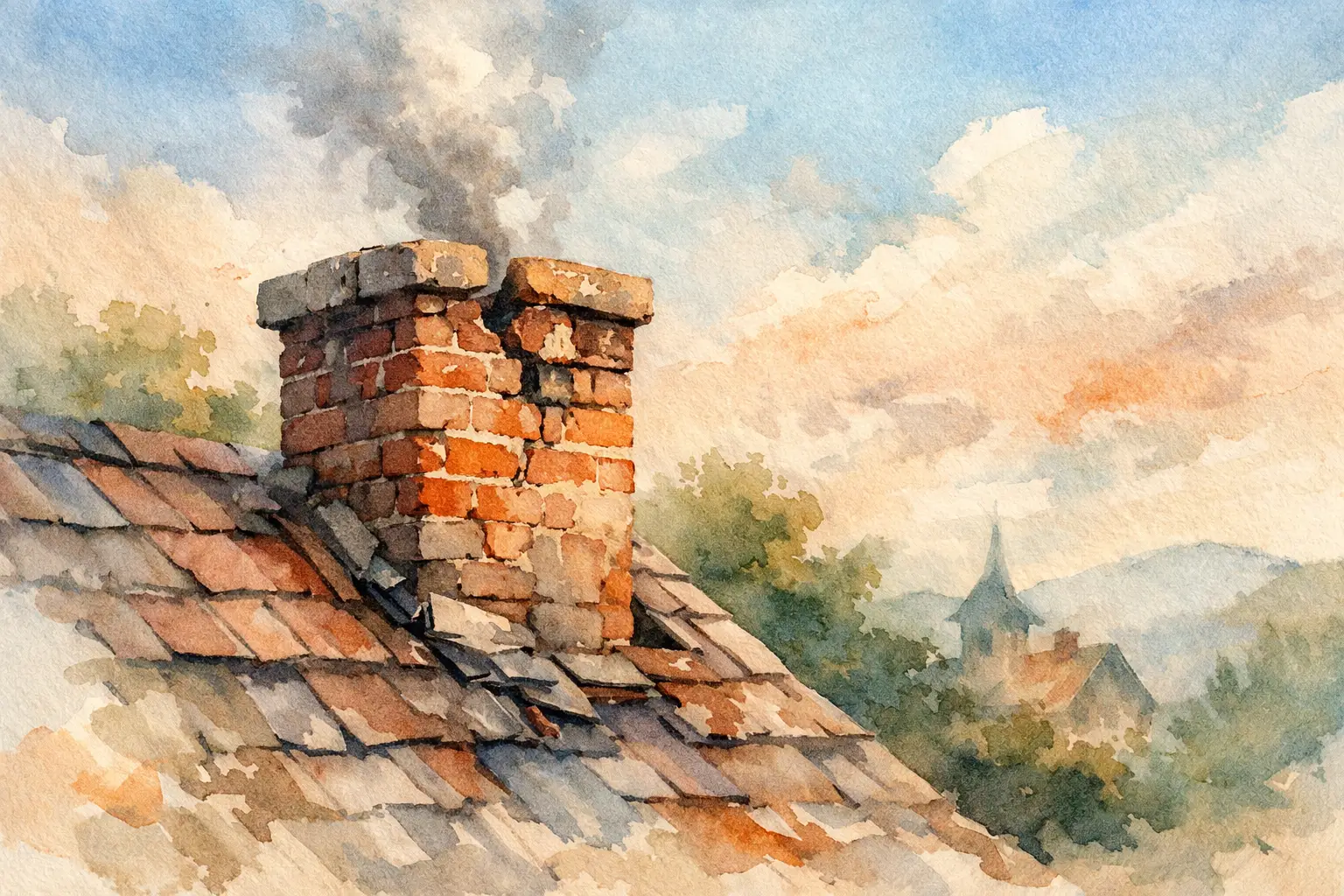
How to Tell if Chimney Needs Repair
A chimney rarely fails all at once. More often, it starts with a small crack in the mortar, a damp patch near the breast, or bits of masonry turning up in the garden after heavy wind and rain. If you are wondering how to tell if chimney needs repair, the key is spotting those early signs before they become a larger roofing or structural problem.
In Central Scotland, chimneys take a lot of punishment from wet weather, frost and high winds. Even a chimney that looked sound a year ago can begin to deteriorate once water gets into the brickwork or pointing. That is why regular visual checks matter, especially on older properties or homes that have already had roof issues.
How to tell if chimney needs repair from the ground
You do not need to climb onto the roof to notice that something is wrong. In many cases, the first warning signs are visible from ground level if you know what to look for.
Start by checking whether the chimney stack looks straight and stable. If it appears to lean, bulge, or sit unevenly against the roofline, that is a serious concern. Movement in a chimney can point to weakened mortar joints, failing brickwork, or long-term structural stress. This is not something to leave and monitor for months. It needs proper inspection.
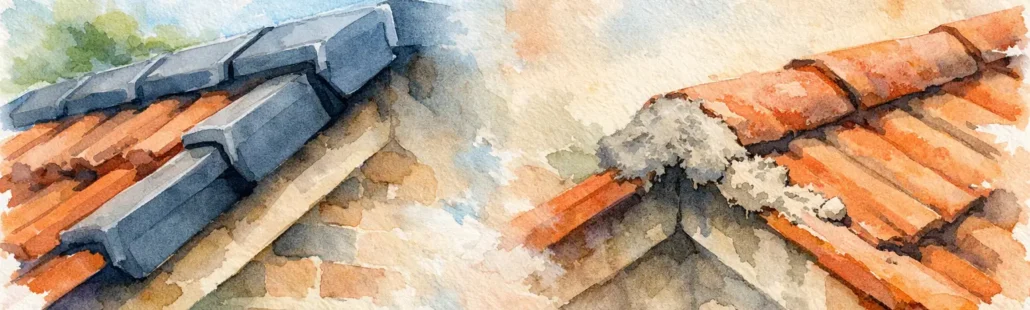
Next, look at the mortar between the bricks or stone. If the joints appear recessed, crumbly or missing in places, the chimney may need repointing. Mortar is what helps hold the stack together and keeps water out. Once it begins to fail, rain can penetrate the chimney and speed up internal damage.
Also pay attention to loose pots, damaged flaunching and visible cracks. The flaunching is the mortar around the chimney pot at the top of the stack. If that area is cracked or breaking away, water can get in around the pot and weaken the top of the chimney quickly.
If you are finding small pieces of mortar, brick or render on the ground below the stack, do not ignore it. Chimneys do not shed material for no reason. Debris at ground level usually means weathering has already progressed beyond the cosmetic stage.
Signs inside the property
Some of the clearest clues are inside the house rather than outside. A chimney can look reasonable from the street while still allowing water into the property.
Damp staining on ceilings or walls near the chimney breast is one of the most common signs. You might notice discoloured patches, peeling wallpaper, bubbling paint or a musty smell after rain. In some cases, the issue is failed flashing where the chimney meets the roof. In others, it is porous brickwork, damaged pointing or problems with the chimney crown.
If the chimney breast feels unusually cold or damp, that is also worth checking. Moisture can travel through masonry and show up indoors before the full extent of the external damage becomes obvious.
Another sign is debris or soot falling into the fireplace. If bits of mortar, flue lining or brick are appearing in the hearth, parts of the chimney may be deteriorating internally. This can affect both safety and performance, especially if the fireplace or stove is still in use.
Cracks, leaning and movement
Not every crack means the whole chimney needs rebuilding, but the location and size of the crack matter. Fine surface cracks in render may be relatively minor. Cracks running through bricks, stepped cracks along mortar joints, or widening gaps near the stack are more serious.
Movement tends to get worse rather than better. A chimney is exposed on all sides, and once the structure is weakened, strong winds and freeze-thaw weather can accelerate the problem. What starts as a repair job can become a partial or full rebuild if left too long.
This is where experience counts. A professional inspection can tell the difference between repairable weathering and deeper structural instability. For homeowners, the practical point is simple: if a crack is visible from the ground, it is worth having it checked.
How weather damage shows up
Scottish weather is hard on masonry. Rainwater gets into tiny gaps, then colder temperatures cause it to expand and contract. Over time, that cycle breaks down mortar, opens cracks and loosens masonry.
You may notice the chimney looks worse after winter or after a period of storms. That is common. Flashing can lift, pointing can fail, and the top of the stack can start to crumble. Chimneys with older mortar are particularly vulnerable because the materials may already be near the end of their service life.
Salt deposits, staining and damp patches can all point to water penetration. So can plant growth. If moss or vegetation is starting to take hold in the mortar joints, moisture is sitting where it should not be.
Common chimney problems that need repair
Several faults tend to come up again and again on domestic properties. Repointing is one of the most common, especially where mortar has eroded over time. Flashing repairs are also frequent, as lead flashing around the base of the stack can split, lift or come loose.
Then there is damage to the chimney crown or flaunching, which lets water in from the top. Brick spalling is another issue, where the faces of bricks begin to break away after water has soaked in and frozen. On older homes, full or partial rebuilds are sometimes needed where the stack has become unstable.
It depends on how far the damage has gone. A chimney with isolated pointing loss may only need localised repairs. A chimney with widespread cracking, loose masonry and visible movement may need more extensive work. The best outcome usually comes from dealing with the defect early rather than waiting for a leak or safety issue to force the matter.
When a chimney problem becomes urgent
Some signs mean you should act quickly. If the chimney is leaning, dropping debris onto the roof or ground, or allowing active water ingress into the property, it should be assessed as soon as possible. The same applies if storm damage has loosened pots, flashing or masonry.
Urgency also increases if the chimney is attached to an occupied fireplace or stove. Defects in the structure or flue can create ventilation and fire safety issues, not just water damage. Even if you no longer use the chimney, loose masonry above roof level can still pose a hazard to people and property below.
Landlords and commercial owners should be especially cautious here. A visibly damaged chimney is not just a maintenance issue. It can become a liability issue if material falls or internal damp affects tenants.
How to tell if chimney needs repair or replacement
This is where many property owners hesitate. They can see a problem, but they are unsure whether it is a straightforward repair or something larger.
As a rule, repair is suitable when the main structure is still sound and the defects are localised. That might mean repointing, replacing damaged flashing, renewing flaunching or repairing a small section of masonry. Replacement or rebuilding becomes more likely when the stack is unstable, the brickwork is badly decayed, or previous patch repairs have failed repeatedly.
Age matters too, but condition matters more. An older chimney that has been maintained can outlast a newer one that has been neglected. Equally, a stack that looks acceptable from one side may have hidden defects on the rear slope or around the leadwork. That is why a proper inspection is more useful than guesswork.
What to do next if you spot a problem
If you have noticed cracking, damp, loose mortar or debris, the safest next step is a professional assessment. Avoid trying to inspect the chimney yourself from a ladder or roof. Chimney repairs involve working at height and often require a closer look at the flashing, stack and surrounding roof covering.
A good contractor should explain what is wrong, what level of repair is needed and whether any related roofing issues are contributing to the problem. In many cases, chimney defects are linked to neighbouring roof areas, so it makes sense to look at the whole section rather than treating the chimney in isolation.
For homeowners in places like Falkirk, Stirling and Alloa, weather exposure makes early action worthwhile. A small repair carried out at the right time is usually far less disruptive and less costly than waiting until the chimney starts leaking heavily or becoming unstable.
If something about your chimney does not look right, trust that instinct. Exterior problems rarely improve on their own, and the sooner they are identified, the more options you usually have to put them right properly.