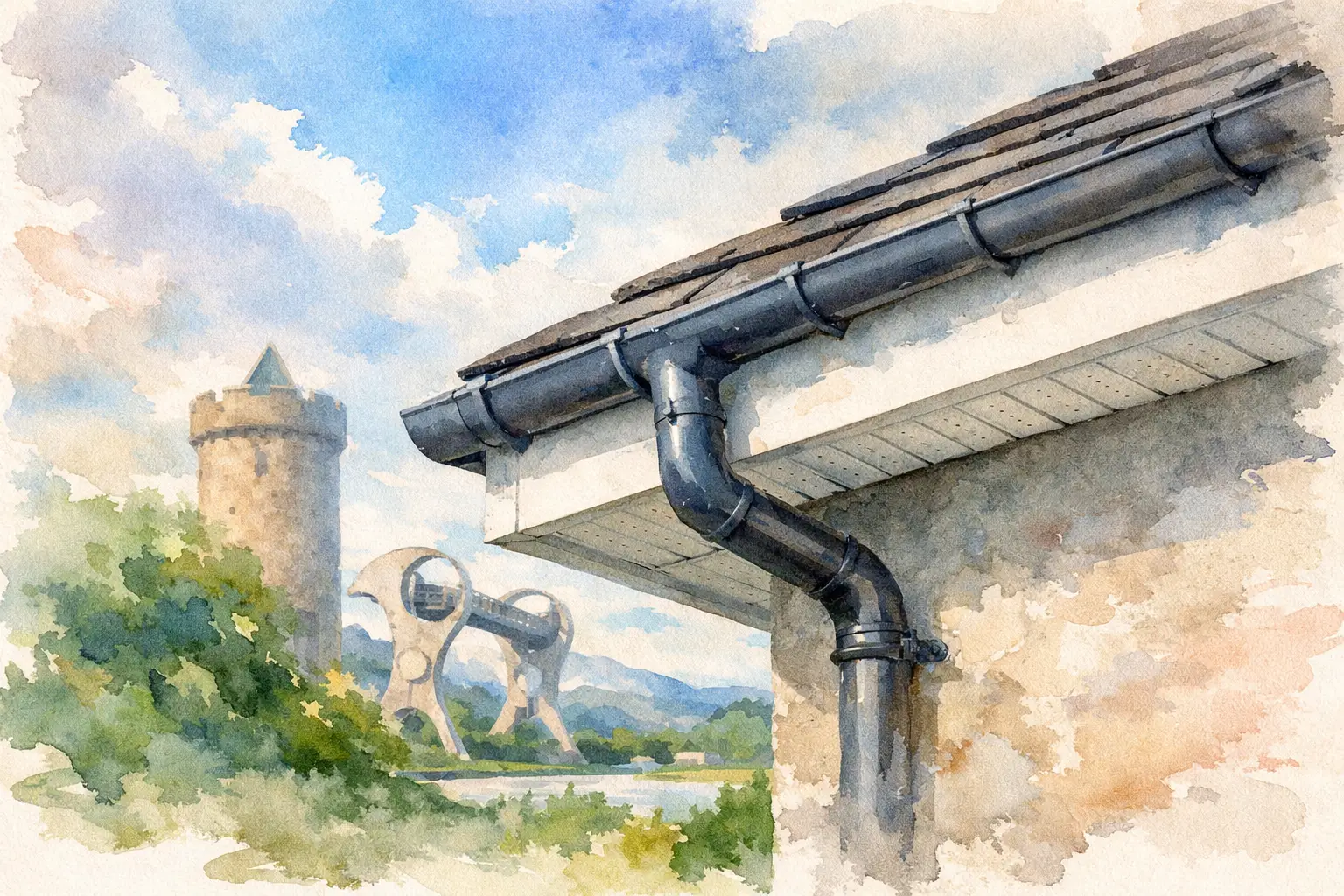
Falkirk Fascias, Soffits and Gutters Explained
A gutter overflowing onto your wall may look like a small maintenance job, but it can be the first sign of wider roofline trouble. Fascias, soffits and gutters explained: protecting your Falkirk home means looking at how these connected parts keep rainwater away from the roof structure, brickwork and foundations. When one part fails, water can quickly find its way into places it should never reach.
For homeowners and landlords, a sound roofline is one of the simplest ways to prevent avoidable exterior repairs. It protects the edges of the roof, helps air move through the loft and directs heavy Scottish rainfall safely into the drainage system. Neglect it for too long and the result can be damp, rotten timber, staining, loose gutters and damage that costs far more than an early repair.
Fascias, soffits and gutters explained for Falkirk homes
Although they sit next to one another, fascias, soffits and gutters each have a different job.
The fascia is the straight board fixed along the lower edge of the roof. It is usually visible from ground level and provides the main fixing point for the guttering. On many properties, it also supports the lower ends of the roof rafters. A fascia needs to be securely fitted and strong enough to carry gutters full of rainwater, leaves and occasional snow.
The soffit is the underside of the roof overhang, running from the outside wall back to the fascia. It gives the roof edge a clean, finished appearance, but it has a practical role too. Vented soffits allow air to circulate through the roof space, helping reduce condensation and moisture build-up in the loft.
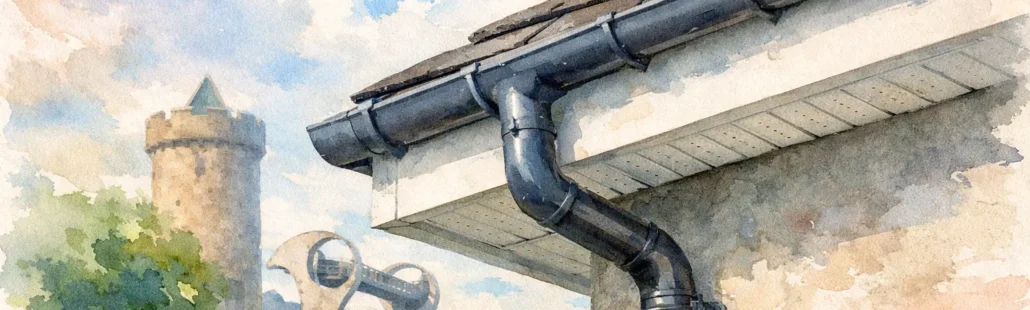
The guttering catches rainwater as it runs from the roof tiles and carries it to downpipes. Those downpipes then direct the water into the property’s drainage system. Gutters are not there simply to stop drips at the door. They prevent repeated water exposure at the top and bottom of external walls, protecting render, roughcasting, masonry, paths and foundations.
Together, this roofline system works quietly in the background. You tend not to notice it when it is doing its job. You certainly notice it when it is not.
Why a healthy roofline matters in Central Scotland
Falkirk properties are regularly exposed to driving rain, gusting wind, frost and long wet spells. A roofline that is slightly loose, blocked or poorly aligned can struggle in these conditions. Water may spill over the gutter’s back edge, run down the wall, or collect behind a damaged fascia where it can affect timber and the roof structure.
Overflowing gutters are particularly hard on rendered and roughcast properties. Constant runoff can leave dark streaks, encourage algae and eventually lead to cracking or blown areas where moisture has repeatedly penetrated the surface. At ground level, splashing water can contribute to damp patches and make paths slippery.
Poor ventilation is a different problem, but one that is just as relevant. If blocked or missing soffit vents restrict airflow, warm moist air from inside the home can condense in the loft. Over time, this can affect insulation performance and create conditions that encourage mould or timber decay. The correct solution depends on the roof construction, so ventilation work should be considered alongside the condition of the insulation and any existing roof vents.
Warning signs that should not be ignored
You do not need to climb a ladder to spot every roofline issue. A regular look from ground level, especially after heavy rain or high winds, can reveal early warning signs.
Look for gutters that sag, pull away from the fascia or hold standing water. Water pouring over the sides during rainfall may point to a blockage, but it can also mean the gutter has the wrong fall, insufficient capacity or poorly positioned joints. If one section regularly overflows while the rest is clear, it needs more than a quick clean.
Peeling paint, cracked boards, soft timber and dark staining around the roof edge can indicate that moisture has reached old wooden fascias or soffits. Small holes, gaps at joints and loose cladding should also be checked, as birds and insects can gain access to the roof void through damaged areas.
Inside the property, keep an eye out for musty loft smells, damp insulation, mould near upper ceilings or visible daylight around the eaves. These signs do not always originate with the fascia or soffit, but they warrant a proper inspection of the roof edge, tiles, flashing and ventilation.
Cleaning helps, but it is not always the repair
Clearing leaves, moss and debris from gutters is sensible maintenance, particularly where trees are close to the property. However, cleaning alone will not resolve a gutter that has dropped due to rotten fascia boards, brackets fixed into weak timber, or a drain connection that is blocked below ground.
It is also worth being cautious about DIY ladder work. Wet paving, uneven ground and overhead cables make gutter cleaning riskier than it appears. More importantly, trying to fix a loose gutter without addressing the board behind it can hide the real problem for a few months, then leave the system failing again during the next spell of heavy weather.
A thorough roofline check should assess the guttering, brackets, joints, downpipes, fascia condition, soffit ventilation and the adjacent roof covering. This gives a clearer picture of whether a straightforward clean, local repair or replacement is the sensible option.
Choosing between repair and replacement
A local repair is often the right answer where damage is limited. Re-securing a gutter, replacing a leaking union, renewing a short damaged section or correcting the fall can restore reliable drainage without unnecessary work.
Replacement becomes more cost-effective when timber boards are decayed across several elevations, gutters repeatedly leak at multiple joints, or the roofline is reaching the end of its serviceable life. Replacing fascias, soffits and gutters together can also avoid the disruption and expense of returning later to remove newly fitted guttering for fascia work.
Many homeowners choose uPVC because it is low-maintenance, durable and available in finishes that suit modern and traditional properties. It does not need regular painting and is not vulnerable to rot like timber. That said, quality of installation matters. Boards must be fixed properly, ventilation must not be blocked, and gutter brackets need secure support rather than being attached over failing material.
Timber remains appropriate for some older homes and conservation-sensitive projects, where retaining the original character is important. It requires more ongoing care, including preparation, painting and prompt attention to damaged areas. Aluminium guttering can be a strong long-term option for certain properties, but suitability and cost should be weighed against the size, style and drainage demands of the building.
The roof edge should be checked with the roof itself
Fascia and gutter defects can sometimes be symptoms of a roofing problem rather than isolated issues. Broken tiles at the eaves, failed underfelt, damaged flashing or poorly directed water from a roof valley can overload gutters and saturate the roof edge. Simply replacing the gutter in these cases will not stop the water source.
This is where using an experienced roofing and exterior contractor can make a practical difference. FK Roofing can assess the roofline as part of the wider condition of the roof and external walls, helping property owners avoid piecemeal repairs that do not address the cause. Where chimney repairs, roof repairs, roughcasting or drainage-related building work are also needed, coordinating the work through one contractor can reduce disruption.
A practical approach to looking after your roofline
Check the gutters visually after storms and during sustained rainfall, when faults are easiest to spot. Keep nearby trees managed where possible, and arrange cleaning before autumn leaf fall becomes a blockage issue. If you see movement, staining or water running down a wall, arrange an inspection before winter weather makes the damage worse.
The aim is not to replace perfectly good roofline materials on a timetable. It is to act when there is clear evidence of wear, poor drainage or moisture damage, and to choose a repair that will last. A well-fitted fascia, ventilated soffit and correctly aligned gutter system will protect the parts of your Falkirk home that are much more difficult and expensive to put right later.