How to Spot Roof Leak Signs Early
A roof leak rarely announces itself with water pouring through the ceiling. More often, it starts with a faint stain in the spare room, a musty smell in the loft, or a patch of damp that seems to appear after heavy rain and then fade again. If you want to know how to spot roof leak signs before they turn into a bigger repair, the key is knowing where small changes show up first.
In Falkirk and across Central Scotland, roofs take a fair amount of punishment from wind, driving rain and cold weather. That means even a small weakness can let water in over time. The trouble is, the point where water appears indoors is not always the place where it enters the roof, so it helps to look at the full picture rather than one obvious mark.
How to spot roof leak signs inside your property
Most homeowners first notice a leak from inside the house. Brown or yellow ceiling stains are one of the clearest warnings, especially if they grow after wet weather. You might also see bubbling paint, peeling wallpaper or plaster that feels soft to the touch. These are all signs that moisture is sitting where it should not be.
Sometimes the warning is less visible. A room that suddenly smells damp, especially upstairs or around a chimney breast, can point to water getting in through roofing materials, leadwork or flashing. If the loft smells musty or feels more humid than usual, that is worth paying attention to as well.
Keep an eye on your loft if you can access it safely. Daylight showing through the roof covering is a bad sign, but so is damp insulation, dark marks on rafters, or water droplets on felt and timbers. A leak does not always leave a dramatic puddle. It may simply soak insulation over weeks, reducing its effectiveness and creating conditions for timber decay.
It is also worth checking around the top of walls. Water from a roof issue can track down beams and appear in places that seem unrelated at first glance. That is why a stain near a window does not always mean the window is at fault. It could be coming from slipped tiles, damaged flashing or blocked guttering higher up.
The outside signs that often get missed
If you are looking at how to spot roof leak signs properly, an outdoor check matters just as much as an indoor one. You do not need to climb onto the roof. In fact, it is better not to. A careful look from ground level can tell you a lot.
Start with the roofline. Missing tiles or slates are an obvious problem, but cracked, slipped or uneven sections can be just as important. One damaged tile may not look serious, yet it can expose the underlay and battens to repeated water ingress. Over time, that becomes a larger repair.
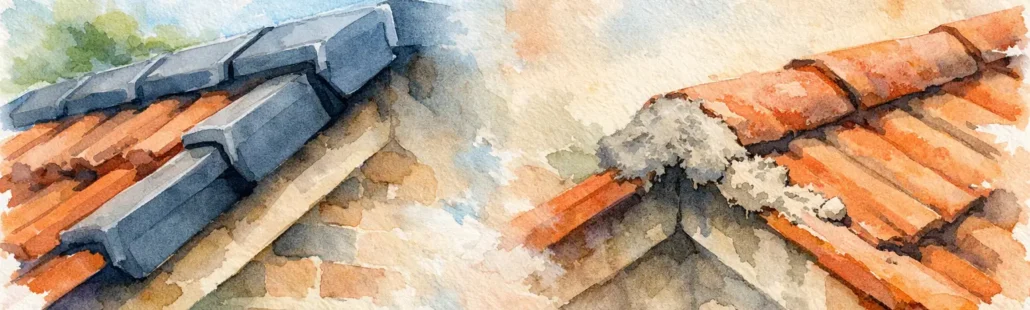
Look at ridge tiles as well. If mortar is cracked or pieces are missing, rainwater can work its way in. Chimneys are another common weak point. Damaged flashing, loose pointing or worn masonry around the chimney stack often allows water to enter, especially during prolonged bad weather.
Your gutters and downpipes can also reveal a lot. Overflowing water, sagging sections, plant growth in gutters or staining on the outside walls all suggest rainwater is not draining properly. In some cases, the roof itself is sound but blocked guttering forces water back under the edge of the roof, creating internal damp patches that look like a roofing failure.
Fascias and soffits deserve attention too. Peeling paint, swelling timber or visible damp marks under the eaves can indicate that water is escaping where it should not. This is particularly common where gutters have been overflowing for a while.
Roof leak signs after storms and heavy rain
Bad weather often exposes roofing faults that have been developing quietly for months. After strong winds, check for anything that looks out of place from ground level – slipped tiles, debris on the roof, flashing that looks lifted, or guttering that has shifted.
After heavy rain, notice whether stains indoors become darker or whether new marks appear. If damp patches only show up during certain wind directions, that can help identify the source. Wind-driven rain is especially good at finding gaps around chimneys, valleys, roof edges and older joints.
Snow and frost can add another layer to the problem. Freeze-thaw cycles can widen existing cracks in mortar and damage ageing materials. A roof that looked fine in autumn may start showing leak symptoms by late winter.
When a leak is not actually a roof leak
Not every patch of damp means the roof covering has failed. Condensation in the loft can mimic a leak, particularly in colder months when warm moist air rises from the house and meets cold roof surfaces. That can leave water droplets on felt, timbers and insulation.
The difference usually comes down to pattern. Condensation tends to be more widespread and may appear during cold spells even without rain. A roof leak is more often linked to wet weather and localised staining. Still, the line is not always obvious, and both issues can damage the property if ignored.
Blocked gutters can also be mistaken for a leaking roof. So can damaged render, cracked pointing and faults around roof windows. This is where a proper inspection matters, because treating the symptom without finding the source usually leads to more cost later.
The signs that mean you should act quickly
Some roof leak signs can wait a short time for planned repairs. Others call for a faster response. Active dripping, sagging ceilings, soaked insulation, mould growth, or signs of water around electrics should never be ignored. Even a small amount of water can create serious problems if it reaches wiring or weakens plasterboard.
Leaks around a chimney or valley also deserve prompt attention because these areas handle a high volume of water. Likewise, if you have noticed repeated damp after each spell of rain, that suggests the problem is established rather than one-off.
For landlords and small commercial property owners, speed matters even more. Water ingress can affect tenants, stock, decoration and insurance claims. Delaying often turns a straightforward repair into a wider internal job involving plastering, joinery or insulation replacement.
What to do if you have spotted possible roof leak signs
First, do not ignore a small mark and hope it dries out for good. Roof leaks rarely fix themselves. Make a note of when you first saw the issue and whether it gets worse after rain or wind. Photos help, especially if the problem changes over time.
If it is safe, check the loft and the outside of the property from ground level. You are looking for clues, not trying to carry out your own repair. Walking on a roof is risky and can cause more damage, especially on older tiles or slates.
If water is actively coming in, place a container underneath and move valuables away from the affected area. If the ceiling is bulging with water, that can become a safety issue and should be dealt with carefully. In that situation, professional advice is the safest route.
A roofing inspection will usually identify whether the problem is caused by broken tiles, failed flashing, chimney defects, guttering issues or another external fault. That matters because the right repair depends on the actual entry point, not just where the water shows itself indoors.
For homeowners in Falkirk, Alloa, Dunblane, Linlithgow and nearby areas, this is often where a local contractor makes the difference. A company such as FK Roofing understands the kind of weather exposure common across Central Scotland and can assess not just the roof covering, but the wider exterior details that often contribute to leaks.
Why early action saves money
A small leak can stay hidden for longer than most people expect. While the visible stain might look minor, water may already be affecting insulation, timber, plaster and decoration behind the scenes. The longer it goes on, the more likely it is that the repair spreads beyond the roof itself.
Early intervention is usually cheaper because the damaged area is smaller and easier to isolate. Replacing a few slipped tiles or renewing flashing is far more manageable than dealing with rotten timbers, damaged ceilings and recurring mould.
There is also the issue of energy efficiency. Wet insulation does not perform properly, which means heat escapes more easily. In practical terms, a leak can quietly push up heating costs long before it becomes an obvious structural problem.
The best approach is simple. If something looks off, smells damp, or keeps appearing after bad weather, trust that instinct and get it checked. Catching the issue early gives you more options, less disruption and a much better chance of keeping a small repair from becoming a major one.