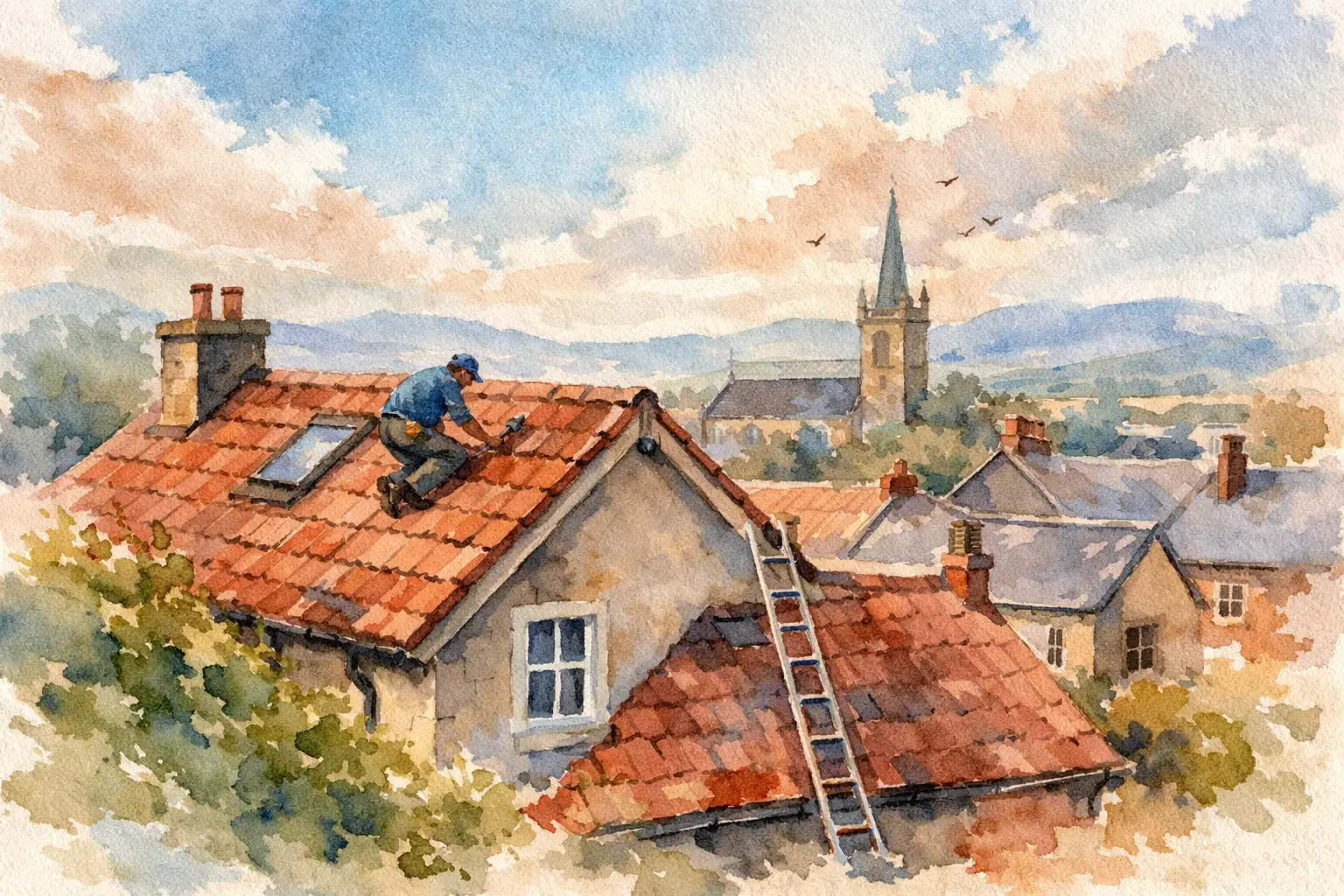
Homeowner’s Guide to Roof Maintenance in Falkirk
A roof can look sound from the ground while a loose ridge tile, blocked gutter or cracked flashing is quietly allowing water into the structure. In Central Scotland, repeated rain, wind and winter frost put every part of a roof under pressure. This complete homeowner’s guide to roof maintenance in Falkirk explains what to check, when to check it, and when a professional inspection is the sensible next step.
Regular maintenance is not about constantly spending money on your roof. It is about finding small defects before they affect timber, insulation, ceilings and internal decoration. A timely repair is usually far less disruptive than dealing with a leak after a spell of heavy weather.
Why Falkirk roofs need regular attention
Falkirk properties face a mix of driving rain, gusty conditions, cold snaps and damp air. Roofs on exposed streets, older properties with original chimneys, and homes close to mature trees can all need more frequent attention. Slate, tile, flat and pitched roofs each age differently, but water will always seek out the weakest point.
A roof also works as a system. Tiles or slates shed rainwater, underlay provides a second line of defence, flashing seals vulnerable junctions, and gutters carry water safely away. Fascias, soffits and roofline ventilation play their own part in protecting the eaves and preventing moisture build-up. Ignoring one area can create problems elsewhere.
The aim is not to assume the worst every time you see moss or a stained patch. It is to recognise changes early and arrange a proper assessment if something does not look right.
Your roof maintenance routine in Falkirk
For most homeowners, two visual checks a year are a sensible starting point: once in spring after winter weather, and again in autumn before the wettest months. A further check after a particularly severe storm can help identify obvious damage quickly.
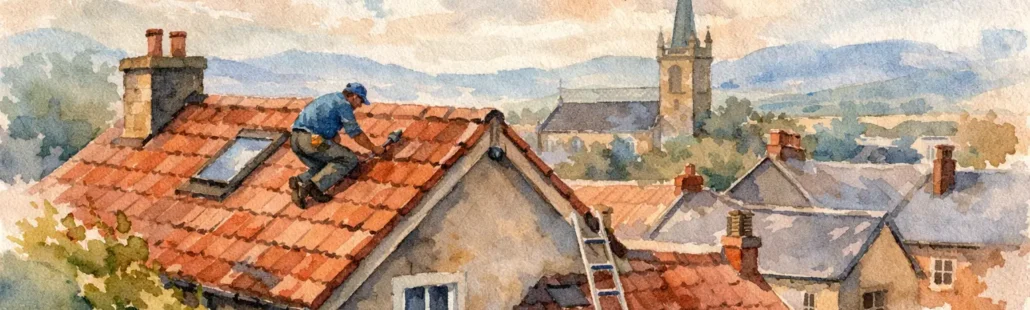
These checks should be made safely from ground level, from an upstairs window where appropriate, or with binoculars. Do not climb onto a roof, lean ladders against gutters, or walk on tiles and slates. Aside from the risk of injury, putting weight in the wrong place can crack materials or dislodge them.
Start with the roof covering
Look across the roofline for slipped, missing, cracked or uneven slates and tiles. A single missing tile does not always cause an immediate leak, but it leaves the layers beneath exposed and can become a clear entry point for wind-driven rain.
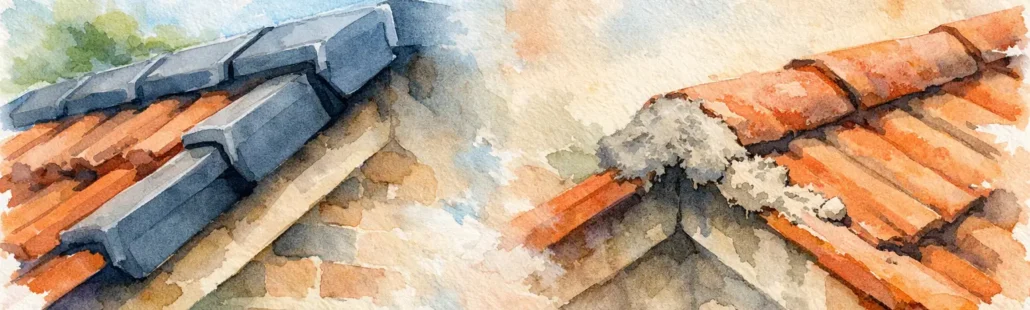
Pay attention to the ridge and hip tiles, which sit along the top and angled edges of a pitched roof. Loose mortar, gaps, or tiles that appear out of line may indicate that re-bedding or re-pointing is needed. On older roofs, this is a common maintenance requirement rather than a reason to replace the whole roof.
For flat roofs, look for standing water that remains long after rainfall, splits in the surface, lifted edges or visible blistering. Ponding water can point to an issue with drainage or falls in the roof surface. It does not automatically mean failure, but it deserves professional advice before deterioration spreads.
Check gutters and downpipes
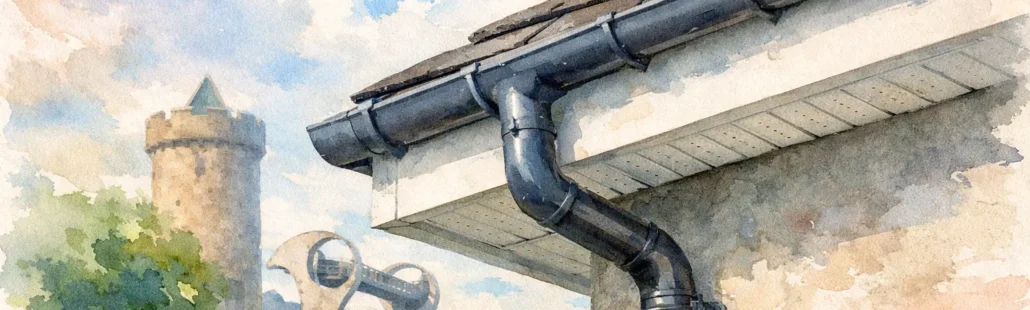
Gutters are easy to overlook because they are not technically part of the roof covering, yet blocked or overflowing gutters cause a surprising amount of damage. Leaves, moss, twigs and roof debris stop water flowing to the downpipe. It then spills over the edge, soaking fascias, brickwork and the ground around the property.
During rainfall, look for water overflowing at one point, dripping from joints, or running down an external wall. On a dry day, check for sagging sections, vegetation growing from the gutter and downpipes that appear loose or blocked.
Gutter clearing is particularly worthwhile in autumn and for homes beneath trees. If access is difficult, the guttering is high, or you have concerns about the roofline, it is safer to have the work carried out professionally.
Inspect chimneys, flashing and roof junctions
Chimneys and junctions are among the most vulnerable parts of any roof because different materials meet there. Lead flashing around chimneys, dormer windows, roof valleys and abutments is designed to direct water away. When flashing lifts, cracks, splits or pulls away from mortar, water can track underneath and enter the roof space.
From ground level, look for crumbling chimney pointing, loose pots, damaged render, staining beneath the chimney breast or vegetation growing from mortar joints. Do not ignore small fragments of mortar or tile on the ground after bad weather. They may be evidence that something above needs attention.
Chimney repairs vary widely. Some homes only need localised repointing or flashing repairs, while others need more substantial work to stabilise a deteriorating stack. A close inspection is the only reliable way to establish the right scope of repair.
Look inside the loft as well
A dry-looking roof outside can still have a developing problem beneath it. On a bright day, inspect the loft safely with a torch and look for daylight where it should not be, damp insulation, dark water marks on timbers, mould, or a musty smell.
Condensation can be confused with a roof leak. If moisture is widespread and appears mainly on the underside of the roof covering, poor ventilation may be contributing. If there is a distinct wet area near a chimney, valley or roof edge, a defect in the external roof is more likely. Both issues need addressing, but the solution is different.
Roof maintenance by season
Spring is the time to identify damage left by winter. Check for slipped tiles, damaged pointing, blocked gutters and signs of leaks in the loft. It is also a practical period for arranging non-urgent repairs before minor problems are tested by another season of rain.
Summer often provides the best conditions for planned maintenance. This can include gutter repairs, roof cleaning where appropriate, renewing flashing, chimney work or replacing worn roofline components. Dry weather makes inspection and repair work easier, though reliable contractors work year-round when conditions are safe.
Autumn should focus on clearing gutters and checking that downpipes are flowing freely. Overhanging branches should be assessed too. They can shed leaves into gutters, rub against tiles in high winds and provide a route for debris to collect on the roof.
Winter calls for observation rather than DIY work at height. Watch for new internal stains, overflowing gutters and visible storm damage. If a tile comes down or water enters the property, arrange prompt repairs rather than waiting for better weather. Temporary protection may be needed to prevent further damage.
Moss, roof cleaning and the right approach
Moss is common on roofs in damp parts of Scotland, especially on north-facing slopes and shaded properties. A light covering is not always an emergency, but heavy moss can hold moisture, block gutters and lift at tile edges as it grows. When it breaks away, it can also create blockages at the downpipe.
Roof cleaning should be handled with care. Aggressive pressure washing can damage tiles, strip protective surfaces and force water beneath the roof covering. The correct method depends on the type, age and condition of the roof. Gentle manual removal and suitable treatment may be appropriate, but a fragile or older roof may need a more cautious approach.
Before arranging cleaning, ensure the roof is inspected for defects. Cleaning a roof with loose tiles, failing mortar or damaged flashing can make an existing issue worse.
When to call a roofing professional
Some signs should not wait for the next routine check. Arrange an inspection if you notice a leak, a ceiling stain that is spreading, missing tiles or slates, loose ridge tiles, overflowing gutters despite clearing, cracked chimney masonry, or daylight visible in the loft.
A professional inspection is also worthwhile before buying an older property, after prolonged storm damage, or when planning related work such as new fascias and soffits, roughcasting repairs or a conservatory roof conversion. Addressing connected exterior issues together can reduce repeat access costs and help ensure each element works properly with the next.
Be wary of anyone offering an urgent repair without explaining the issue clearly. A trustworthy roofer should identify the problem, outline the recommended work and provide a clear quote. The cheapest option is not always best if it leaves underlying defects unresolved, but a full replacement is not always necessary either. Localised repairs are often the right answer when the rest of the roof remains in good condition.
Keep a simple roof record
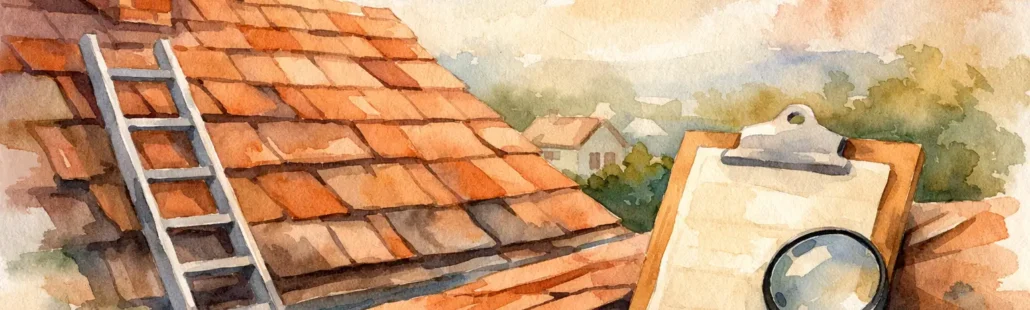
Keep photographs of your roof from ground level, along with dates of gutter clearing, inspections and any repairs. This gives you a useful baseline for spotting changes and can be helpful when planning future work. It also makes it easier to explain a problem accurately if you need to call a contractor.
For homeowners who want experienced, insured help with inspections, repairs or wider exterior building work, FK Roofing can provide a free, no-obligation quote. A roof rarely gives much warning before a small weakness becomes a bigger problem, so the most useful maintenance step is often simply arranging an inspection when something changes.