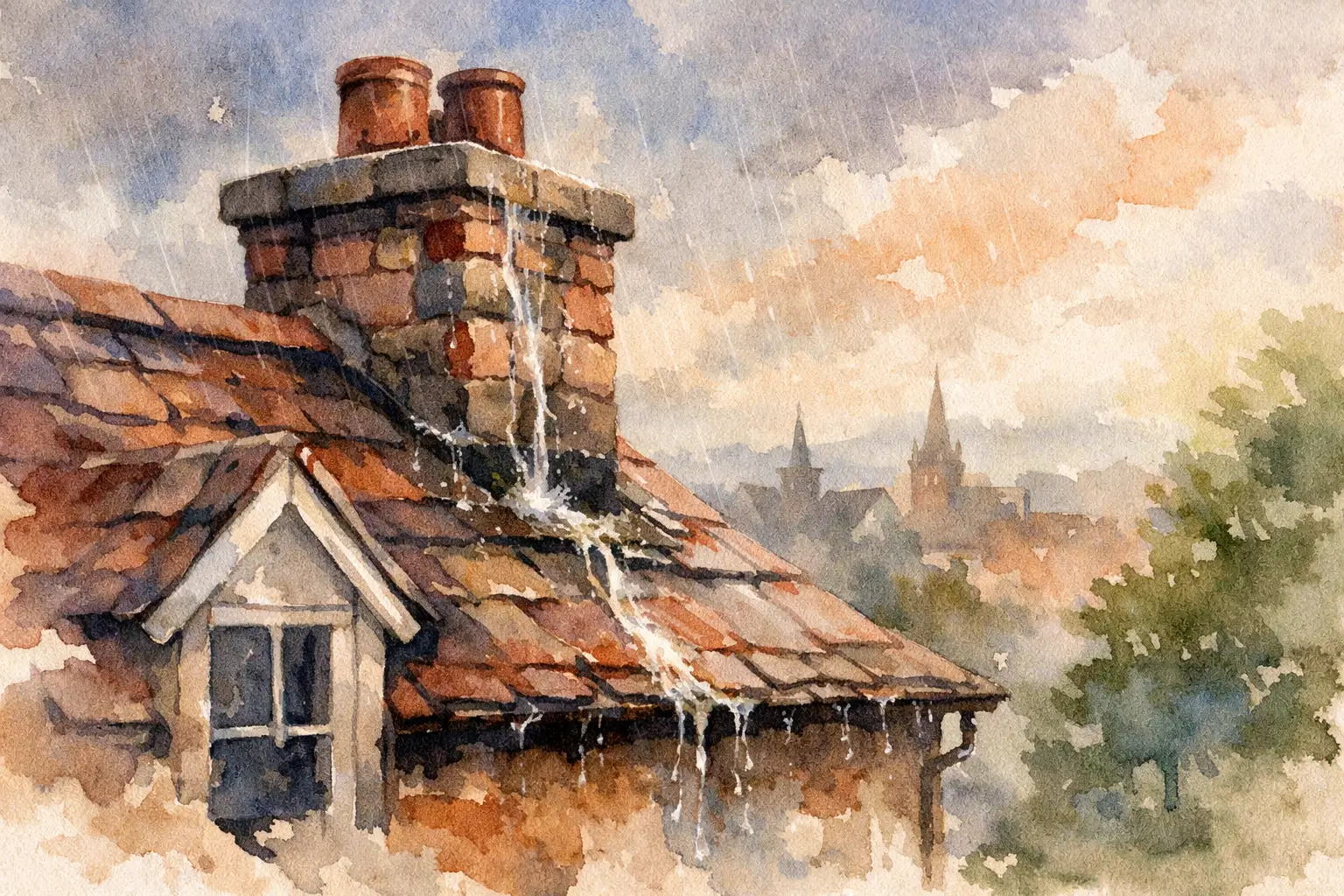
Chimney Repairs Falkirk: Stop Costly Water Damage
A chimney can look solid from ground level while allowing water into the roof every time it rains. That is why chimney repairs Falkirk: protecting your roof from costly water damage should be treated as a practical maintenance priority, not a job to leave until a ceiling stain appears. Cracked mortar, failed flashing and loose chimney pots can all create small entry points for rain – and small entry points rarely stay small through a Scottish winter.
The good news is that most chimney faults can be repaired before they lead to major internal damage. A careful inspection identifies where water is getting in, whether the stack is stable, and which repair will protect the roof for the long term.
Why chimney defects cause roof leaks
Your chimney passes through the roof covering, creating a natural weak point in an otherwise weatherproof surface. The materials around it must cope with rain, wind, frost, changing temperatures and movement in the building. When one part begins to fail, water can track behind slates or tiles and soak into the roof structure.
Lead flashing is often the first line of defence. It is fitted around the base of the chimney to direct rainwater safely onto the roof. If flashing has lifted, split, deteriorated or been poorly fitted in the past, water may run beneath it rather than away from the property. The leak may then show up several feet from the chimney, making the source difficult to spot without a proper roof inspection.
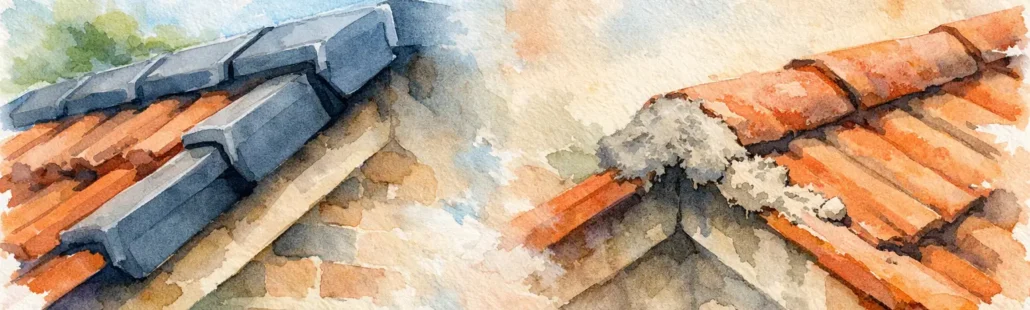
Deteriorating pointing is another common issue. Mortar between the bricks gradually weathers away, particularly on exposed chimney stacks. Gaps allow moisture into the brickwork, where repeated freezing and thawing can loosen more mortar and damage the face of the bricks. Left untreated, this can affect both the chimney stack and the roof area below it.
Chimney repairs in Falkirk: problems to look for
You do not need to climb onto the roof to notice every warning sign. From the ground, look for crumbling mortar, leaning or uneven chimney pots, staining on brickwork, missing render, or vegetation growing from joints. Indoors, damp patches near the chimney breast, peeling paint, a musty smell in the loft or drips after heavy rain all deserve attention.
Some problems are more obvious after a storm. High winds can dislodge pots, cowls and flashing, while heavy rain exposes weaknesses that have been developing quietly for years. If slates or tiles around the chimney have slipped, prompt repairs help prevent water reaching the roof felt, battens and rafters.
Age also matters. Older properties in Falkirk and the surrounding area often have chimney stacks that have endured decades of weathering. That does not automatically mean a full rebuild is needed. Repointing, replacement flashing, brick repairs or new pots may be sufficient. The right approach depends on the stack’s condition, its stability and how far moisture has travelled.
The repairs that protect your roof
A professional chimney repair starts with identifying the cause, rather than simply sealing over the visible symptom. A temporary patch may stop a drip for a short period, but it is poor value if damaged flashing or loose masonry is still allowing water behind the roof covering.
Repointing replaces failed mortar joints and restores the stack’s resistance to weather. The existing loose material is removed carefully before fresh mortar is applied. Matching the appropriate mortar to the chimney matters, especially on older brickwork. Mortar that is too hard can cause surrounding bricks to deteriorate instead of allowing the joint to do its job.
Flashing repairs or replacement may be needed where lead has cracked, pulled away from the wall, or reached the end of its useful life. Properly formed flashing should sit securely against the chimney and integrate with the surrounding slates or tiles. This is precise work, not a place for excessive sealant. Sealant can have a role in certain details, but it should not be used to disguise failed leadwork.
Where bricks have spalled, cracked or become loose, localised brickwork repairs can often restore the stack. If the chimney is extensively unstable, a partial rebuild or complete rebuild may be the safer option. This costs more than minor pointing, but it removes a structural risk and prevents recurring water ingress.
Other useful repairs can include refitting or replacing chimney pots, renewing a damaged cowl, repairing haunching around pots, and renewing render where appropriate. If a chimney is no longer in use, a suitable cowl or cap can reduce rain entering the flue, though ventilation still needs to be considered. Blocking a flue completely without assessing moisture and airflow can create condensation problems.
What happens when water damage is ignored
Water entering around a chimney does not just affect the loft. It can saturate insulation, rot timber battens, stain plaster and damage electrical fittings. In more serious cases, prolonged damp can weaken roof timbers and create conditions for mould growth inside the property.
There is also a safety aspect. Loose brickwork, unstable pots or a failing chimney crown can shed material onto the roof or ground below. A small repair completed early is usually less disruptive and more affordable than dealing with internal redecoration, timber replacement and emergency masonry work later.
For landlords and commercial property owners, delays can have wider consequences. A leak may affect tenants, stock, ceilings or business operations. Regular external checks and a quick response after severe weather are sensible ways to manage that risk.
Why quick fixes are not always the answer
It is understandable to want the fastest possible repair when water is coming through the ceiling. Emergency protection may be needed to limit damage, particularly during persistent rain. However, the permanent repair should still address the underlying defect.
For example, coating a chimney with a water-repellent treatment may help in the right circumstances, but it will not solve open mortar joints, failed flashing or unstable brickwork. Likewise, replacing a slipped slate without checking the chimney flashing may only postpone the same leak.
A good contractor will explain what is urgent, what can be planned, and why. There can be trade-offs. Scaffolding adds cost, but it may be essential for safe, thorough work on a tall or difficult-to-access stack. Minor repairs may be possible from roof ladders, while more extensive repointing or rebuilding needs a secure working platform. Safety and lasting workmanship should take priority over a shortcut.
A practical approach to chimney maintenance
An annual visual check, plus an inspection after severe storms, can catch many problems early. Keep an eye on the roofline and chimney stack when you are outside, and check the loft for signs of damp after prolonged rain. Avoid walking on the roof or attempting chimney repairs yourself. Heights, fragile roof materials and loose masonry make this specialist work.
If you are arranging roof maintenance, ask for the chimney, flashing and nearby tiles to be checked at the same time. Combining related exterior work can be more efficient than arranging separate visits, particularly where gutters, fascias, roof coverings or roughcast are also showing signs of wear.
FK Roofing provides clear assessments for homeowners and property owners who need dependable chimney and roof repairs. The aim is straightforward: identify the fault, recommend proportionate work and leave the roof properly protected against the weather.
A chimney should protect the character and function of your property, not become the route for rainwater to enter it. Acting when the first signs appear gives you more repair options, lower risk and a better chance of keeping a minor fault exactly that.