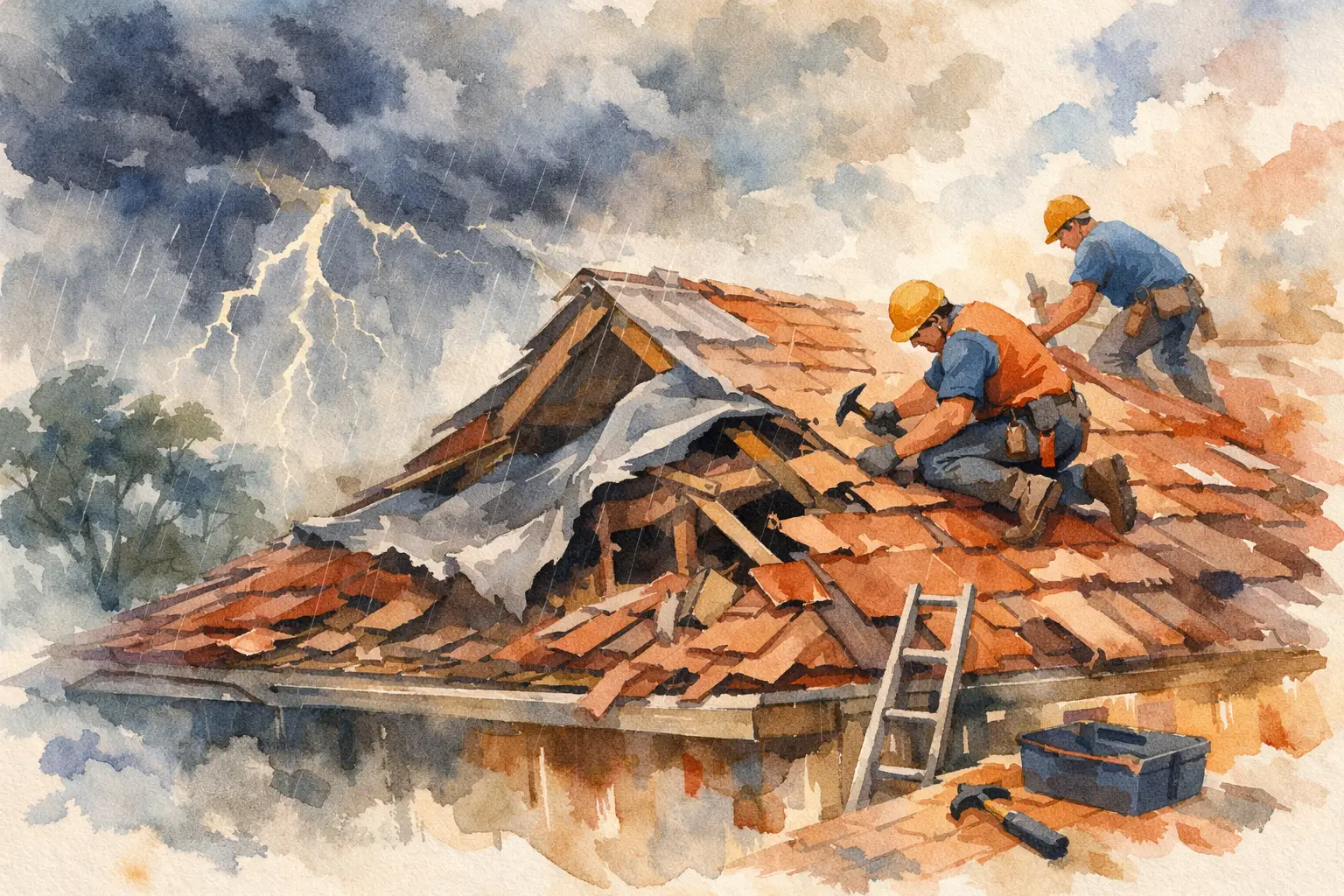
Storm Damaged Roof Repair: What to Do Fast
A storm rarely gives you much warning. One night of high winds or heavy rain can leave you with slipped tiles, damaged flashing, blocked gutters, or water coming through the ceiling by morning. When storm damaged roof repair is needed, the first few hours matter. Acting quickly can limit internal damage, reduce repair costs, and stop a small fault turning into a much bigger problem.
For most property owners, the difficulty is knowing what counts as urgent and what can wait a day or two. From the ground, a roof can look mostly intact while water is already finding its way into the loft, soaking timbers, insulation, and plaster. That is why a proper inspection matters after bad weather, even if the damage seems minor.
What storm damage usually looks like
Storm damage is not always dramatic. Sometimes it is obvious, such as ridge tiles on the ground or a branch through the roof. More often, it shows up in less visible ways. Wind can loosen tiles and slates without fully dislodging them. Rain can exploit tiny gaps around chimneys, valleys, vents, and flashing. Gutters can overflow because they have shifted out of line or filled with debris.
On pitched roofs, common problems include cracked or missing tiles, lifted verge sections, damaged ridge pointing, and flashing that has peeled away from adjoining walls or chimneys. Flat roofs can suffer splits in felt, punctures, standing water, or lifted edges where wind has got underneath the covering. In both cases, the danger is the same – once water gets in, it rarely stays in one place.
It is also worth remembering that storm damage can expose existing weaknesses. A roof that was already ageing or carrying previous patch repairs may not cope as well as a newer, well-maintained one. In that situation, the storm is the trigger, but the repair needed may be more extensive than first expected.
Storm damaged roof repair starts with safety
If you suspect roof damage, avoid the temptation to climb up and investigate yourself. Wet roof surfaces, loose materials, and hidden weak spots make post-storm conditions risky. Even using a ladder to inspect the edge of the roof can be dangerous if the ground is soft or debris is present.
A safer first step is to check from ground level. Look for tiles or slates on the ground, bent guttering, fallen mortar, visible sagging, or debris lodged on the roof. Inside the property, look in the loft for damp insulation, staining on timbers, drips, or daylight where there should not be any. Upstairs ceilings may show fresh brown marks, bubbling paint, or patches of damp that were not there before.
If water is entering the property, try to contain it rather than trace it precisely. Use buckets, move furniture and belongings out of the area, and protect flooring where possible. Water can travel along rafters and plaster before it appears indoors, so the visible leak point may not sit directly below the damaged section.
When a repair is urgent and when it can wait
Some storm damage needs same-day attention. Active leaks, exposed underlay, loose ridge tiles, partially detached flashing, or any area where materials could fall pose an immediate risk. The priority in those cases is making the roof weather-tight and safe as quickly as possible, often with a temporary emergency measure before a permanent repair is completed.
Less urgent issues still need prompt attention, but not always an emergency visit. A single cracked tile, minor gutter displacement, or a small section of mortar loss may be repairable within a short scheduled visit if there is no sign of water ingress. The difficulty is that what looks small from the outside can hide more serious damage beneath, so a professional inspection is still the sensible route.
For landlords and small commercial property owners, there is another factor to consider. Delaying repairs can affect tenant safety, lead to internal damage claims, and disrupt normal use of the building. Fast action is not just about the roof itself. It protects the whole property.
What a professional inspection should cover
A proper roof inspection after a storm should do more than identify the obvious breakages. It should check the surrounding roof system as a whole. That includes the condition of tiles or slates, ridge and hip lines, leadwork, chimney details, valleys, roof vents, soffits, fascias, gutters, and downpipes.
An experienced contractor will also look for signs that water has travelled beyond the initial damage point. Wet battens, stained felt, damaged membrane, rotted timbers, or saturated insulation may all need attention. If a chimney has moved or flashing has failed, adjoining masonry can also be affected.
This is where working with a contractor who handles broader external repairs can help. Storms do not always damage one element in isolation. A job may involve roofing work, guttering repairs, chimney pointing, roughcasting repairs, or replacing damaged soffits. Having one company manage that from start to finish often means a quicker, cleaner result.
Temporary fixes versus permanent repairs
Emergency measures have their place, but they should not be mistaken for a finished repair. A temporary covering or patch can stop immediate water entry and protect the property until conditions allow proper work to be carried out. That is useful in severe weather or where materials need to be ordered.
Permanent storm damaged roof repair should address the full cause of the problem, not only the visible symptom. Replacing a missing tile is straightforward if that is the only issue. But if wind has also loosened neighbouring tiles, damaged the fixing points, or opened flashing joints, those faults need dealing with at the same time.
The same applies to flat roofs. A small patch may hold for a while, but if the covering is brittle, lifting at the edges, or showing multiple weak areas, a localised repair might only delay a larger problem. The right solution depends on the age of the roof, the extent of the damage, and whether the surrounding materials are still sound.
Why quick repairs usually cost less
Many property owners hesitate after a storm because they hope the damage is superficial. Unfortunately, waiting often increases the final bill. Water ingress can damage ceilings, walls, insulation, electrics, and stored belongings long before the roof fault is fixed. Timber exposed to repeated moisture can begin to rot, and damp conditions in the loft can lead to mould growth.
There is also the issue of repeat exposure. Once a roof has been weakened, the next spell of bad weather can worsen it quickly. A tile that has shifted slightly in one storm may come away entirely in the next. Flashing that has lifted a few millimetres can become fully detached under another bout of wind.
Prompt repairs are usually more controlled, less disruptive, and easier to price accurately. They also reduce the chance of needing wider remedial building work later.
Choosing the right contractor after storm damage
Storms often bring out rushed decisions, and that is when poor workmanship tends to happen. A roof repair should be carried out by an insured, experienced contractor who can explain what has failed, what needs immediate attention, and whether any related areas should be monitored.
Clear communication matters. You should expect a straightforward assessment, a sensible repair recommendation, and a clear quotation without pressure. Guarantees and proof of insured work add reassurance, especially where the damage affects a larger section of roof or involves associated building repairs.
For homeowners in Falkirk and surrounding areas, a local contractor also has the advantage of understanding the types of roofs common across the region and how Scottish weather tends to affect them. That practical knowledge often makes fault-finding faster and repairs more durable.
After the repair, think about prevention
Not every storm problem can be avoided, but many can be reduced with regular maintenance. Loose tiles, worn mortar, blocked gutters, and ageing flashing often give early signs before a storm turns them into urgent repairs. Periodic checks help spot these weaknesses while they are still manageable.
If your roof is older, has had repeated patch repairs, or regularly suffers from slipped tiles after high winds, it may be worth discussing whether further repairs are still the best value. Sometimes a targeted repair is exactly right. Sometimes a more substantial overhaul makes better financial sense over the next few years. It depends on the roof condition, not just the latest damage.
A storm does not need to leave a hole in the roof to cause serious trouble. If something looks wrong, sounds loose, or has started letting water in, getting it checked early is the practical move. A fast, professional response protects the roof, the rooms below it, and your peace of mind when the weather turns again.