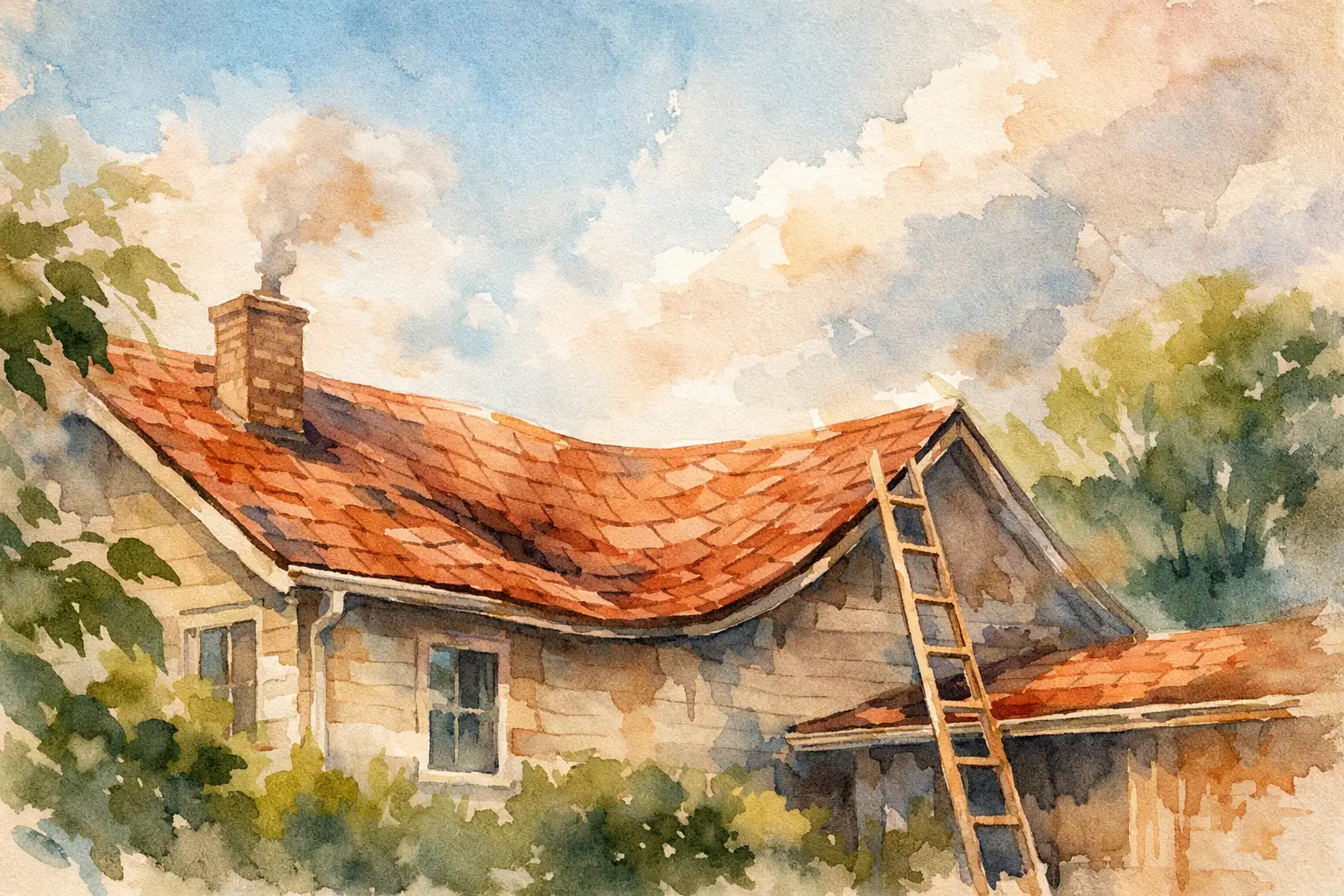
Why Is My Roof Sagging? Causes and Next Steps
A roofline that once looked straight but now dips in the middle, bows near the eaves or appears uneven from the road is not a fault to put off until spring. If you are asking, “why is my roof sagging?”, the answer can range from a localised repair to a structural issue that needs prompt attention. The key is finding the cause before water, movement and extra weight make the damage worse.
A sagging roof is not always close to collapse, but it should never be dismissed as normal ageing. In Falkirk and across Central Scotland, repeated rain, wind, frost and occasional snow can expose weaknesses in older roofs surprisingly quickly. A professional inspection can establish whether the problem lies with the covering, the roof timbers, supporting walls or a combination of issues.
Why is my roof sagging in the middle?
A dip in the centre of a pitched roof often points to movement in the rafters, purlins or other supporting timbers. Roofs are designed to transfer their weight safely down to the external walls. When timber weakens, supports shift or the load becomes too great, that straight line can gradually become a visible hollow.
Water ingress is one of the most common reasons. A slipped slate, cracked tile, failing flashing or damaged ridge can allow moisture into the roof space. Timber that stays damp can rot, soften and lose its ability to carry the roof load. The leak may be small enough to go unnoticed from inside for months, while the damage to the structure continues.
Older properties may also have roof timbers that are undersized by modern standards, altered during previous work or simply affected by decades of movement. This does not automatically mean a full replacement is required. Sometimes damaged rafters can be strengthened or replaced and the cause of the water entry repaired. The right solution depends on how widespread the deterioration is.
Common causes of a sagging roof
Water damage and timber decay
Rainwater should run off the roof, into clear gutters and away from the building. When tiles, slates, valleys, flashings or gutters fail, water can reach the felt, battens and timbers beneath. Persistent damp may cause rot, while poor ventilation can increase condensation in the loft.
Look for staining on ceilings, mould near the top of external walls, peeling paint, wet insulation or a musty smell in the loft. These signs do not prove the exact source, but they are strong reasons to arrange an inspection. Repairing a leak early is usually far less disruptive than rebuilding decayed timber later.
Excessive weight on the roof
A roof can sag when it is carrying more weight than it was designed to support. Heavy layers of moss, trapped water, snow build-up or multiple layers of old roofing materials can all add unnecessary load. Flat roofs are particularly vulnerable to standing water, although pitched roofs can also suffer where drainage routes are blocked.
Roof cleaning can help where moss is contributing to blocked gutters and retained moisture, but it must be done properly. Aggressive cleaning methods can damage tiles or slates and create another route for water to enter. The roof covering and its condition should always be assessed before any cleaning work starts.
Alterations without adequate support
Loft conversions, storage platforms, solar panel installations and changes to chimney structures can affect roof loading. A professionally designed conversion or installation accounts for the added weight and structural support required. Problems are more likely where work has been carried out without suitable calculations, supports have been removed or the roof space has been adapted informally over time.
Even storing heavy boxes across ceiling joists can create confusion when assessing movement. Ceiling joists are not the same as roof rafters, but overload can cause ceilings to bow and may be mistaken for a sagging roof. A competent roofer can identify what is moving and advise if a structural specialist is needed.
Failed rafters, trusses or purlins
Rafters form the slope of many traditional roofs, while purlins provide support along their length. Newer homes may use prefabricated trusses, which rely on each member and connection working together. Cracks, splits, insect damage, rot or alterations to any of these elements can affect the shape and strength of the roof.
Never cut, drill or remove a truss member to create storage space or improve access. What appears to be a small piece of timber can be vital to the whole structure. Likewise, temporary propping should only be undertaken after professional advice, as poorly placed supports can transfer stress elsewhere.
Movement in walls, lintels or foundations
Not every apparent roof sag starts in the roof itself. Settlement, movement in external walls, a failing lintel or deterioration around a chimney can alter the line where the roof is supported. You may notice cracks in brickwork, open joints around a chimney breast, doors sticking or gaps around window frames alongside the uneven roofline.
These symptoms need a joined-up assessment. Repairing tiles alone will not resolve a roof that is moving because the supporting structure beneath it needs attention. This is where using a contractor experienced in both roofing and external building repairs can make the process clearer and avoid patching only the visible symptom.
How urgent is a sagging roof?
The urgency depends on the severity, the cause and whether the roof is still keeping water out. A slight, long-standing unevenness in an older roof may be stable, but a new sag, a deepening dip or a roofline that changes after a storm should be treated as urgent.
Arrange prompt professional help if you notice four or more warning signs such as:
- a visible dip that has appeared or worsened recently;
- cracked, slipped or missing tiles and slates around the affected area;
- water marks, dripping or a bulging ceiling below the roof;
- cracked, split or visibly bowed timbers in the loft; and
- loose masonry, leaning chimney sections or cracks near where the roof meets the wall.
If a ceiling is bulging with water, keep people out of the room beneath it and avoid trying to puncture it yourself. If there is a risk of falling materials, move away from the affected area and seek urgent professional assistance. Do not climb onto a sagging roof or rely on a ladder inspection to diagnose a structural problem.
What a professional roof inspection should establish
A proper inspection should do more than identify a few broken tiles from ground level. The roofer should assess the roof covering, ridges, valleys, flashings, gutters and chimney details, then inspect the roof space where it is safe to do so. This helps determine whether the sag is caused by failed covering materials, moisture damage, weakened timbers or movement in the supporting walls.
You should receive a clear explanation of what has been found, how urgent it is and what work is recommended. In some cases, the repair may involve replacing localised timber, renewing underlay and battens, and reinstating the roof covering. In others, wider re-roofing is more sensible because the existing materials are near the end of their working life.
There is a cost trade-off worth considering. A targeted repair is often the right option when damage is contained and the rest of the roof is sound. However, repeatedly repairing an old covering above compromised timbers can become false economy. A straightforward quote should separate essential structural work from recommended improvements so you can make an informed decision.
Can a sagging roof be repaired?
Yes, many sagging roofs can be repaired, particularly when the cause is found early. The work might include replacing rotten rafters, reinforcing purlins, repairing truss damage under suitable guidance, renewing defective flashings or rebuilding a damaged chimney section. Where the roof covering has failed across a large area, a new roof may provide the most reliable long-term result.
The repair should always address the source of the problem, not just straighten the visible dip. Covering damaged timber with new plasterboard, adding extra tiles or patching a leak without checking the structure can leave the underlying issue to progress out of sight.
A sagging roof is your property asking for attention, not a reason to panic. Take photographs from a safe position, note any recent changes or leaks, and arrange a no-obligation assessment before another spell of bad weather has the chance to turn a manageable repair into a larger one.