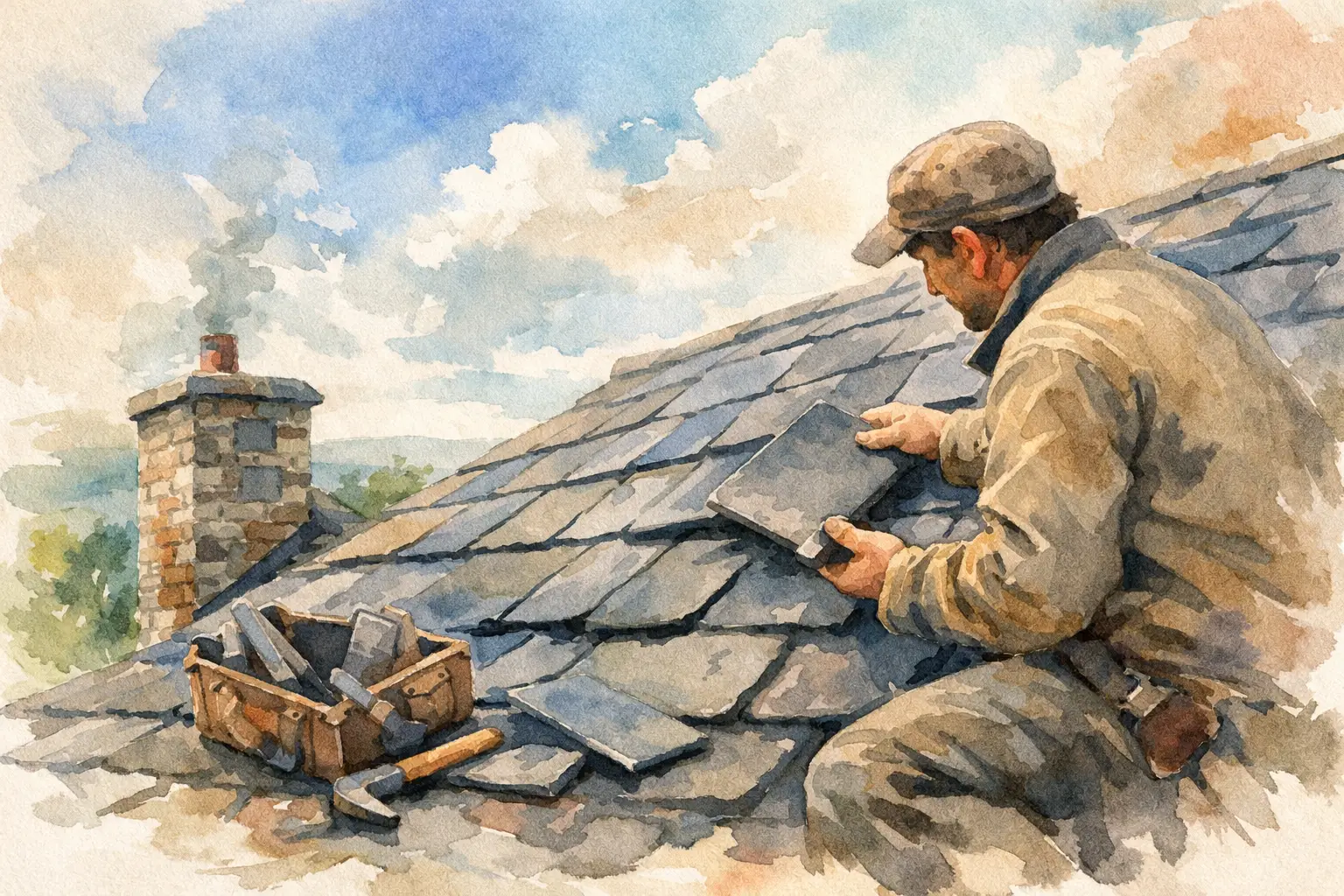
Fixing Slipped Roof Slates Before Leaks Start
A single slate sitting out of line can look like a small problem from the garden. On a roof exposed to Central Scotland wind, rain and frost, however, that gap can quickly become a route for water. Fixing slipped roof slates promptly protects the layers beneath, helps prevent internal damp and avoids a modest repair developing into wider roof damage.
Slate is one of the most durable roofing materials available, and many slate roofs last for generations when maintained properly. The weak point is often not the slate itself, but the nail, fixing, flashing or surrounding roof detail that holds everything in place. Knowing what to look for and when to arrange a professional repair can save considerable disruption later.
Why roof slates slip in the first place
Slates are normally secured with nails or hooks and laid in overlapping courses so rain runs safely down the roof. Over time, the original nails can corrode, particularly on older roofs. This is often called nail sickness. As the fixing weakens, a slate may slide down, tilt outwards or fall completely.
Storms are another common cause. Strong gusts can lift a slate that is already loose, while heavy rain can expose a weakness that has gone unnoticed during drier weather. Frost also plays a part. Water entering a small crack or gap freezes and expands, putting additional pressure on nearby slates and fixings.
Not every slipped slate means the whole roof is failing. It may be an isolated issue caused by a damaged fixing or a branch striking the roof. But if several slates have moved, or you find pieces of nail or slate on the ground, it may point to ageing fixings across a larger area. That is when a close inspection matters.
Signs that a slipped slate needs urgent attention
A visible gap in the roof covering is reason enough to arrange a repair, even if there is no stain on the ceiling yet. Water does not always appear directly below the entry point. It can travel along battens, felt or timbers before becoming visible inside the property.
Act quickly if a slate has fallen onto a path, driveway or neighbouring area. Loose roofing materials are a safety risk, especially in windy conditions. Keep people clear of the area beneath the roof and do not attempt to climb up with a ladder to investigate.
Inside, look out for a damp patch in the loft, wet insulation, a musty smell or fresh staining on upper-floor ceilings. These signs may be linked to a slipped slate, but they can also come from damaged flashing, cracked chimney pointing, blocked gutters or a problem around a roof window. A proper inspection identifies the source rather than simply treating the visible symptom.
Fixing slipped roof slates properly
A lasting repair is about more than putting the slate back where it was. A roofer first checks whether the slate is still sound and whether the surrounding slates are secure. Natural slate can be reused if it has not cracked, split or become too thin around its fixing holes. If it is damaged, a matching replacement slate is fitted to maintain the roof’s weather protection and appearance.
The failed nail or fixing must also be addressed. On an older roof, the original nail may be impossible to replace in exactly the same way without disturbing the surrounding course. Experienced roofers can use suitable repair techniques, including copper or stainless-steel fixings, to secure the replacement without creating new weaknesses in the roof covering.
The underlay and timber battens beneath the slate should be checked at the same time. If water has been entering for a while, the battens may have softened or the felt may be torn. Refitting a slate over damaged materials can hide the problem temporarily, but it will not stop water reaching the roof structure.
A good repair also includes checking the nearby details that direct water away. Valleys, chimney flashings, abutments and roof edges are all areas where a small defect can cause a slate to move or allow rain in around it. The right scope depends on what the inspection finds. Sometimes the answer is one replacement slate; sometimes a short section needs attention to prevent repeat problems.
Why adhesive is rarely the right answer
It can be tempting to use roof sealant or adhesive as a quick fix. This is rarely a dependable solution for a slate roof. Slates need to shed water naturally, and trapped moisture or an incorrectly fixed slate can lead to further movement. Adhesive may also make a later professional repair more difficult.
Temporary weatherproofing may be appropriate after severe storm damage while a full repair is arranged. It should be treated as temporary, not as a substitute for secure mechanical fixing and a sound roof covering.
Should you repair a slate roof yourself?
Replacing a low-level slate may look straightforward in online videos, but working on a pitched roof carries real risks. Slates can be brittle, roof surfaces can be slippery, and a ladder placed incorrectly can damage gutters or cause a fall. There is also the risk of cracking adjoining slates or disturbing the overlap that keeps water out.
For homeowners, the sensible approach is to inspect from ground level using binoculars if safe to do so, take a clear photograph where possible, and arrange a roofer to assess the issue. Avoid walking on the roof, pushing a loose slate back into place from a ladder, or using foam and sealant to cover a gap.
The exception may be safely collecting a fallen slate from the ground and keeping it aside. If it is unbroken, it may help a roofer identify the size, colour and type required. Do not store it where children or pets could be hurt by sharp edges.
When one slipped slate suggests a bigger roof repair
The age and condition of the roof make a difference. A relatively modern slate roof with one displaced slate after a storm may only need a local repair. An older roof with repeated slipped slates, rusting nail heads and widespread uneven courses may need a more planned programme of repairs.
This does not automatically mean a full replacement is necessary. Many traditional slate roofs can be repaired in stages, extending their working life while keeping costs manageable. The key is an honest assessment of the slates, fixings, battens and supporting roof structure.
Landlords and owners of older properties should also consider the timing of repairs. Waiting until a vacant property is being redecorated or until water has marked the ceiling usually costs more than dealing with the roof defect at the first sign of movement. Early work is generally less intrusive and helps protect insulation, plasterwork and timber from avoidable moisture damage.
What to expect from a professional slate repair
A competent roofing contractor will inspect the affected area, identify whether the problem is isolated or part of a wider issue, and explain the recommended work clearly. The quote should set out what will be repaired, whether replacement slates are needed and any related work required around flashings, ridge details or gutters.
Access is considered before work begins. A small repair may be completed from ladders where safe and appropriate, while more extensive work may require scaffolding. Scaffolding adds cost, but it can be the safer and more efficient option where the roof is steep, high or difficult to reach. It also allows repairs to be completed carefully rather than rushed.
For properties in Falkirk and the surrounding area, FK Roofing can assess slipped or damaged slates and provide a clear, no-obligation quote for the repair needed. The focus should always be on restoring a watertight roof with workmanship that stands up to the weather, not on selling unnecessary work.
Keep an eye on the roof after bad weather
A quick visual check after high winds or prolonged rain is a sensible part of property maintenance. Look for slates that appear lower than the surrounding course, gaps near chimneys and valleys, debris on the ground, or gutters that have suddenly started overflowing. Checking the loft periodically can reveal a leak before it reaches the ceiling below.
If you spot movement, do not wait for the next downpour to prove there is a problem. Arranging fixing slipped roof slates while the issue is small is one of the simplest ways to keep a durable slate roof doing the job it was built for.