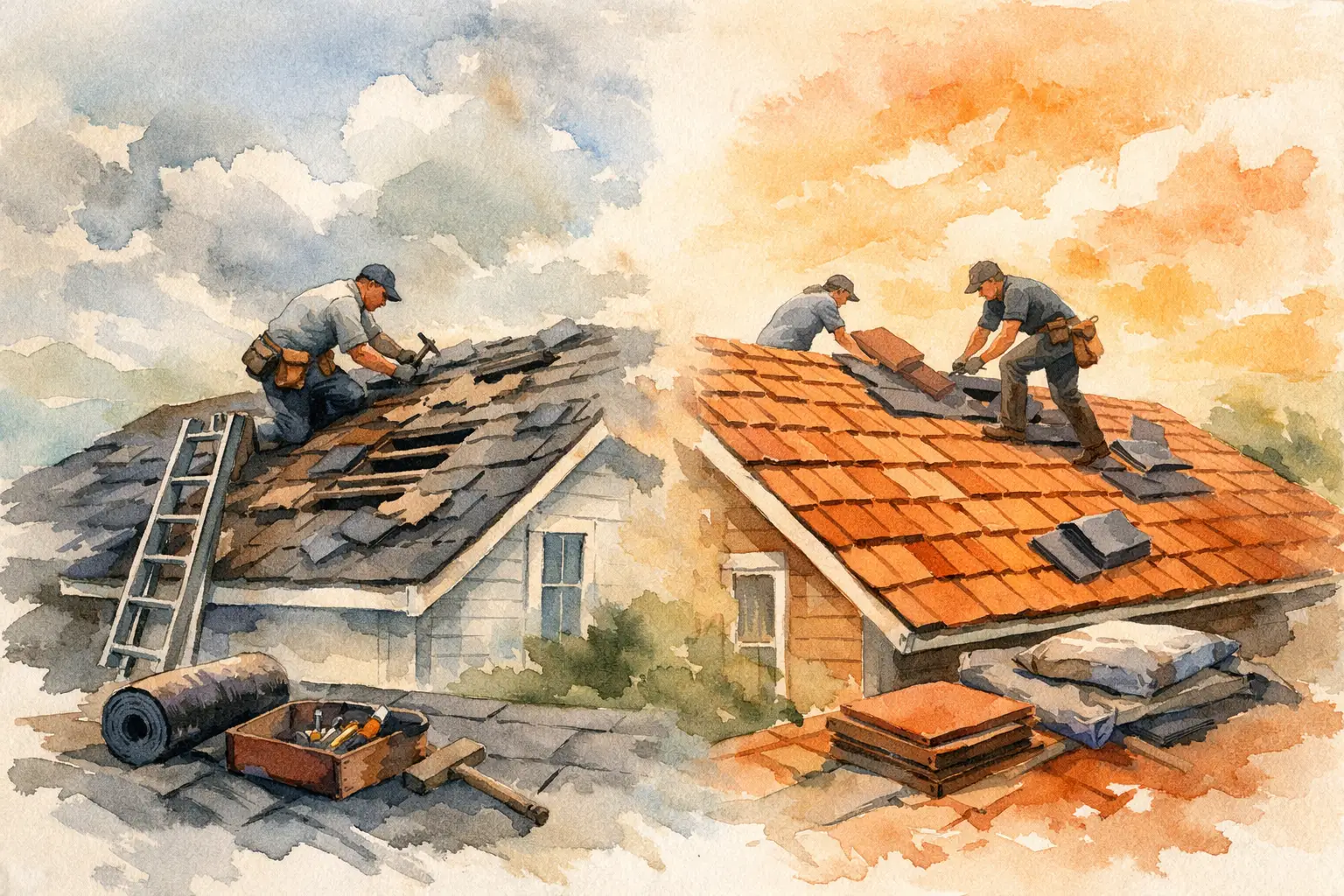
Roof Repair Versus Replacement: Which Is Right?
A ceiling stain after heavy rain can make any property owner fear the worst. Yet roof repair versus replacement is rarely a simple choice between a small patch and a major bill. The right answer depends on where the water is entering, how much of the roof has deteriorated, its age, and whether a repair will genuinely protect the property for years to come.
For homes and small commercial properties in Central Scotland, weather exposure matters. Persistent rain, high winds and repeated freeze-thaw cycles can turn a loose tile, cracked flashing or failing mortar joint into a bigger problem. Acting early is usually less disruptive and more affordable than waiting for visible internal damage.
When Roof Repair Is the Sensible Option
A targeted repair is often the best value when the rest of the roof remains in sound condition. One or two slipped slates, a damaged ridge tile, cracked lead flashing around a chimney, or a localised leak on a flat roof do not automatically mean the entire roof needs replacing.
The key is finding the source of the issue rather than treating the symptom. Water can travel beneath tiles, felt or roof coverings before appearing on a ceiling, so the damp patch inside is not always directly below the fault. A proper roof inspection should assess the covering, underlay, battens, valleys, flashings, chimney stack and gutter line where relevant.
Repair work is usually appropriate when damage is isolated, the roof is not near the end of its expected lifespan, and the underlying structure is dry and stable. It can also be the practical choice after storm damage, where most of the roof has held up well but a particular area has been affected.
A good repair should blend into the existing roof as far as possible and address the reason the damage occurred. Replacing a broken tile without securing loose neighbouring tiles, for example, may only postpone the next call-out. Likewise, renewing flashing without dealing with crumbling chimney mortar can leave another route for water to enter.
Common repairs that can extend a roof’s life
Repairs can provide many more years of service when the roof has a solid overall base. Typical work includes replacing broken or missing tiles and slates, renewing leadwork and flashings, repairing valleys, repointing ridges and chimneys, repairing flat roof sections, and renewing damaged fascias, soffits or guttering that are allowing water to back up at the roof edge.
These jobs are not merely cosmetic. Loose ridge tiles can become a safety risk in strong winds, while damaged flashing can allow persistent damp into roof timbers. Addressing defects promptly helps protect insulation, plasterwork and the internal structure of the property.
Signs That Replacement May Be Better Than Repair
There comes a point where repeated repairs become poor value. If several areas are failing, materials are heavily weathered, or water has reached the roof structure, a new roof can be the more dependable long-term investment.
Replacement is worth discussing when you are seeing several of the following issues:
- Recurring leaks in different parts of the roof, despite previous repairs.
- Widespread cracked, loose, missing or porous tiles and slates.
- Sagging roof lines, rotten timbers or visible movement in the structure.
- A worn-out underlay, deteriorated battens or widespread water damage beneath the covering.
- A roof nearing the end of its serviceable life, with multiple defects developing at once.
A roof does not have to be collapsing to justify replacement. A covering that needs frequent attention can create ongoing expense, uncertainty during bad weather and the risk of damage to rooms below. For landlords and business owners, recurring roof faults can also cause avoidable disruption for tenants, staff or customers.
The hidden condition beneath the tiles
From ground level, a roof may appear tired but repairable. Equally, it may look acceptable while the underlay, battens or timber edges beneath have deteriorated. This is why decisions should not be made on appearance alone.
During a professional assessment, attention should be given to whether tiles can be safely lifted and reused, whether fixings remain secure, and whether moisture has affected supporting materials. If the structure is sound and only the outer covering has local defects, repairs may still be worthwhile. If the supporting layers are failing across a large area, replacement usually offers a more reliable result.
Comparing the Real Cost of Repair and Replacement
The lowest initial price is not always the lowest cost over time. A minor repair that stops a new leak quickly can be excellent value. But spending money every year on separate patches, emergency call-outs and internal repairs may eventually cost more than planned replacement work.
When comparing quotes, consider the scope rather than focusing only on the headline figure. A repair quote should explain the fault being addressed, the materials to be used and whether nearby defects have been identified. A replacement quote should make clear what is included beneath the surface, such as underlay, battens, ventilation details, flashings and disposal of old materials.
There is also the cost of delay. Water ingress can damage insulation, ceiling finishes, electrics and timber. In severe cases, a small external problem becomes a more extensive building repair. If a roof is consistently leaking, temporary fixes may protect the property for a short time, but they should not be treated as a permanent solution without investigating the cause.
Energy Efficiency and Planned Improvements
A roof replacement can be an opportunity to improve more than weather protection. When a roof covering is removed, it may be easier to review ventilation, insulation and details around roof edges, chimneys and dormers. Better-performing materials and correctly installed components can help reduce draughts and moisture issues in the roof space.
This does not mean every older roof needs replacing to improve energy efficiency. Loft insulation, ventilation improvements and repairs to gaps around pipework or roof junctions can make a noticeable difference where the roof itself remains sound. The best approach depends on the condition of the roof and how the property is used.
Conservatory roofs are a separate but common example. A lightweight or ageing conservatory roof may cause rooms to feel too cold in winter and overly warm in summer. A roof conversion can be a more useful long-term improvement than repeatedly repairing minor leaks or damaged panels, provided the existing structure is suitable.
How to Make the Right Decision
Start with a clear assessment of the roof’s condition and the cause of any leak or visible damage. Be wary of anyone who recommends a complete replacement without explaining what has failed, just as you should question a contractor who offers a quick patch without checking the wider area.
Ask how long the proposed repair is expected to last, whether the surrounding materials are in good order, and what could cause the same problem to return. For replacement work, ask what system is being installed, how roof details will be finished, and what guarantee and insurance arrangements apply. These questions help you compare like for like and choose work that offers proper peace of mind.
For a recently installed roof with isolated storm damage, repair is often the obvious route. For an ageing roof with leaks, deteriorating materials and several previous fixes, replacement can prevent a cycle of short-term spending. There is no benefit in replacing a roof that has years of reliable life left, but there is also little value in endlessly repairing one that is clearly failing.
FK Roofing provides clear, no-obligation assessments for property owners who need an honest view of the options. Whether the answer is a carefully targeted repair or planned replacement, the priority should be work that keeps the building dry, safe and properly protected through the next spell of Scottish weather.
If you are unsure which route applies to your roof, arrange an inspection before the next small defect becomes an internal repair. A straightforward professional opinion can turn an uncertain decision into a practical plan.