How Long Should a Roof Last in Falkirk Homes?
A roof in Falkirk has to cope with far more than the passing of time. Persistent rain, driving wind, frost, moss growth and occasional storm damage all place pressure on tiles, slates, flashing and roofline materials. So, how long should a roof last in Falkirk? For most homes, a well-installed and properly maintained roof should protect the property for several decades, but its actual lifespan depends heavily on the roofing material, workmanship and how quickly small faults are dealt with.
A roof does not normally fail all at once. More often, minor issues such as a slipped tile, cracked flashing or blocked gutter allow water to get where it should not be. Acting early can make the difference between a straightforward repair and a larger replacement project.
How long should a roof last in Falkirk?
As a general guide, a traditional natural slate roof can last 75 to 100 years or more. Concrete roof tiles commonly last around 40 to 60 years, while clay tiles may last 60 years or longer when they are sound and correctly fitted. Flat roofing systems have shorter expected lifespans, although modern materials can provide excellent service when professionally installed.
These figures are useful starting points, not promises. A 50-year-old tiled roof may still have plenty of life left if it has been maintained, ventilated and repaired properly. Equally, a much newer roof can develop problems if poor installation, inadequate detailing or storm damage has compromised it.
For property owners, the key question is not simply the roof’s age. It is whether the roof remains weather-tight, structurally secure and economical to maintain.
Typical lifespan by roof type
Natural slate roofs
Many older Falkirk properties have slate roofs, and quality natural slate is one of the longest-lasting roofing materials available. Individual slates can sometimes need replacing after years of exposure, particularly around vulnerable areas such as valleys, chimneys and roof edges. That does not necessarily mean the whole roof has reached the end of its life.
The condition of the fixings underneath matters as much as the slate itself. On older roofs, nails can corrode and allow slates to slip even where the slate remains in good condition. Targeted repairs can often extend the serviceable life of the roof, but widespread slipping or failing fixings may point towards re-roofing.
Concrete and clay tiled roofs
Concrete tiles are common on newer homes and can be a practical, durable choice. Their lifespan is generally shorter than natural slate, but a well-maintained tiled roof can provide decades of protection. Clay tiles often retain their appearance for longer and can have a longer working life, although they may be more vulnerable to impact damage.
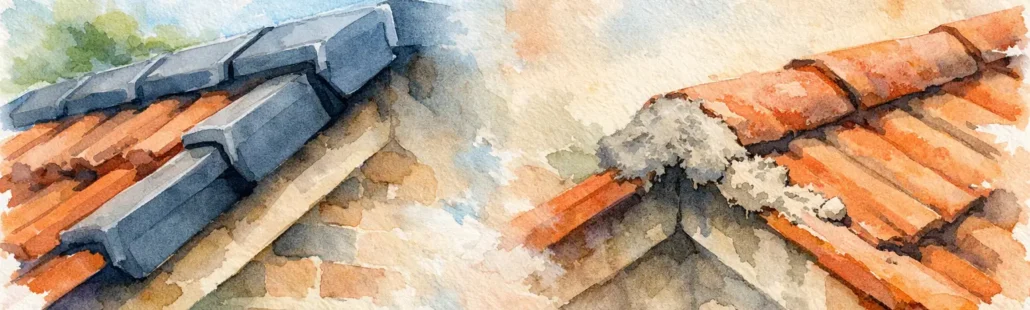
With either type of tile, check for cracked, loose or missing sections after severe weather. Water can enter through a surprisingly small gap, especially when wind drives rain beneath the tiles. Mortar bedding on ridges and verges also needs attention over time, as it can crack and loosen through repeated freezing and thawing.
Flat roofs
Flat roofs are often found on extensions, garages, porches and commercial premises. Traditional felt roofs may last around 15 to 25 years, depending on the product and maintenance. Modern systems, including EPDM rubber and fibreglass roofing, can often last 25 to 40 years or more when installed over a suitable deck with proper drainage.
Standing water is a warning sign on any flat roof. A small amount after heavy rain may be normal, but water that remains for days can speed up deterioration and expose weak points. Splits, blisters, cracked edges and failed joints should be assessed promptly before moisture reaches the roof structure below.
Why Falkirk weather can shorten a roof’s life
Central Scotland’s weather is a genuine factor in roof condition. Rain is expected, but wind-driven rain is particularly challenging because it can force water beneath damaged tiles, loose leadwork and worn pointing. High winds can lift ridge tiles, dislodge slates and expose areas that looked secure from ground level.
Winter adds another issue. Water entering small cracks can freeze, expand and worsen the damage. Over time, this affects mortar, tiles and chimney masonry. Moss and algae are also common in damp, shaded areas. Moss itself is not always an emergency, but heavy growth can hold moisture against the roof surface and impede drainage into gutters.
This does not mean every roof in Falkirk will wear out early. It means regular inspection and timely repairs are more valuable than waiting until water is visible indoors.
Signs your roof may need repair or replacement
A leak is the most obvious concern, but it is not the only sign of a roof nearing the point where work is required. Damp patches in an upstairs room, staining around a chimney breast, peeling paint, mould in the loft and a sudden draught can all indicate water ingress or gaps in the roof covering.
Outside, look for slipped or broken slates, missing tiles, damaged ridge lines, cracked render around chimneys, sagging gutters and debris collecting in downpipes. Granules in gutters from an ageing flat roof surface can also suggest material breakdown.
Some warning signs need faster action than others. A single slipped tile may be a contained repair. Repeated slips across several areas, visible sagging, extensive water staining or a roof that needs frequent call-outs may mean ongoing patching is no longer the best value. A professional inspection can establish whether the issue is isolated or whether the roof covering, underlay, battens or supporting timber needs more comprehensive work.
Repair or replacement: which is the sensible choice?
Roof repairs are often the right answer where the main structure and covering remain sound. Replacing damaged tiles, renewing flashing, repointing a chimney, repairing a valley or securing loose ridges can restore weather protection without the cost and disruption of a full re-roof.
Replacement becomes more sensible when faults are widespread, materials are at the end of their expected life, or repairs are becoming regular and expensive. A new roof also provides an opportunity to improve ventilation, insulation detailing and the overall finish around fascias, soffits and gutters.
There is a trade-off to consider. The lowest immediate cost is not always the lowest long-term cost. Repeated repairs on an extensively worn roof can become frustrating and may leave the property vulnerable between visits. On the other hand, replacing a roof simply because it is older is unnecessary if an inspection confirms it remains sound. The right decision should be based on condition, not guesswork.
How to help your roof last longer
Simple maintenance can protect the investment already above your head. Keep gutters and downpipes clear so water can drain away freely, particularly after autumn leaf fall and storms. Trim back overhanging branches where safe to do so, as branches can scrape tiles and leave debris on the roof.
It is also sensible to arrange a visual roof check after severe wind or heavy rainfall, especially if you notice anything unusual indoors. Do not climb onto the roof yourself. Slates and tiles can be slippery, fragile and unsafe to walk on. A qualified roofer can inspect hard-to-see details such as lead flashing, valleys, chimney joints and ridge bedding safely.
If you are buying an older property or managing a rental home, a roof assessment can also provide clarity before a small issue turns into an unexpected expense. FK Roofing can assess roofing and external building concerns across Falkirk and advise clearly on whether repair, maintenance or replacement is appropriate.
A roof should give you confidence during the worst weather, not leave you watching the ceiling whenever the rain starts. If you have noticed a change in its condition, arranging an inspection while the problem is still small is usually the most practical next step.