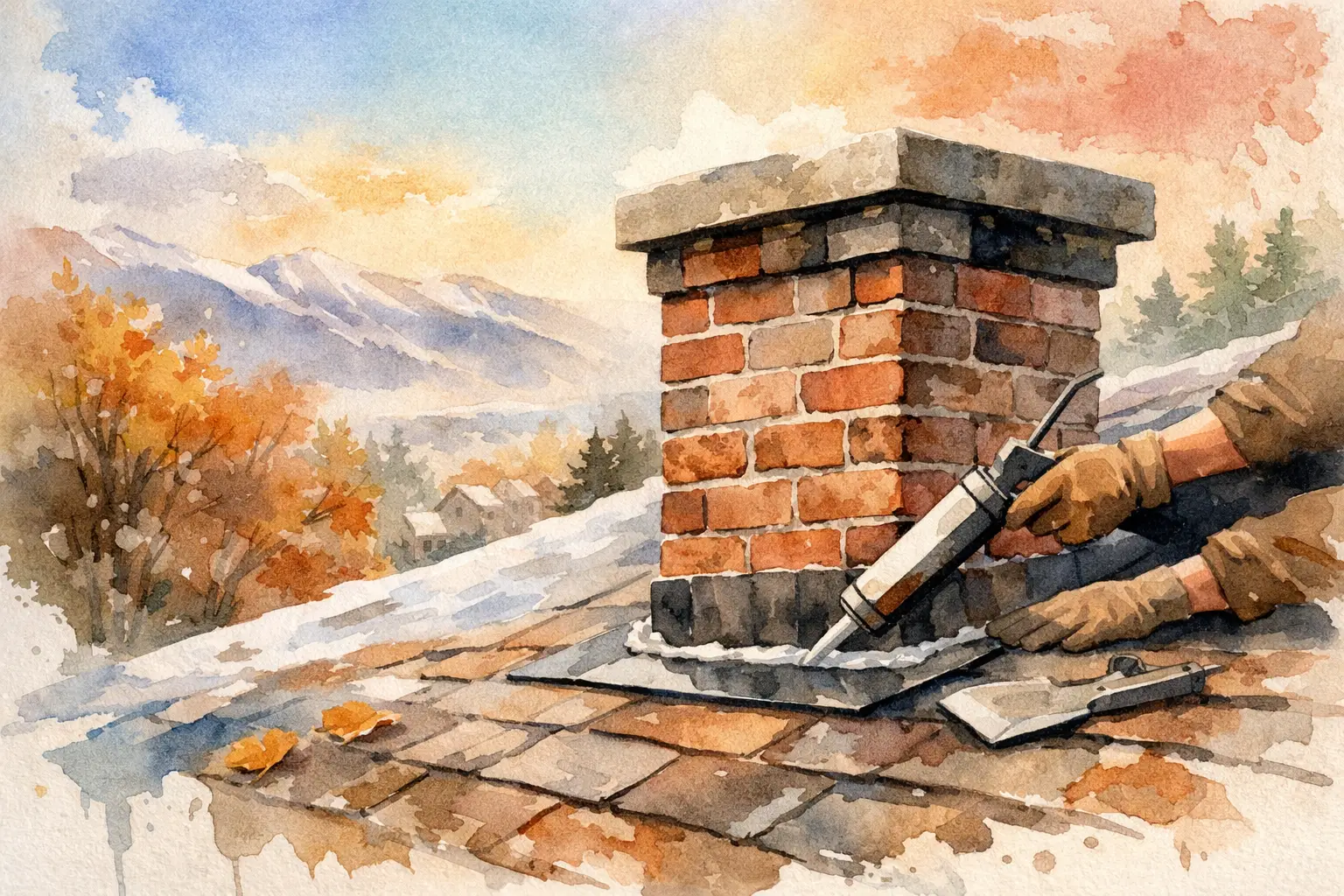
How to Prevent Chimney Leaks Before Winter
A damp patch beside the chimney breast is rarely just a decorating issue. Water can enter around a chimney long before it appears indoors, soaking timbers, insulation and roof battens on the way. Knowing how to prevent chimney leaks means dealing with the vulnerable details around the stack before a spell of heavy Falkirk rain or high winds turns a small defect into a larger repair.
Chimneys sit above the main roofline, where they take the full force of weather from every direction. They also join several different materials – brickwork, lead, mortar, roof tiles and sometimes render – so there are more potential weak points than on an uninterrupted roof slope. Regular checks and prompt repairs are usually far more cost-effective than waiting for a visible ceiling stain.
How to prevent chimney leaks at the source
The aim is not simply to seal every gap with mastic. A chimney needs properly formed weatherproofing that directs water onto the roof covering and into the gutters. Where materials have cracked, lifted or reached the end of their life, the lasting answer is normally repair or replacement rather than a temporary surface seal.
Keep flashing secure and correctly dressed
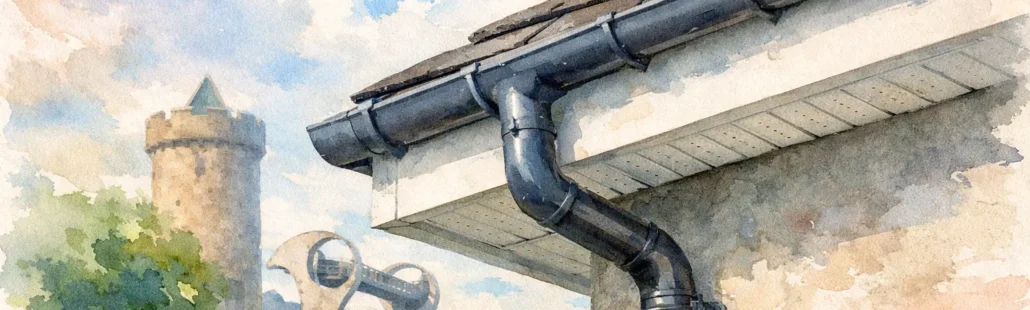
Lead flashing is the strip of metal fitted where the chimney meets the roof. It is one of the most common causes of chimney leaks. Step flashing is built into the brick joints along the sides of the stack, while front and back aprons guide water away from the base and rear of the chimney.
Over time, lead can split, pull away from the brickwork or become loose where mortar has failed. Poorly fitted replacement flashing can also allow water behind it, even if it appears neat from ground level. Look for lifted edges, open joints, staining beneath the chimney area or sections that have been covered heavily in sealant.
Lead naturally expands and contracts with changes in temperature, so it needs room to move. A professional repair should use correctly sized, well-secured flashing and sound chase joints in the brickwork. Sealant has a place for small finishing details, but it should not be relied upon to compensate for missing or badly fitted leadwork.
Repair failing mortar and damaged brickwork
A chimney stack is exposed on all sides, making weathered pointing a serious concern. Mortar joints that are cracked, recessed or crumbling can absorb rainwater. During colder weather, trapped moisture can freeze, expand and loosen more mortar or even damage the brick faces.
Repointing replaces defective mortar to restore the weatherproof outer face of the stack. If individual bricks have spalled, cracked or become loose, they should be replaced at the same time. On rendered chimneys, cracks in the render need attention too. A small crack can admit water behind the finish, where it may spread unnoticed before causing visible damp internally.
Do not overlook the chimney shoulders – the sloping tops beneath the pots. These should shed water away from the stack. Cracked or poorly formed shoulders often hold water against the brickwork, accelerating deterioration.
Check the chimney crown, pots and terminals
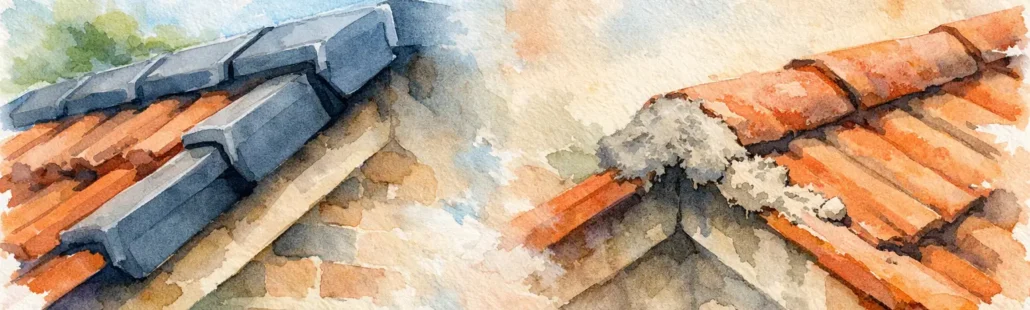
The crown, sometimes called the chimney cap or flaunching, is the cement bedding around chimney pots. It should be firm, free-draining and in good condition. When it cracks or breaks down, rain can work directly into the top of the stack and through the flue structure.
A leaning chimney pot, loose cowl or damaged terminal is also a safety issue, particularly in high winds. Bird guards and suitable rain cowls can help reduce water entering an unused flue, but they must suit the type of appliance and ventilation requirements. Never block a working flue or fit a cover without checking that it is appropriate for the fireplace, stove or boiler it serves.
If a chimney is no longer in use, it still needs ventilation. A fully sealed flue can trap condensation and lead to damp inside the property. The right solution may be a ventilated cap at the top and a suitable vent at the fireplace opening, allowing air to circulate while keeping out most rain and debris.
Maintain the roof immediately around the stack
Water often appears to be coming through a chimney when the real issue is a broken tile, slipped slate or worn underlay nearby. Tiles around a stack can be vulnerable because they are cut to fit and depend on the flashing detail to remain watertight.
After strong winds, check from the ground for displaced roof coverings, debris collecting behind the chimney, or obvious gaps at the sides. Moss and leaves can slow drainage and hold moisture in place. Gutters and valleys should also be kept clear, as overflowing water can saturate brickwork and make it harder to identify the true route of a leak.
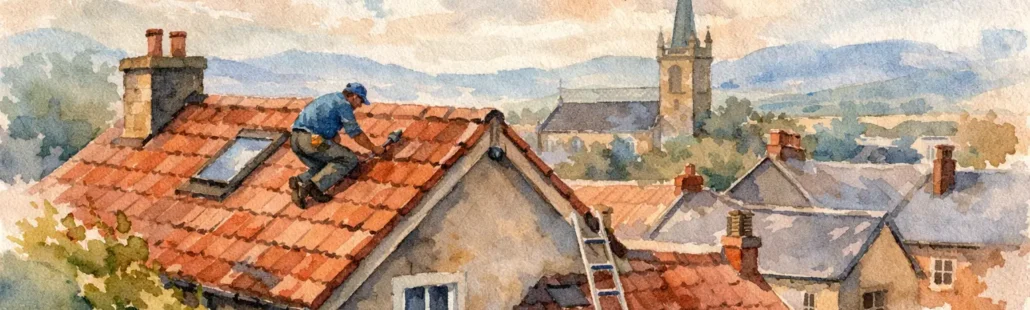
Avoid climbing onto the roof to investigate. Chimney repairs involve working at height and can disturb already weakened masonry or tiles. A close visual inspection from a safe position is useful; a hands-on inspection should be left to an insured roofing professional.
Know the warning signs before water spreads
A chimney leak is not always obvious during the first shower of rain. Moisture can travel along timbers or masonry, then show itself some distance from the original entry point. Look out for these signs, especially after prolonged rain or windy weather:
- Brown marks, peeling paint or bubbling plaster near a chimney breast, ceiling or loft hatch.
- A musty smell in the loft, damp insulation or darkened roof timbers around the stack.
- Loose grit or pieces of mortar on the ground below the chimney.
- White, powdery deposits on brickwork, known as efflorescence, which can indicate repeated moisture movement.
- Drips or dampness that occur only when rain is driven from a particular direction.
The direction of the weather matters. A leak that only appears in south-westerly wind-driven rain may point to side flashing, porous brickwork or cracks on the exposed face of the stack. Damp that develops after steady rainfall may be linked to the chimney crown, rear flashing or water pooling behind the stack.
Photograph staining when you notice it and make a note of the weather conditions. This can help a roofer trace the source rather than treating the symptom.
Choose prevention that matches the chimney’s condition
There is no single chimney-leak repair that suits every property. A relatively modern stack with one lifted flashing edge may need a focused repair. An older chimney with failing pointing, cracked flaunching and damaged leadwork may be better served by a coordinated refurbishment, completed while safe access is already in place.
Water-repellent treatments can be useful on suitable sound brickwork, but they are not a cure for open mortar joints, cracked bricks or defective flashing. Likewise, painting over damp patches inside will not solve the cause. The moisture must be stopped at the exterior, then the affected area needs time to dry properly.
If a chimney is redundant and in poor condition, removal down to a safe level can sometimes be the sensible long-term option. That decision depends on the building, shared flues, neighbouring properties and future plans for the fireplace. It should be assessed carefully, not treated as a quick fix.
Plan inspections around the Scottish weather
A visual check twice a year is a sensible routine: once after winter and again before the wetter, windier months return. It is also worth checking after major storms. You do not need to wait for a leak to arrange an inspection if the stack looks weathered, mortar is falling away or flashing has visibly lifted.
For homeowners and landlords in Falkirk and surrounding areas, FK Roofing can inspect chimney stacks, lead flashing, roof coverings and related exterior defects as part of a practical repair assessment. Addressing several connected issues in one visit can prevent repeated call-outs and help protect the roof as a whole.
A sound chimney should shed rain without drawing attention to itself. If you have noticed staining, loose mortar or a change after bad weather, arranging an early assessment gives you the best chance of keeping a straightforward repair from becoming internal water damage.