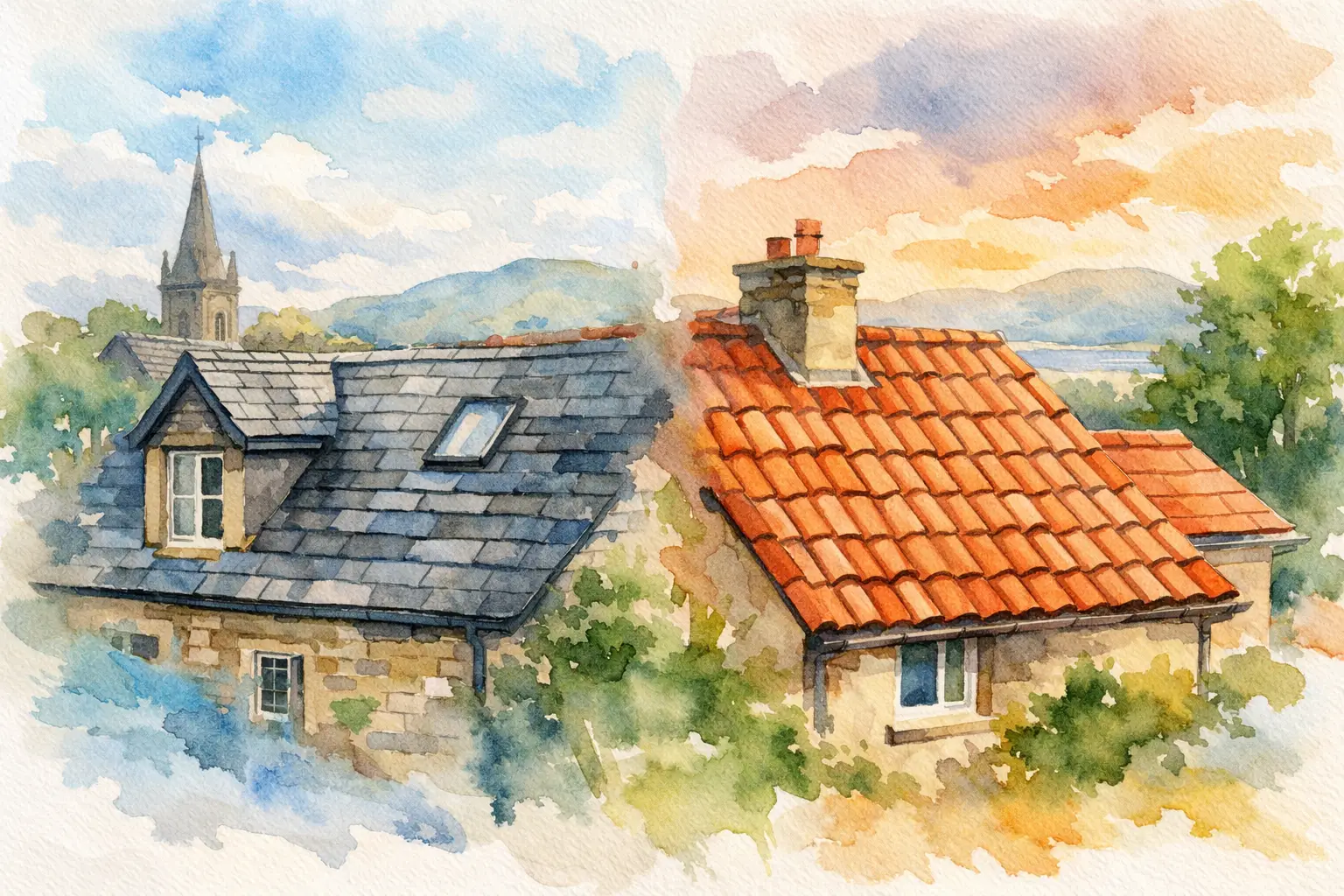
Slate vs Tile Roofs for Falkirk Properties
A roof in Falkirk has to cope with more than just the odd spell of rain. Wind-driven weather, cold winters, damp conditions and the age of many local properties all play a part in what roofing material makes sense. If you are weighing up slate vs tile roofs: which is best for Falkirk properties, the right answer depends on your building, your budget and how long you expect the roof to last.
For some homes, slate is the clear fit. For others, tile gives better value and more flexibility. The key is not choosing the material with the best reputation on paper, but the one that suits the property and performs well over time.
Slate vs tile roofs: which is best for Falkirk properties?
The short answer is that both can work very well, but they suit different priorities.
Slate is often chosen for its lifespan, traditional appearance and strong weather performance. It is especially well suited to older stone and period properties where character matters. A properly installed slate roof can last for decades and, in many cases, much longer than tile.
Tile, on the other hand, is usually the more budget-friendly option upfront. It comes in a wider range of profiles and finishes, and it can be a practical choice for newer homes, extensions and many replacement roof projects where cost and consistency matter just as much as appearance.
That does not mean one is always better. A roof should be chosen based on structure, pitch, exposure and the look of the property as a whole.
How Falkirk weather affects the choice
Local weather conditions matter more than many property owners realise. In this part of Scotland, roofs need to stand up to regular rain, gusting winds and prolonged damp. That puts pressure on every part of the roof covering, from the main material down to the battens, underlay and fixings.
Slate has a strong reputation in wet and exposed areas because it is dense, durable and less likely to absorb water. Good quality slate can cope very well with harsh conditions when installed correctly. It also sheds water efficiently, which is useful on steeper roofs and older properties designed with slate in mind.
Tiles can also perform well in Falkirk conditions, but the exact type matters. Concrete tiles are common and cost-effective, though they are heavier and can be more prone to surface wear over time. Clay tiles are attractive and durable, but they are not always the first choice for every local property style or budget.
In exposed spots, wind uplift is another factor. Both slate and tile can fail if poorly fixed, so workmanship matters just as much as the material itself.
Appearance and suitability by property type
A roof should look right on the building. This is not just about kerb appeal. The wrong material can look out of place and may even affect how well the roof integrates with neighbouring properties or existing features.
Slate tends to suit traditional homes, older terraces, cottages and period buildings. It gives a sharper, flatter finish and often complements stonework or older brickwork far better than modern interlocking tiles. In some cases, especially where a property already has slate or sits in a traditional setting, changing to tile can alter the character of the building too much.
Tile is often a better match for modern estates, newer builds, extensions and garages. It offers more choice in colour and profile, which can make it easier to match an existing roof. If a section of roof is being extended or rebuilt, tile can also be a practical route where slate matching would be difficult or expensive.
This is one of those areas where there is no universal rule. A material can be technically sound but still be the wrong visual choice for the property.
Cost now versus value over time
For many homeowners and landlords, budget is one of the biggest deciding factors.
Tile roofs generally cost less to install than slate roofs. The materials are usually cheaper, and installation can be quicker depending on the roof design. If you are replacing a roof on a standard residential property and need a sensible, durable option without pushing costs too high, tile may be the better fit.
Slate usually comes with a higher initial cost. Both the material and labour tend to be more expensive, particularly if the roof has complex details or if a natural slate product is being used. However, slate often delivers better long-term value because of its lifespan. When maintained properly, a slate roof can outlast many tiled alternatives.
So the real question is not just what the roof costs today. It is whether you want the lower initial spend or the stronger long-term return. If you plan to stay in the property for many years, slate may justify the extra outlay. If you need a practical replacement at a more controlled price, tile may be the more realistic option.
Weight, structure and installation requirements
Not every roof structure is suited to every material without adjustment. This is where a proper inspection is important.
Slate is heavy, but many older properties were originally built to carry it. If the building already has a slate roof, replacing like for like may be straightforward from a structural point of view, though the condition of the roof timbers still needs checked.
Concrete tiles are often heavier than many people expect and can place a significant load on the roof structure. On some older buildings, changing from slate to heavier concrete tile may require structural assessment or strengthening work. That can affect both cost and practicality.
Installation detail also matters. Slate requires precision. Tile systems can be quicker to lay, especially interlocking products, but speed should never come at the expense of proper fixing and alignment. A roof is only as good as the installation behind it.
Maintenance and repair considerations
Every roof will need maintenance at some stage. The difference is how repairs tend to present over time.
Slate roofs often fail in smaller, localised ways. A slipped or broken slate can usually be repaired without replacing a large section, provided the surrounding roof is still in sound condition. That can be helpful on older roofs where most of the covering remains serviceable.
Tile roofs can also be repaired effectively, but replacement tiles need to match properly in profile and colour. With some older or discontinued tile ranges, that can be harder than expected. Concrete tiles may also show more visible ageing over time, which can make patch repairs stand out.
Another point to consider is that roof problems are not always caused by the slate or tile itself. Leadwork, ridge lines, flashing, underlay and chimney details are often the real source of leaks. That is why material choice should be part of a wider roofing assessment rather than the only decision made.
When slate is usually the better option
Slate is often the stronger choice when the property is older, the appearance matters, and you want maximum lifespan. It is also well suited to homes where maintaining original character is important or where the roof is highly visible and forms a major part of the building’s overall look.
If you are investing in a long-term home, or upgrading a property where quality and durability are the priority, slate makes a lot of sense. It can also add to the perceived value of a traditional property because buyers often recognise it as a premium roofing material.
When tile is usually the better option
Tile is often the better choice when affordability, speed and flexibility are more important. For many family homes, rental properties, extensions and garages, a good tiled roof offers dependable performance without the higher upfront cost of slate.
It can also be the right answer where matching an existing tiled roof is important, or where the style of the building suits a more modern roofing finish. For planned replacement work on a sensible budget, tile often gives the best balance of cost and durability.
The best decision starts with the property, not the product
The most reliable way to choose between slate and tile is to assess the roof as a whole. Age, pitch, exposure, structure, surrounding buildings and visual style all matter. A blanket recommendation rarely holds up once those details are looked at properly.
That is why experienced local advice is worth having before any major roofing work begins. A contractor who understands the housing stock in Falkirk and the conditions local roofs deal with can usually tell quite quickly whether slate or tile is the better fit for your property.
If you are planning a replacement roof, the best choice is the one that suits the building, performs well in Scottish weather and gives you confidence that the job has been done right the first time.