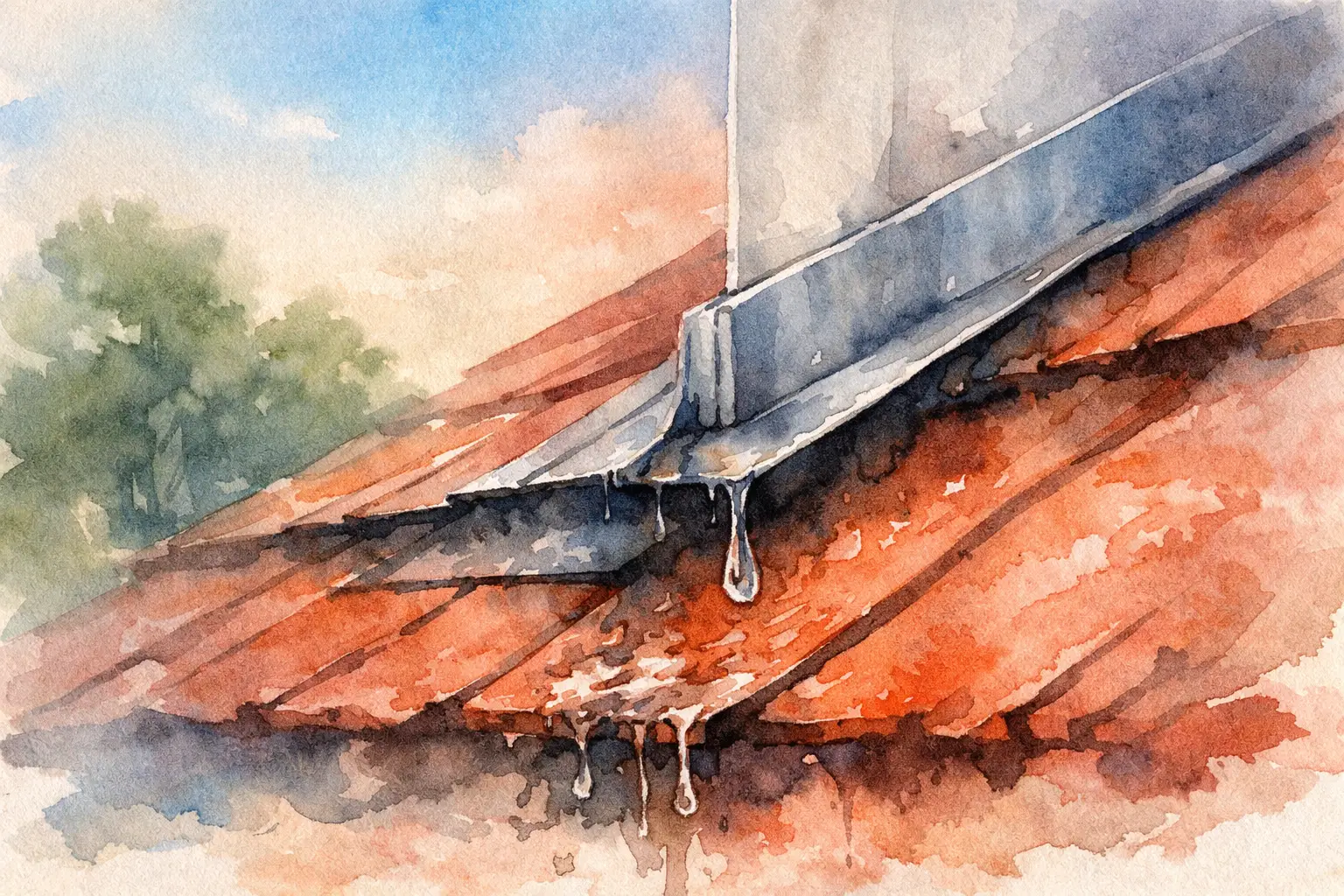
Why Does Roof Flashing Leak? Common Causes
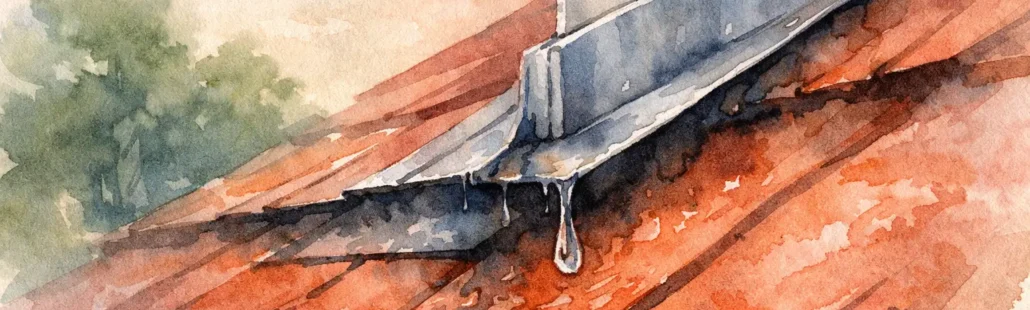
A damp mark beside a chimney breast, a drip in the loft after heavy rain, or staining around a roof window often points to one place: the flashing. But why does roof flashing leak when the surrounding tiles or slates appear sound? Flashing sits at the roof’s most vulnerable junctions, where different materials meet and rainwater is concentrated. A small failure here can let in far more water than its size suggests.
Flashing is designed to direct water away from gaps around chimneys, valleys, roof windows, dormers and abutments where the roof meets a wall. When it is correctly fitted and maintained, it forms a durable weatherproof barrier. When it cracks, lifts, separates or deteriorates, rain can find a route behind the roof covering and into the structure below.
Why Does Roof Flashing Leak in the First Place?
Roof flashing leaks for several reasons, and the right repair depends on the material, the roof design and the condition of the surrounding masonry and coverings. It is not always a case of replacing a strip of lead. In many instances, the issue lies with failed mortar, loose tiles, decayed roof timbers or poor detailing from an earlier repair.
Age and weathering
Lead flashing is long-lasting, but it is not maintenance-free. Years of expansion and contraction caused by changing temperatures can stress the metal and the joints that hold it in place. Central Scotland’s wet, windy conditions add further pressure, particularly on exposed roofs.
Over time, lead can split, fatigue around folds, or pull away from the wall or chimney. Older flashing may also have been installed in sections that are too large, leaving insufficient allowance for natural movement. The result is often a fine crack that only leaks during persistent rain or wind-driven showers.
Failed mortar at chimney or wall flashings
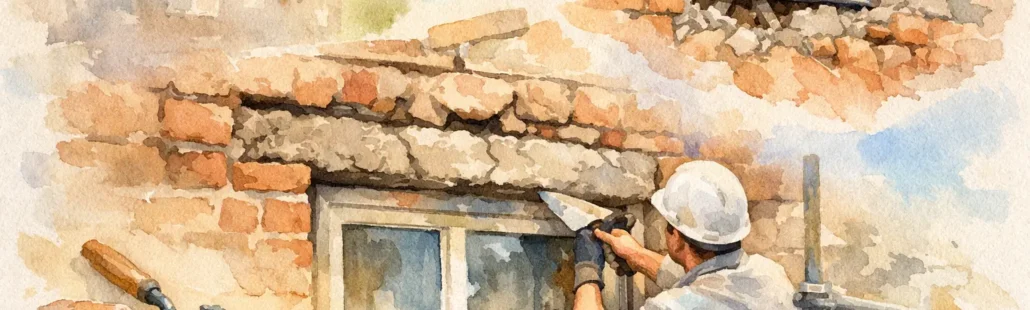
At a chimney stack or brick wall, stepped flashing is usually secured into mortar joints. The pointing can become loose, cracked or washed out with age. Once the mortar no longer holds the flashing securely, water can pass behind it and run into the loft or down an internal wall.
This is why a leak around a chimney should never be blamed on the flashing alone without a proper inspection. Damaged chimney pointing, defective coping stones, cracked render and failing leadwork can all produce similar signs indoors. Addressing only the most visible gap may provide a short-term improvement but leave the real entry point unresolved.
Poor installation or unsuitable repairs
Flashing has to be shaped and layered so water always flows over the next section, rather than behind it. Incorrect laps, missing soakers, shallow upstands or poorly formed corners can all create a weak point. This is especially common where a previous repair has relied too heavily on sealant instead of sound roofing detail.
Roofing sealants have a place for small, targeted tasks, but they are not a substitute for correctly installed leadwork. A thick line of mastic may cover a crack for a while, yet it can shrink, split or lose adhesion as the roof moves. It may also hide the condition of the flashing underneath, making a lasting repair more difficult later.
Corrosion or deterioration of non-lead flashing
Not every roof uses lead. Flashing may be made from zinc, aluminium, steel, copper or modern flexible products. Some materials are more vulnerable to corrosion, particularly where incompatible metals meet or water regularly sits on the surface.
Galvanised steel can rust once its protective coating fails. Aluminium may be damaged by unsuitable products or improper fixing. Flexible flashing systems can crack with age, lift at the edges or fail where they have been stretched too tightly. The best repair is based on the existing roof detail, not simply the quickest material to hand.
Movement in the roof or building
Buildings move slightly over their lifetime. Timber roof structures expand and contract, masonry settles, and temperature changes affect both metal and roof coverings. Flashing is intended to accommodate a degree of movement, but excessive movement can open gaps.
A loose chimney stack, sagging roof area or deteriorated timber beneath the tiles may place strain on flashing that was once secure. If the flashing keeps failing in the same area, the underlying movement needs to be investigated. Repeated patching without correcting the cause can become an expensive cycle.
Debris, blocked valleys and damaged coverings
Flashing often works alongside valleys, gutters and roof tiles to move water safely off the roof. Moss, leaves and debris can hold water against the flashing or block its route to the gutter. In heavy rain, water may then back up beneath the edge of the flashing.
Cracked tiles, slipped slates and broken ridge or verge mortar nearby can also allow water to reach places it should not. A roof leak can travel along timbers or felt before becoming visible indoors, so the damp patch is not always directly below the fault.
Warning Signs of a Flashing Leak
The earliest sign may be a brown stain on a ceiling or wall close to a chimney, dormer or roof junction. Peeling paint, bubbling plaster, a musty smell in the loft and damp insulation are further indications that water has been entering for some time.
Outside, look for lifted lead edges, split corners, open mortar joints, staining on chimney masonry, missing tiles around a junction, or sealant that is cracked and coming away. Binoculars from ground level can help identify obvious defects, but avoid climbing onto the roof. Wet tiles, fragile slates and unstable flashing areas create a real safety risk.
It is also worth paying attention to when the problem occurs. A leak only during strong wind may point to a raised edge or failed overlap. Water entering after prolonged rainfall can suggest blocked drainage, a valley issue or saturation around masonry. A professional inspection during dry weather can often identify the likely route without waiting for another storm.
How Roof Flashing Leaks Are Properly Repaired
A lasting repair starts with finding the source of the water, not just treating the stain inside. The roofer should inspect the flashing, roof coverings, mortar joints, chimney condition and drainage around the affected area. Where access allows, the condition of the underlay and roof timbers should also be considered.
Minor work may involve re-securing a loose flashing edge, renewing failed pointing, replacing a small damaged section or correcting an isolated tile defect. These repairs can be effective where the surrounding material remains in good condition.
More extensive deterioration may require old flashing to be removed and replaced with properly dressed leadwork, including soakers and stepped sections where required. If chimney masonry is damaged, repointing or chimney repairs may need to be completed at the same time. It makes little sense to install new lead flashing against a stack with failing mortar joints or cracked render.
For some properties, particularly where several roof defects have developed together, a broader repair may offer better value than a series of small call-outs. Replacing damaged tiles, improving valley drainage, repairing fascias or renewing defective pointing alongside the flashing can protect the property as a whole and reduce the likelihood of future leaks.
Can You Repair Roof Flashing Yourself?
Small amounts of loose debris can be cleared safely from accessible gutters, but flashing repairs are rarely suitable for a DIY approach. The work involves height, often steep roof pitches, and careful handling of lead or other materials. More importantly, a repair that appears watertight from outside can still direct water behind the roof covering if it is not correctly lapped and formed.
Temporary emergency sealing may limit water ingress in exceptional circumstances, but it should be treated as a short-term measure. Avoid driving screws through sound flashing or applying large quantities of sealant across a junction, as this can trap water and complicate the eventual repair.
For homeowners in Falkirk and surrounding areas, arranging an inspection promptly is usually the sensible option when damp appears near a chimney or roof junction. FK Roofing can assess the condition of the flashing and the connected roof or building elements, then provide a clear recommendation and no-obligation quote for the work required.
A flashing leak rarely improves by itself. Dealing with it while the issue is limited to a small section of leadwork or pointing can help protect insulation, timbers, ceilings and the wider structure of your property.