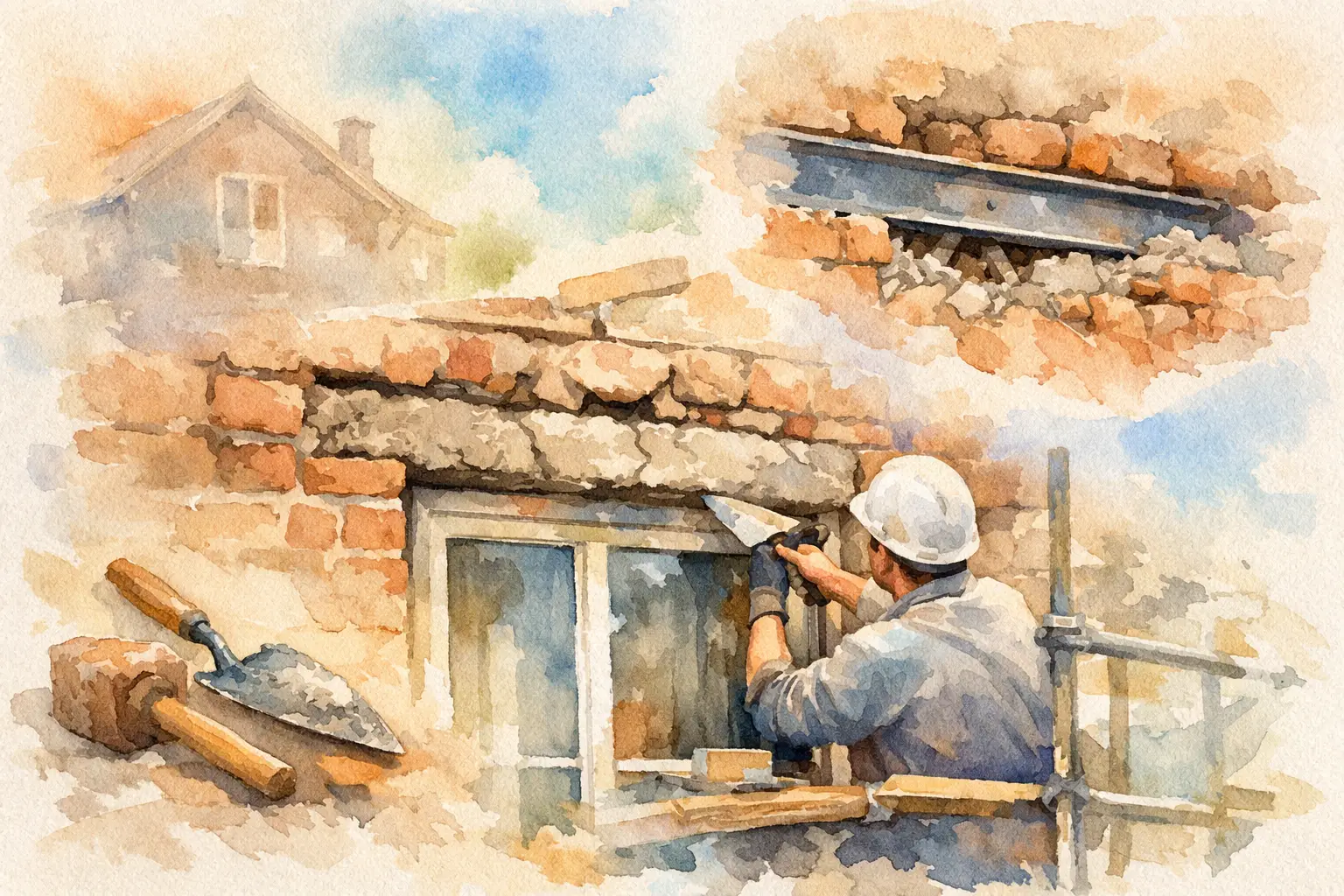
What Are Lintel Repairs and Why Are They Important?
A crack spreading from the corner of a window, brickwork lifting above a door or a window frame that suddenly sticks can point to more than a cosmetic problem. What are lintel repairs and why are they important? They are the repair or replacement of the horizontal support above an opening, and they help keep the brickwork, masonry and the opening below it safely supported.
Lintel problems are common in older properties across Central Scotland, where years of rain, frost, movement and corroding steel can take their toll on external walls. Addressing the issue early is usually simpler, less disruptive and more cost-effective than waiting for loose masonry, water ingress or a failing window opening to force urgent work.
What Is a Lintel?
A lintel is a structural beam fitted above a window, door, garage opening or other gap in a wall. Its job is to carry the weight of the masonry or wall above, transferring that load to the brickwork or stonework at either side of the opening.
Lintels can be made from steel, concrete, stone, brick, timber or a combination of materials, depending on the age and construction of the building. Modern cavity walls often use steel cavity lintels, while many traditional homes have stone, brick arch or timber lintels hidden behind render or roughcast.
When a lintel deteriorates, bends, cracks or loses adequate bearing at either end, the wall above can no longer be properly supported. The result may be cracking, displaced masonry and damage to the window or door below.
What Are Lintel Repairs and Why Are They Important for Your Property?
Lintel repairs cover a range of work, from stabilising localised damage to removing and replacing a failed lintel. The right approach depends on the material, the extent of deterioration, the construction of the wall and whether there is still sound support around the opening.
For minor issues, a repair may involve renewing damaged mortar joints, replacing isolated bricks, treating exposed steel or repairing failed render that has allowed water into the structure. Where corrosion, cracking or movement has compromised the lintel itself, replacement is often the safer long-term option.
This work matters because lintels are not decorative features. They are load-bearing components. A fresh coat of paint or a patch of mortar may hide a crack for a while, but it will not solve a corroded steel lintel that is expanding behind the brickwork or a concrete lintel that has fractured. Proper repairs deal with the cause as well as the visible damage.
Signs That a Lintel May Need Attention
Not every crack around a window means the lintel has failed. Buildings settle, render can shrink and minor movement can occur with changing temperatures. However, certain signs should be assessed by an experienced building contractor, particularly if they are worsening.
Look out for:
- stepped cracks running through brick mortar above, beside or diagonally from a window or door;
- bricks that appear lifted, pushed outwards, loose or uneven above an opening;
- rust staining, flaking render or spalling brickwork where a steel lintel may be corroding;
- doors and windows that become difficult to open, close or lock;
- visible sagging, cracking or crumbling in the masonry directly over an opening; and
- damp patches around the head of a window, especially after heavy rain.
Rust staining is particularly telling on homes with older steel lintels. As steel rusts, it expands. That expansion puts pressure on surrounding brickwork and render, causing cracks and eventually forcing masonry out of position. Simply filling the crack without addressing the steel can leave the problem to develop behind the surface.
Why Water Makes Lintel Defects Worse
Water is often part of the story. Failed pointing, cracked roughcast, defective window seals, blocked gutters or leaking roof details can repeatedly soak the wall above an opening. In winter, trapped moisture can freeze and expand, widening small cracks and weakening mortar.
On cavity walls, poor protection around the lintel can also allow water to travel towards the internal leaf of the wall. This may lead to damp around the window reveal, stained plaster or mould growth indoors. The source is not always obvious, which is why an inspection should look beyond the crack itself.
A sound lintel repair may include associated building work, such as renewing flashings, repointing brickwork, repairing render or correcting rainwater goods. There is little value in installing a new lintel if the same water route is left open above it.
How Professional Lintel Repairs Are Carried Out
A proper repair begins with identifying the lintel type and confirming what has caused the damage. The surrounding brickwork, wall condition, opening width and condition of the window or door all need to be considered. In some cases, the visible crack is localised; in others, it is evidence of wider movement or long-term water penetration.
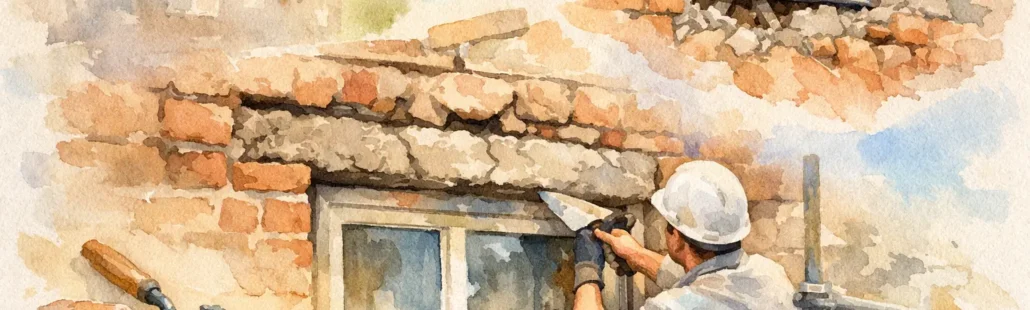
If replacement is required, the area above the opening is carefully supported before affected bricks or render are removed. The damaged lintel can then be taken out and a correctly specified replacement installed with sufficient bearing at each end. The masonry is rebuilt, joints are finished to match where possible, and the surrounding surface is made good.
The work must be carried out in the correct sequence. Supporting the wall properly is essential, as is using a lintel suitable for the load and wall construction. A window may also need temporary protection or, in some situations, removal and refitting to allow the work to be completed safely.
For a rendered or roughcast property, matching the repaired area may take additional care. A new patch can look noticeably different at first, particularly where the existing finish has weathered over many years. A contractor should be upfront about this and discuss the best option, whether that is a localised repair or treating a larger section for a more consistent appearance.
Repair or Replacement: Which Is the Right Choice?
The decision is rarely based on appearance alone. Surface rust on an exposed lintel may be treatable if the steel remains sound and the surrounding masonry is stable. A cracked mortar joint can often be renewed. But if a steel lintel has expanded significantly, a concrete unit has broken, or bricks are moving out of line, replacement is generally the more dependable solution.
Replacement can cost more initially because it involves temporary support, removal of masonry and reinstatement work. Yet repeated patch repairs to a failed lintel can become more expensive over time, particularly if water damage spreads or a window frame is distorted.
The age of the property also affects the approach. Traditional stone buildings require sympathetic work to avoid damaging original masonry, while modern cavity walls need the right lintel and damp-control detailing. There is no one-size-fits-all repair, and a site inspection is the sensible starting point.
The Risks of Delaying Lintel Work
A small crack may seem easy to live with, but structural defects do not normally improve without intervention. As movement continues, brickwork can become unstable and water can find its way deeper into the wall. The opening may gradually lose its shape, putting pressure on frames, glazing and internal finishes.
For landlords and commercial property owners, unresolved lintel issues can also create maintenance and safety concerns around entrances, shopfronts or occupied rooms. Loose masonry above a doorway should never be ignored.
Early repair protects more than the wall. It helps preserve the condition of your windows and doors, limits damp-related repairs and maintains the appearance and value of the property. It can also prevent a modest external repair from becoming a larger building project later.
Choosing a Contractor for Lintel Repairs
Lintel work sits between structural building repair and external property maintenance, so experience matters. A reliable contractor should inspect the opening closely, explain whether repair or replacement is recommended and set out any associated work needed to stop water returning.
Ask how the wall will be supported, what lintel material will be used, how the brickwork or render will be reinstated and whether the work is insured and guaranteed. Clear answers are a good sign that the job has been assessed properly rather than priced from a photograph alone.
For homeowners in Falkirk and nearby areas, FK Roofing can assess lintel damage alongside roof, chimney, roughcast and other exterior issues that may be contributing to water ingress. A free, no-obligation quote gives you a clear view of the work required before damage has the chance to spread.
If you have noticed cracking above a window or door, arrange an inspection while the issue is still manageable. Sound support above an opening is one of those parts of a property you rarely think about – until it needs attention.