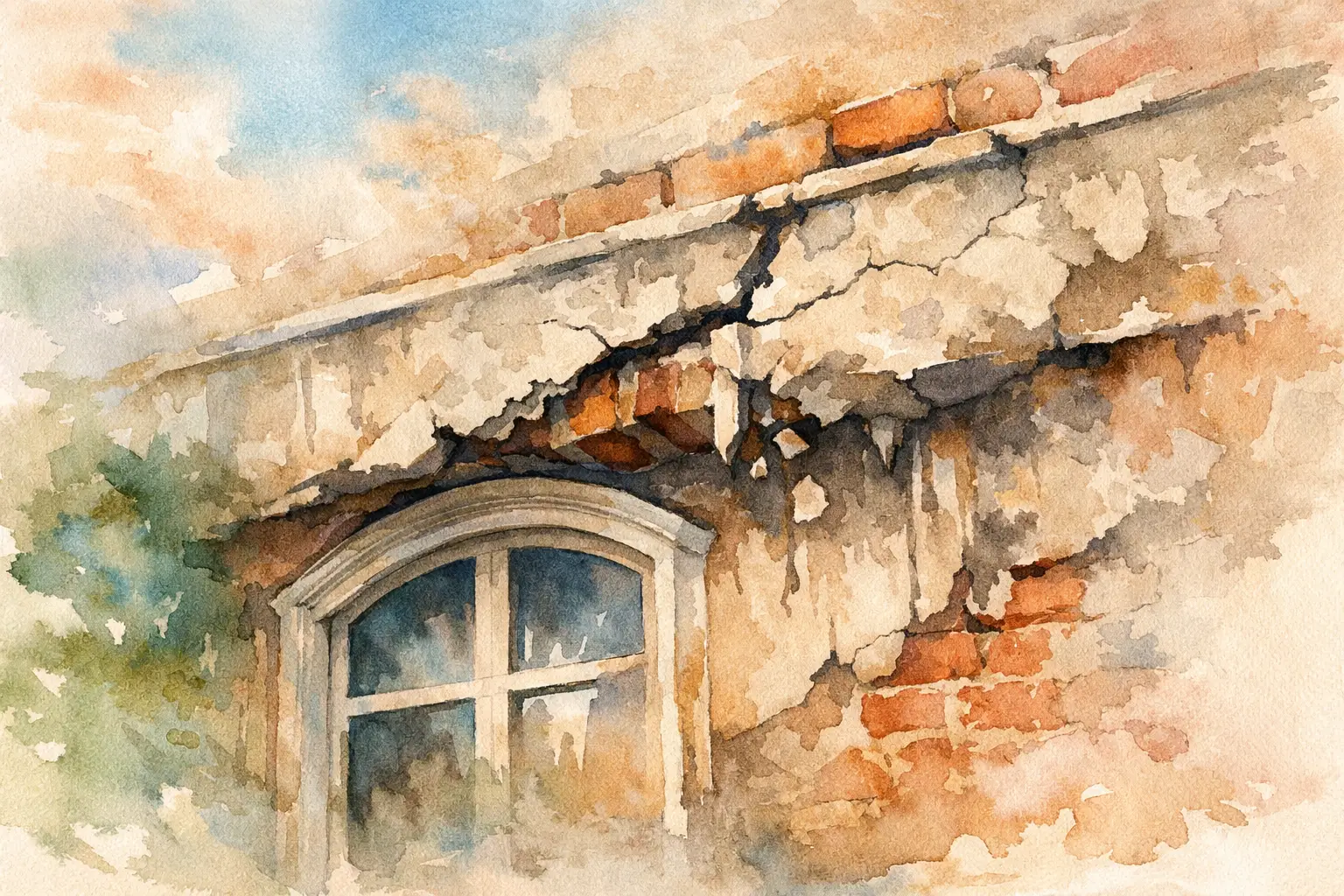
Signs of Lintel Damage You Should Not Ignore
A crack above a window may look like a small cosmetic issue, but it can be one of the clearest signs of lintel damage. The lintel is the horizontal support that carries the brickwork or masonry above a door, window or garage opening. When it begins to fail, the weight above can no longer be distributed properly, allowing cracks, movement and water penetration to develop around the opening.
In Central Scotland, repeated rain, frost and wind can expose weaknesses in older masonry quickly. Early attention is usually simpler and less disruptive than waiting until brickwork loosens, windows become difficult to use or internal finishes start cracking.
What does a lintel do?
A lintel sits directly above an opening and transfers the load of the wall above to the masonry at either side. It may be made from steel, concrete, stone or timber, depending on the age and construction of the property.
Steel lintels are common in modern homes, while older properties may have stone or timber supports. Each material can deteriorate differently. Steel may corrode as moisture reaches it, concrete can crack or spall, and timber can rot where water has been allowed to enter the wall. The result is often movement in the brickwork around the window or door rather than an obvious problem with the lintel itself.
The most common signs of lintel damage
Cracks running from the corners of windows or doors
Diagonal cracks that start at the top corners of an opening and travel out through the mortar joints or bricks deserve attention. They often form because the masonry is no longer being supported evenly. A stair-step crack following the mortar joints is particularly common in brickwork.
Not every crack means a failed lintel. Minor hairline cracking can result from seasonal movement, plaster shrinkage or previous repairs. However, cracks that widen, lengthen, reappear after filling or are visible both inside and outside should be assessed properly.
Cracked, displaced or loose brickwork above an opening
Look closely at the bricks immediately above windows, doors and garage openings. Bricks that appear to be dropping, bulging forward, separating from mortar or sitting unevenly can indicate that the lintel has moved or deteriorated.
Loose masonry is not a repair to put off, especially above an entrance or frequently used path. It can become a safety concern as well as a source of further damage to the wall.
Rust staining and damaged render
Where a steel lintel is present, water can cause corrosion. Rust expands as it develops, placing pressure on the surrounding masonry, render or roughcast. You may notice brown-orange staining, cracks in the render line above the opening, or a strip of render beginning to lift away.
The rust visible on the surface is often only part of the problem. Once water has reached a steel lintel, the surrounding area needs investigating to identify why moisture is getting in and whether the metal has lost significant strength.
Windows and doors that stick or no longer sit square
A window that suddenly catches, a door that will not latch cleanly or new gaps around a frame can be related to movement in the opening. This does not automatically mean the frame is faulty. If the masonry around it is shifting, the frame can become distorted.
Check whether the issue is accompanied by cracking above the opening or gaps between the frame and surrounding wall. These combined symptoms make a lintel or masonry problem more likely than a simple adjustment issue.
Gaps between the frame and masonry
Sealant around windows and doors does age, particularly on exposed elevations. But a widening gap at one corner, cracked pointing around the reveal, or a frame pulling away from the brickwork may signal movement rather than ordinary sealant failure.
Water can enter through these gaps and worsen the cycle. Damp reaches the lintel or wall cavity, materials deteriorate, and the opening becomes more vulnerable to further movement during wet and freezing weather.
Internal cracks, damp patches or flaking finishes
Lintel problems can also show inside the property. Cracks above a window reveal, a damp patch at the head of an opening, blistering paint or crumbling plaster may indicate water penetration or movement in the external wall.
Internal symptoms alone are not enough to diagnose the cause. Condensation, roof defects and failed window seals can create similar marks. A professional inspection should consider the external wall, pointing, render, roofline and flashings where relevant, rather than treating the visible internal damage in isolation.
Why lintels fail
Most lintel damage develops over time. The common cause is water ingress, often through cracked pointing, failed render, defective seals, poorly directed rainwater or deteriorated masonry above the opening. On a steel lintel, trapped moisture causes corrosion. On a concrete lintel, frost action and water penetration can lead to cracking and sections breaking away.
Poor original installation can also contribute. A lintel needs suitable bearing at each end so it can transfer the wall load safely. If it is too short, inadequately supported or incorrectly installed, cracks may appear earlier than expected.
Movement elsewhere in the building is another possibility. Settlement, nearby alterations, an ageing wall tie system or structural movement can all create cracking around openings. This is why it is sensible to have the cause diagnosed before agreeing to a repair. Repointing over an active crack may improve the appearance for a short time, but it will not correct a failing support.
When should you arrange an inspection?
Arrange an inspection promptly if a crack is growing, brickwork is loose, a window or door is noticeably distorted, or there is visible rust and spalling above an opening. The same applies if cracking appears after severe weather, building work or a sudden impact.
Avoid removing loose masonry yourself or forcing a sticking window into place. Do not rely on filler, caulk or paint to conceal the issue. These can hide useful evidence and may allow water to remain trapped behind the finish.
A competent contractor can inspect the opening, assess the condition of the brickwork and lintel, and identify likely routes of water ingress. Where there are signs of wider structural movement, a structural engineer may be needed. It depends on the pattern and severity of the damage, the property type and whether the opening has visibly moved.
What a proper lintel repair may involve
The right repair is based on the condition of the existing lintel and wall. In some cases, deteriorated pointing, cracked render and failed sealing can be repaired before they cause major damage. Where corrosion or structural deterioration is established, the affected masonry may need to be carefully supported while the old lintel is removed and replaced.
A proper repair commonly includes making the area safe, installing a correctly sized replacement lintel, rebuilding disturbed brickwork, renewing damaged pointing or roughcast, and sealing the wall against further water entry. The finish matters, but the priority is restoring support and addressing the reason the lintel deteriorated in the first place.
Access, the opening size and the type of external finish affect the cost and duration of work. A small window lintel with straightforward access is very different from a wide garage opening, a stone-built wall or an area hidden behind a conservatory roof. A clear site inspection and written quote help make the scope of work understandable before repairs begin.
Protecting your property before damage spreads
A quick visual check after winter can help you spot changes early. Look over exposed window heads, door openings, rendered sections and areas beneath leaking gutters or overflowing downpipes. Take dated photographs of any cracks so you can tell whether they are changing rather than relying on memory.
If you are concerned about cracking or movement around an opening, FK Roofing can assess the external condition of your property and advise on a practical repair. Acting while the problem is limited can protect the masonry, reduce the chance of water damage and keep a small warning sign from becoming a larger building repair.