Your Guide to the Roof Replacement Process
A roof rarely fails at a convenient time. A persistent leak after heavy rain, loose slates on the ground or daylight visible in the loft can quickly turn a maintenance concern into a pressing decision. This guide to the roof replacement process explains what should happen from the first inspection to the final clean-up, so you can plan work with confidence rather than guesswork.
A replacement is a significant investment, but it is also a chance to protect the structure of your property, improve its appearance and deal with related issues before they become more expensive. For homes across Falkirk and Central Scotland, where wind and rain put roofs under regular pressure, getting the process right matters.
Start by confirming replacement is necessary
Not every ageing roof needs to be stripped and renewed. Isolated slipped slates, damaged flashing around a chimney or a small leak may be resolved with a targeted repair. A professional inspection should identify the cause of the problem rather than simply treat the visible symptom.
Replacement becomes more likely when defects are widespread. Signs include repeated leaks in different areas, cracked or missing tiles across the roof, sagging roof lines, deteriorated underlay, rotten battens or extensive mortar failure at the ridge and verges. If repairs are becoming frequent, the cost and disruption can eventually outweigh the benefit of extending the roof’s life a little longer.
The roof covering is only one part of the picture. The survey should also consider chimney stacks, leadwork, gutters, fascias, soffits and the condition of the roof structure beneath. Addressing connected external work in one planned project can be more practical than arranging separate visits later.
What a roof replacement survey should cover
A proper survey gives you a clear basis for a quotation and helps prevent surprises once work starts. The contractor will normally assess the roof from ground level and, where safe and appropriate, inspect closer details such as valleys, flashings, ridge tiles and roof edges. The loft space may also reveal signs of water ingress, inadequate ventilation or timber deterioration.
The survey should establish the roof’s size, pitch, access requirements and the type of materials already in place. Natural slate, concrete tiles, clay tiles and flat-roof coverings all have different installation methods, costs and lifespans. Matching the existing appearance may be important for the character of the property, while a change of material may be possible in some circumstances.
It is also the time to discuss practical issues. Will scaffolding be needed? Is there suitable access for deliveries and waste removal? Are there conservatories, solar panels, roof windows or neighbouring properties that need particular protection? Clear answers at this stage make for a safer, smoother job.
Choosing materials for your property
The best material is not always the most expensive one. It depends on the roof design, the surrounding properties, your budget and the finish you want. Slate offers a traditional appearance and excellent longevity, but the initial cost can be higher. Concrete tiles are durable, widely available and often provide strong value, though they can be heavier and may not suit every roof structure without assessment.
A replacement roof should include more than the visible covering. Quality breathable membrane, correctly spaced battens, suitable fixings and well-finished leadwork are essential to weatherproofing. Ridge systems, verge protection and ventilation should be specified for the particular roof rather than added as vague extras.
Understanding the quotation and timescale
A useful quotation sets out exactly what is included. It should cover scaffolding, removal and disposal of old materials, replacement roof coverings, membrane, battens, leadwork, ridge and verge work, and any agreed repairs to timber, chimneys or roofline components. Ask how unexpected defects will be handled if they are found after the old roof is removed.
Price matters, but it should not be the only comparison point. A low figure can leave out essential elements such as waste disposal, flashing work or scaffolding. Comparing like for like protects you from an apparently cheap quote that grows once the project is underway.
Weather affects roofing schedules. Dry, settled conditions allow work to progress more quickly, while high winds, heavy rain or frost can make parts of the job unsafe. A competent contractor will protect exposed areas as work progresses and will not compromise safety merely to meet an unrealistic date. For a typical house, the main roofing work may take several days, but larger roofs, complex valleys, structural repairs and poor weather can extend the programme.
Preparing your home before work begins
Roof replacement is external work, but it can still affect daily life. Scaffolding will alter access around the property, and there will be periods of noise from stripping materials, fixing battens and cutting tiles or slates. Let neighbours know in advance, especially if access, parking or shared boundaries could be affected.
Inside the house, remove fragile items from loft storage and cover belongings where dust may be an issue. Vibration can occasionally disturb items on walls or shelves, so it is sensible to secure valuables. Keep children and pets away from working areas, and agree access arrangements with the roofing team before the start date.
If your driveway is needed for a skip, deliveries or a lorry carrying scaffolding, move vehicles beforehand. Good preparation allows the team to start efficiently and helps keep your property tidy and safe throughout the project.
The roof replacement process, step by step
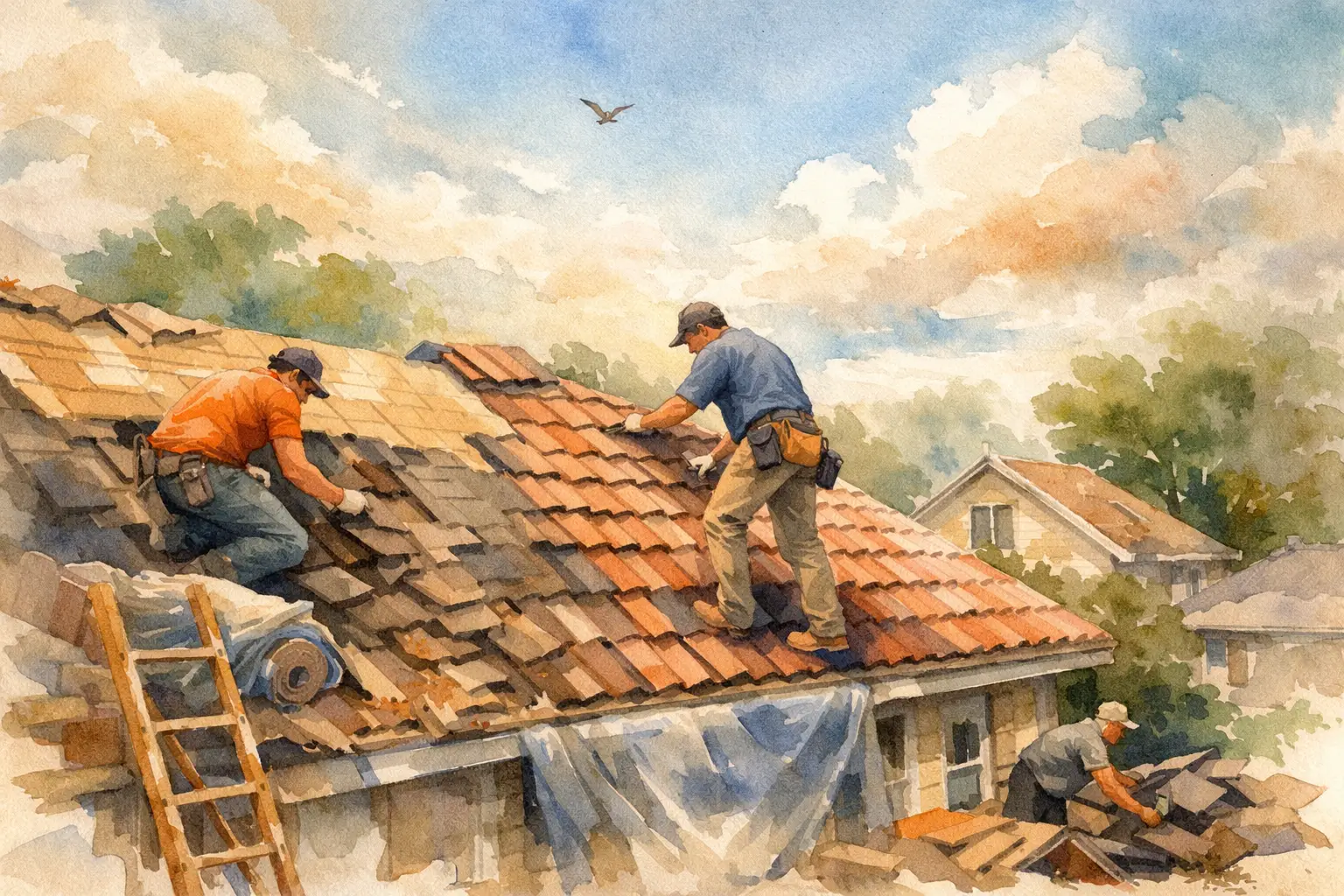
Once scaffolding and safety measures are in place, the old roof covering is carefully removed in sections. The team should avoid leaving large areas exposed unnecessarily, particularly where changeable weather is expected. Old tiles, slates, felt and damaged battens are taken away for disposal.
With the covering removed, the condition of the roof deck, rafters and supporting timbers becomes clear. Minor repairs may be straightforward, while more extensive rot or structural movement needs to be discussed before proceeding. This is why a sensible contingency in the budget is helpful, especially on older properties where hidden defects are more likely.
New breathable membrane is then installed to provide a secondary layer of weather protection, followed by battens fixed at the correct gauge for the selected tiles or slates. The new covering is laid securely, with careful attention to valleys, abutments, roof windows, chimneys and edges. These detailed areas are where many leaks originate when workmanship is poor.
The final stages include ridge and hip work, lead flashing, verge finishes and gutter connections. If fascias, soffits or gutters are being renewed, completing them alongside the roof can give the property a cleaner finish and ensure water is directed away effectively.
Final checks, guarantees and aftercare
Before scaffolding comes down, the completed roof should be checked for alignment, secure fixings, correctly formed flashings and tidy finishes. The site should be cleared of debris, including stray nails and broken tile fragments. Ask for confirmation of the workmanship guarantee and any manufacturer information that applies to the materials used.
A new roof does not mean maintenance can be ignored forever. Check it visually after severe storms, keep gutters clear and arrange prompt attention for damaged flashing, loose ridge components or blocked outlets. Avoid walking on the roof yourself, as this can damage materials and creates an unnecessary safety risk.
For landlords and owners of small commercial buildings, keep copies of quotations, invoices, guarantees and photographs of the completed work. These records are useful for maintenance planning, insurance discussions and future property sales.
A roof replacement should leave you with more than new tiles or slates. It should give you confidence that the property is protected by sound materials, careful workmanship and clear accountability. If you are concerned about the condition of your roof, a no-obligation inspection and detailed quote from an experienced local contractor such as FK Roofing is the sensible place to start.