9 Conservatory Roof Conversion Benefits
A conservatory should feel like part of the home, not the room you avoid in January and shut off in July. That is usually where conservatory roof conversion benefits become clear. If your conservatory is too hot, too cold, too noisy or simply underused, replacing the existing roof can turn it from a seasonal extra into a practical living space.
For many homeowners, the issue is not the conservatory itself. The footprint works, the light is welcome, and the extra room is useful. The problem is the roof. Older glass or polycarbonate systems often struggle with temperature control, condensation and external noise, especially in exposed areas where wind and rain are part of normal life.
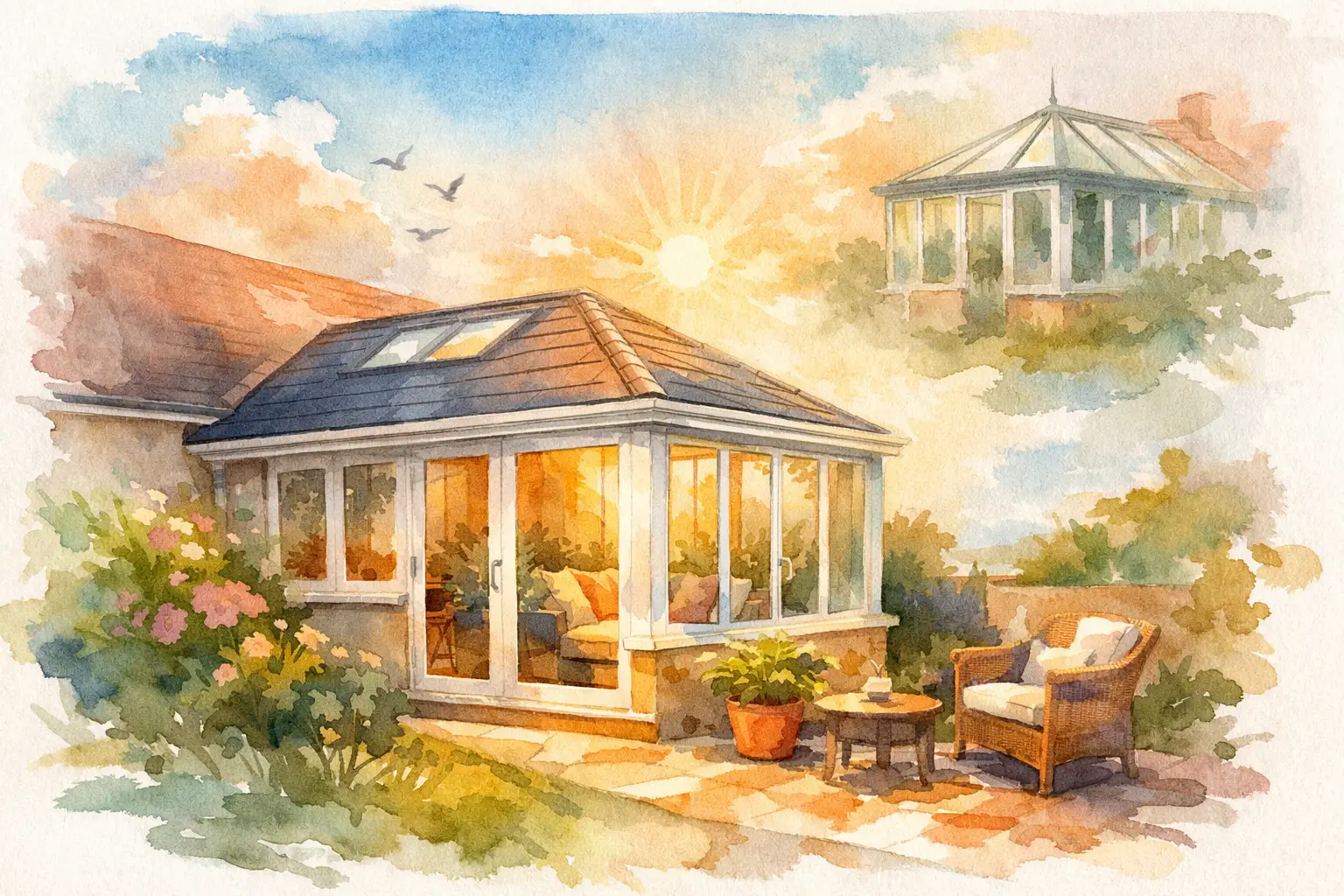
A roof conversion changes how the whole space performs. It can improve comfort, reduce heat loss and give the room a more solid, finished feel. It can also make better use of a room you already have, which is often far more cost-effective than planning a full extension.
Why conservatory roof conversion benefits matter
Most conservatories are built with good intentions. They add space quickly and bring in plenty of natural light. Over time, though, many homeowners find the room becomes difficult to use for large parts of the year.
That tends to show up in familiar ways. In winter, the space feels cold no matter how high the heating goes. In summer, it becomes stuffy and uncomfortable. During heavy rain, conversation has to compete with noise on the roof. If that sounds familiar, the room may be there physically, but it is not doing its job properly.
A conversion deals with the source of the problem rather than the symptoms. Instead of relying on blinds, heaters or fans to make the room tolerable, it improves the actual structure overhead. That is why the benefits are usually felt day to day, not just on paper.
Better temperature control all year
This is often the biggest reason people choose a conversion. A well-built solid or tiled conservatory roof offers far better insulation than many older roof systems. That helps keep heat in during colder months and reduces excessive solar gain when the weather warms up.
The result is a room with a steadier temperature. You are less likely to walk into it and feel an immediate chill or wave of heat. For households that want to use the space as a dining room, playroom, office or second sitting room, that difference is significant.
There is a practical point here too. Better temperature control can reduce the need for constant heating or cooling. That does not mean every home sees dramatic savings overnight, because it depends on the existing conservatory, the new roof system and how the room is used. Even so, improved thermal efficiency is one of the clearest conservatory roof conversion benefits for properties with ageing roofs.
A quieter, more comfortable room
Rain on a lightweight conservatory roof can be loud enough to dominate the room. Wind can add rattling and draughts. If your conservatory backs onto a road or sits in an exposed position, outside noise can make the room feel less restful than the rest of the house.
A roof conversion can help reduce that. Heavier, properly installed materials with suitable insulation tend to soften the sound of rain and improve the overall feel of the room. It is not silence, and no contractor should pretend otherwise, but it is often a noticeable improvement.
That matters more than many people expect. A room that feels calmer is a room people actually choose to sit in. For families using the space every day, comfort is not a luxury. It is the difference between a room that works and one that gets ignored.
A more usable room with a better finish
A converted conservatory often feels closer to a proper extension than a basic add-on. Internally, a new roof can create a more finished ceiling line and a stronger sense that the room belongs with the rest of the property.
That can change how the space is used. Instead of a stop-gap area for drying clothes or storing furniture, it becomes somewhere you can furnish properly and enjoy throughout the year. Many homeowners use the room as a family area, home office or dining space once the roof has been upgraded.
There is also an aesthetic benefit from outside. A tiled or solid-style roof can look more in keeping with the main house, especially if the original conservatory roof looks dated. The exact result depends on the property style, but in many cases it helps the conservatory sit more naturally within the home.
Lower glare and better light balance
People often worry that replacing a glass or polycarbonate roof will make the room too dark. In practice, many older conservatories suffer from the opposite problem. They let in so much direct light and glare that the room becomes uncomfortable for reading, working or watching television.
A well-designed conversion can create a better balance. Some roofs include glazed sections or roof windows to retain natural light while improving insulation and comfort. Others rely on the existing windows and doors around the conservatory, which may still provide plenty of daylight.
This is one of those areas where it depends on the design. If maximum overhead light is your priority, the roof system needs careful planning. If your main concern is making the room more usable, reducing glare can be a genuine advantage rather than a compromise.
Less condensation and fewer ongoing issues
Condensation is a common complaint with older conservatories. When warm indoor air meets a cold roof surface, moisture builds up. That can lead to drips, damp patches and a generally uncomfortable environment.
A better insulated roof can help reduce that problem by improving the internal surface temperature and overall thermal performance. It can also support a healthier room with fewer cold spots and less moisture hanging in the air.
That said, condensation is not always just about the roof. Ventilation, heating patterns and the general condition of the conservatory also play a part. A good contractor will look at the whole setup rather than suggesting the roof alone solves every issue.
Potential boost to property appeal
Home improvements are rarely just about resale, but value still matters. A conservatory that feels cold, dated or impractical may not add much in the eyes of future buyers. A converted roof can make the room more attractive because it improves comfort, appearance and usability.
Buyers tend to respond well to space that feels ready to use. If a conservatory seems like a room they can enjoy all year, it becomes a stronger asset. That does not mean every conversion adds the same amount of value, and market conditions always matter, but it can improve overall property appeal.
For landlords and property owners, that can also support lettability. A more functional extra room gives the property broader appeal without the cost and disruption of a full extension.
Conservatory roof conversion benefits versus a full extension
For some homes, an extension is the right long-term answer. If the conservatory is structurally poor, undersized or no longer suits the layout, starting again may make more sense. But where the existing base and framework are in good condition, a roof conversion can be a practical middle ground.
It is usually quicker, less disruptive and more affordable than building a new extension from scratch. You are improving a room that already exists rather than creating an entirely new one. That can make it an appealing option for homeowners who want meaningful change without taking on a major building project.
The key is getting honest advice on the condition of the existing structure. The roof can only perform properly if the conservatory beneath it is suitable to carry the upgrade and is in sound overall condition.
Choosing the right contractor matters
The best results come from more than good materials. Proper assessment, correct installation and attention to finishing details all matter. A roof conversion affects insulation, ventilation, structural loading and the appearance of the room, so it is not a job to approach casually.
For homeowners in places such as Falkirk, Stirling or Alloa, weather performance is a real consideration. Heavy rain, wind exposure and winter temperatures mean the work needs to be carried out to a high standard. A local contractor with experience in roofing and external building work is often better placed to advise on what will suit the property and hold up well over time.
This is also where guarantees, insurance and clear quotations count. A lower upfront price can be tempting, but if the workmanship is poor, the room may still suffer from draughts, cold spots or finishing issues later on.
Is a conversion right for every conservatory?
Not always. If the existing conservatory has failing frames, movement in the base or significant structural defects, a roof conversion may not be the best answer on its own. In other cases, planning or building regulation requirements need to be considered depending on the scope of the work.
That is why a proper inspection matters. A trustworthy contractor should explain whether your conservatory is suitable, what type of roof would work best and what results you can realistically expect. Straightforward advice at the start usually saves disappointment later.
If your conservatory is sound but uncomfortable, underused and expensive to heat, a roof conversion is often one of the most sensible upgrades you can make. The best improvement is not always the biggest one. Sometimes it is the job that finally makes a wasted room feel like home.