Lintel Repair for Window Cracks Explained
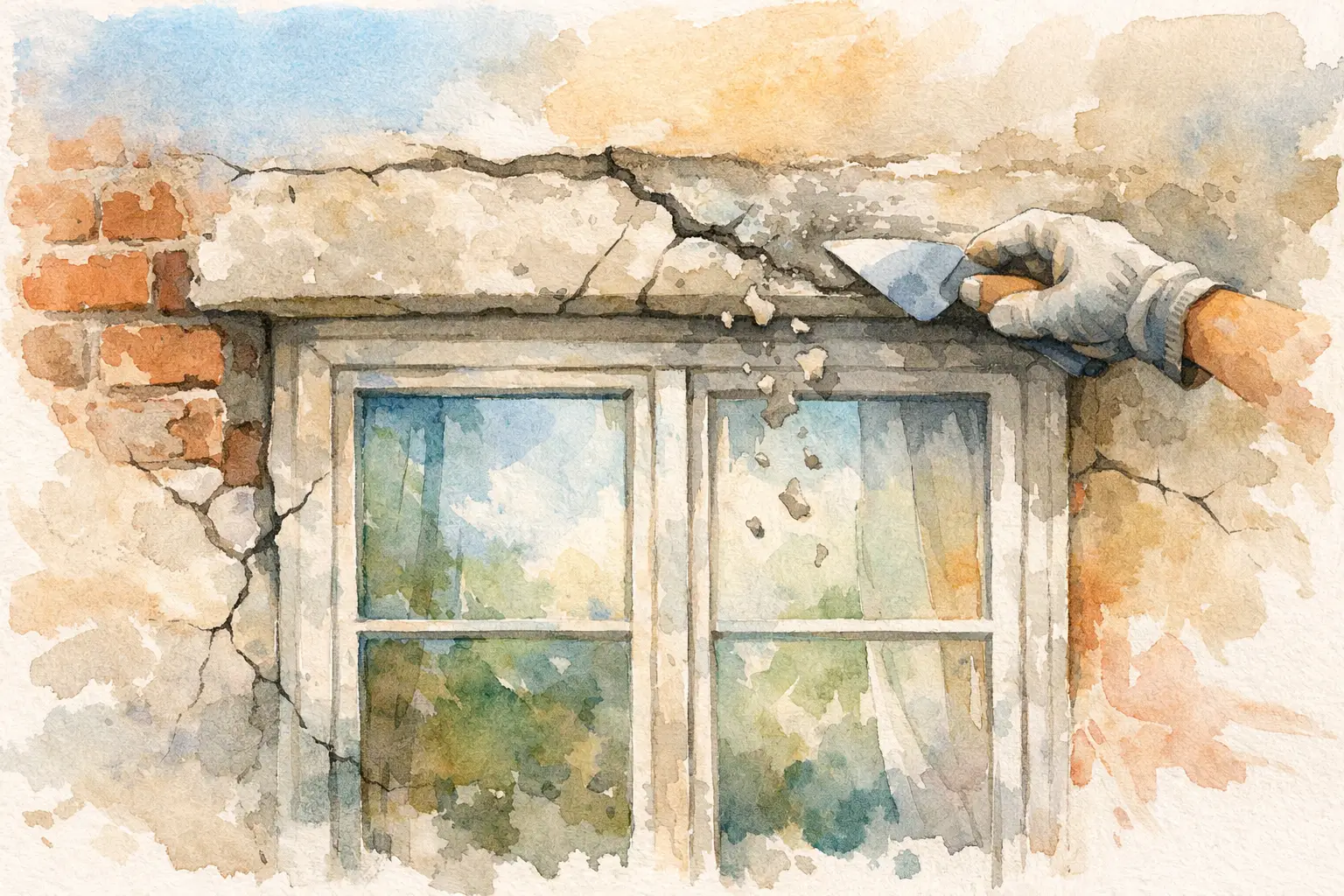
A crack running out from the top corner of a window is easy to dismiss as an old plaster issue. But when the crack follows a diagonal line, widens over time or appears in the external brickwork as well as indoors, it can point to a failing lintel. Lintel repair for window cracks deals with the structural support above the opening, rather than simply covering the visible damage.
A prompt inspection can prevent a small defect becoming a more disruptive building repair. It also gives you a clear answer on what is happening around the window and what work is genuinely required.
Why window cracks can indicate a lintel problem
A lintel is the horizontal support installed above a window or door opening. Its job is to carry the weight of the masonry above and transfer it safely to the walls at either side. Most properties have concrete, steel or stone lintels, although the material and condition can vary greatly with the age of the building.
When a lintel deteriorates, shifts or no longer supports the brickwork properly, pressure around the opening changes. Cracks can then develop from the upper corners of the window, usually at an angle. You may also notice mortar joints opening, loose render, damaged brick faces or a slight dip in the masonry above the frame.
Not every crack means the lintel has failed. Fine, stable cracks in internal decoration can be caused by normal movement, previous repairs or changes in temperature. The concern is greater where cracks are visible outside, are getting larger, reappear after filling, or are accompanied by a stiff window, gaps around the frame or signs of water penetration.
Signs you should arrange lintel repair for window cracks
The pattern of cracking matters as much as the size. A professional assessment is worthwhile if you see one or more of the following signs:
- Diagonal cracks extending from the top corners of a window or door
- Crumbling, spalled or rust-stained concrete above the opening
- Bricks or render that look loose, bowed or displaced
- Cracks that continue through internal plaster and external masonry
- A window frame that has started sticking, dropping or separating from the wall
Rust staining deserves particular attention. Older steel lintels can corrode where moisture reaches the metal. As steel rusts, it expands, forcing apart the surrounding mortar, render or brickwork. What begins as a narrow crack can gradually lead to broken masonry and an opening that no longer has reliable support.
If the wall is visibly bulging, bricks are loose, or cracking has appeared suddenly after a storm or impact, avoid disturbing the area and arrange an inspection without delay. These signs do not automatically mean a major structural issue, but they should not be left to develop.
What causes lintels to deteriorate?
Water is a common cause. Failed pointing, cracked render, leaking gutters, damaged flashing or poor drainage around the opening can allow rainwater into the masonry. In Central Scotland, repeated wet weather and freeze-thaw cycles can accelerate damage to concrete, mortar and exposed steel.
Age also plays a part. Concrete lintels may crack as reinforcement corrodes inside them, while older stone lintels can fracture or settle under years of loading. In some properties, an unsuitable or undersized lintel may have been fitted during earlier alterations. Replacing windows without addressing damaged masonry can also conceal an existing problem rather than solve it.
Movement elsewhere in the building can produce similar cracking. Settlement, thermal movement, timber decay around an opening and more serious foundation movement may all need to be ruled out. That is why a reliable contractor should inspect the full area, including the condition of the wall, render, pointing, roofline and rainwater goods, before recommending a repair.
How a professional lintel repair is carried out
The right repair depends on the lintel material, the load above it and the extent of the surrounding damage. A sound lintel with minor surface deterioration may only need defective mortar, loose render or damaged concrete removed and repaired. If water ingress caused the issue, the source must be dealt with at the same time or the repair is unlikely to last.
Where the lintel has cracked, corroded significantly or lost its bearing, replacement is often the safer long-term option. The masonry above the opening is carefully supported while the damaged lintel is removed. A correctly sized new lintel is then installed with suitable end bearings before the brickwork, render or internal finish is made good.
This is not a job for cosmetic patching alone. Temporary support and safe sequencing are vital because the wall above the window is carrying weight. The visible finish matters too, especially on a front elevation, but it should come after the support has been properly restored.
Matching the repair to the property
A good repair should suit the construction of the building rather than follow a one-size-fits-all approach. For example, a traditional property with stone detailing may need careful masonry work to retain its appearance. A rendered home may require the render removed back far enough to expose hidden cracking, then reinstated to match the existing finish as closely as practical.
Access can affect the scope and cost. Ground-floor work may be completed from a small access tower, while upper-storey openings can require scaffolding. If window replacement, roofline repairs or external rendering work are already planned, combining the work can sometimes reduce repeat access costs and disturbance.
Why filling the crack is rarely enough
Filler can make a crack look better for a short time, particularly indoors. It does not stop water entering external masonry, reverse corrosion or restore a damaged support. If the underlying lintel is moving or breaking down, the crack will commonly return.
There is a sensible distinction between a decorative repair and a structural repair. Once a contractor has confirmed that the lintel and wall are stable, making good plaster, pointing or render is appropriate. Before that point, filling over the crack can hide useful evidence and delay the work that protects the opening.
The same applies to new windows. A replacement frame may improve draughts, security and appearance, but it cannot compensate for defective masonry above it. Resolving lintel issues first helps ensure the new installation sits within a stable, weatherproof opening.
Questions to ask before agreeing to the work
Ask what has caused the cracking, whether the lintel itself has been inspected and what steps will prevent the problem returning. You should also be clear on whether the quotation includes supporting the masonry, supplying the new lintel if needed, rebuilding damaged brickwork, reinstating render or plaster, and removing waste.
It is reasonable to ask about insurance, workmanship guarantees and the expected timescale. The cheapest quote is not always the best value if it only covers filling and painting while leaving corroded metal, failed pointing or a damaged lintel in place. A clear scope of work makes it easier to compare quotations fairly.
Protecting the area after repair
Once the lintel has been repaired or replaced, keep the surrounding wall maintained. Clear gutters and downpipes, repair leaking joints, and deal with cracked pointing or render before water can track behind the finish. Check the area after severe weather, especially where the window sits below a roof valley, chimney, parapet or overflowing gutter.
For homeowners in Falkirk and the surrounding area, an early site visit is often the simplest way to replace uncertainty with a practical plan. FK Roofing can assess window cracking alongside related exterior issues, explain the repair options in plain terms and provide a free, no-obligation quote. Acting while the damage is localised is usually the best way to protect both the appearance and the structure of your property.