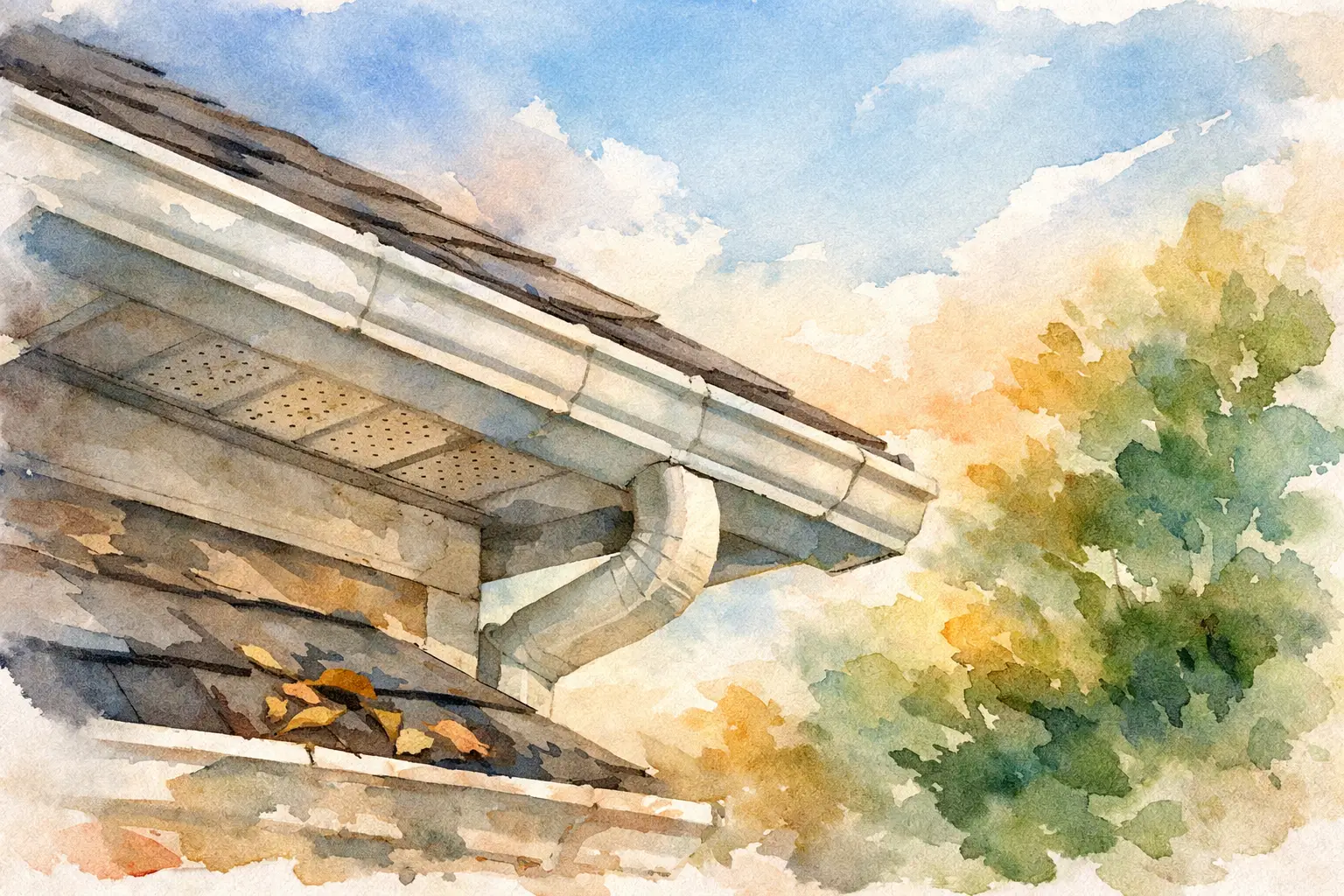
Why Fascias, Soffits & Gutters Need Maintenance
A blocked gutter can look like a small problem from ground level, yet it can send rainwater behind your roofline, into the eaves and down external walls. Fascias, soffits & gutters: why roofline maintenance matters comes down to one simple point – these connected parts direct water away from your home and protect areas that are difficult and expensive to repair once damage takes hold.
In Falkirk and across Central Scotland, roofs are routinely exposed to heavy rain, wind, frost and falling leaves. A roofline that is neglected for even a season or two can develop overflowing gutters, loose boards, damp patches and hidden timber decay. Regular checks and prompt repairs keep these issues manageable rather than allowing them to become a larger roofing or building project.
What the roofline does for your property
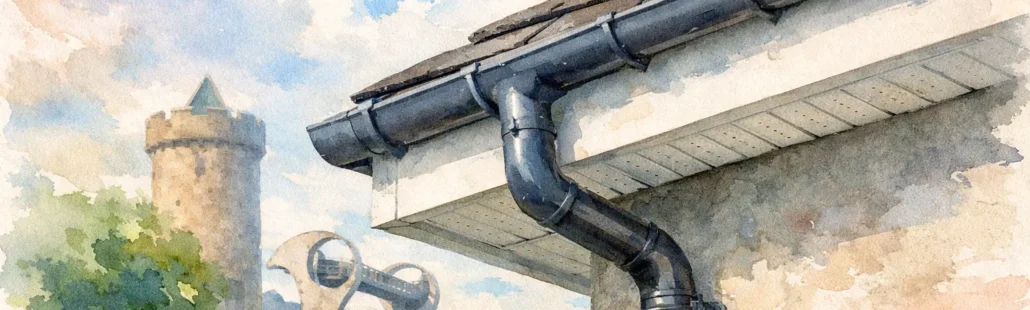
The roofline is the edge of your roof where the covering meets the walls. It includes the fascias, soffits, guttering and downpipes. Although each component has a different job, they work as a system. If one section fails, the others are often affected.
Fascias are the long boards fixed along the lower edge of the roof. They support the gutters and provide a neat finish to the eaves. On many older properties, they are timber and need careful protection from moisture. Modern uPVC fascias are low maintenance, but they can still crack, come loose or be fitted over damaged timber that remains hidden underneath.
Soffits sit beneath the fascia boards, bridging the gap between the outside wall and the roof edge. They protect the underside of the eaves and often include ventilation. That airflow matters because it helps control moisture in the roof space. Without adequate ventilation, condensation can form and contribute to mould, damp insulation and timber problems.
Gutters and downpipes collect rainwater and carry it safely away from the building. When they are clear, correctly aligned and securely fixed, they reduce water exposure around the roof, walls, windows, foundations and entrances.
Fascias, soffits and gutters: why maintenance matters
Rainwater rarely stays where it first lands. When a gutter overflows, water can run behind the fascia, soak into the eaves and track down brickwork or roughcast. The visible stain on an exterior wall may be the first warning sign, while the more serious issue is developing out of sight.
Timber fascias are particularly vulnerable. Repeated wetting causes paint to peel, then allows moisture into the board itself. Over time, the timber softens and rots. Once the fascia loses strength, gutter brackets can pull away under the weight of standing water, leaves or ice. What began as a simple blockage can then involve replacement boards, guttering repairs and possible work to the rafter ends.
Poor roofline maintenance can also affect the inside of a property. Water entering at the eaves may cause damp marks on ceilings, damage to loft timbers or wet insulation. These symptoms are sometimes mistaken for a roof covering failure, so a professional inspection should consider the full roofline rather than focusing only on tiles or slates.
For landlords and owners of small commercial premises, keeping gutters clear also helps protect the building fabric and reduces avoidable maintenance complaints. It is a practical part of looking after an asset, particularly where trees, flat roof outlets or shared drainage routes create extra debris.
The warning signs worth acting on
You do not need to climb a ladder to spot every issue. A visual check from the ground after rainfall can reveal a great deal. Water spilling over the front or back of the gutter, drips at joints, sagging runs and downpipes that discharge close to walls all deserve attention.
Look for peeling paint, black staining, green growth, cracks, gaps at joints and boards that appear uneven. Birds or insects entering gaps around the soffit can also indicate a damaged or poorly fitted section. Inside the loft, a musty smell, visible condensation or dark marks near the eaves may point to ventilation or water-ingress problems.
Some signs are seasonal. In autumn, leaves and moss commonly block outlets and downpipes. During colder weather, trapped water can freeze, adding weight and forcing apart joints. After high winds, it is sensible to check for loose gutter brackets, displaced downpipes and damage caused by branches.
Cleaning helps, but it is not always the full answer
Gutter cleaning is often the right first step, especially when the issue is leaves, moss or general debris. Clearing the gutter channel and outlets allows water to flow as intended. However, cleaning alone will not correct poor falls, damaged seals, undersized guttering or brackets fixed into rotten fascia boards.
A gutter should have a gradual fall towards its outlet. If it is level in places or has dropped between brackets, water can sit in the channel and overflow during heavier rain. Likewise, replacing a leaking joint may solve a local problem, but it will not help if the downpipe is blocked below ground or discharges into a drain that cannot cope.
This is why roofline work should be assessed as a whole. The best repair depends on the condition of the existing materials, the age of the property, the roof pitch and the cause of the water problem. A newer uPVC system may need a straightforward repair, while an older timber roofline may be better served by planned replacement before decay spreads.
Ventilation is a key part of soffit work
Soffits are easy to overlook because they are tucked below the roof edge. Yet their role in roof-space ventilation is significant. Warm air from the home can rise into the loft, and when it meets a cold roof surface it can condense. A properly ventilated roof space helps moisture escape before it settles on timbers or insulation.
Not every soffit needs visible vents, as ventilation arrangements vary between properties. Some roofs use eaves vents, ridge ventilation or other methods. The important point is that a replacement fascia and soffit system should not block the ventilation the roof requires. Covering over old boards without investigating the condition behind them can conceal rot and create a tidier-looking problem rather than a proper repair.
When repair is sensible and when replacement is better
Small leaks at gutter joints, isolated cracked sections and loose brackets can often be repaired quickly. This is usually the most cost-effective route when the rest of the system is sound. Prompt attention is especially worthwhile before winter weather puts extra pressure on the roofline.
Replacement becomes more sensible where timber fascias are extensively rotten, gutters have repeated alignment issues, or several sections are leaking and pulling away. Replacing fascias, soffits, gutters and downpipes together can provide a clean, consistent result and avoids fitting new guttering to boards that are already deteriorating.
There is a trade-off. A targeted repair costs less upfront, but repeated patching on an ageing system can become false economy. A full replacement is a bigger project, yet it can address hidden defects, improve drainage and reduce the ongoing maintenance demands of painted timber. The right choice should be based on an honest inspection rather than a one-size-fits-all recommendation.
A practical maintenance routine
Most homes benefit from a roofline check at least twice a year, commonly in late autumn after leaf fall and again in spring. Properties near mature trees, exposed sites and buildings with conservatories or flat roof sections may need more frequent attention.
From the ground, check that gutters are clear and that downpipes are discharging freely. Keep an eye on overflow during rain, inspect exterior walls for fresh staining and remove vegetation growing from gutters if it can be done safely. Do not lean ladders directly against gutters or attempt high-level work without the right equipment. Damaging a bracket or falling from a ladder turns routine maintenance into a far more serious problem.
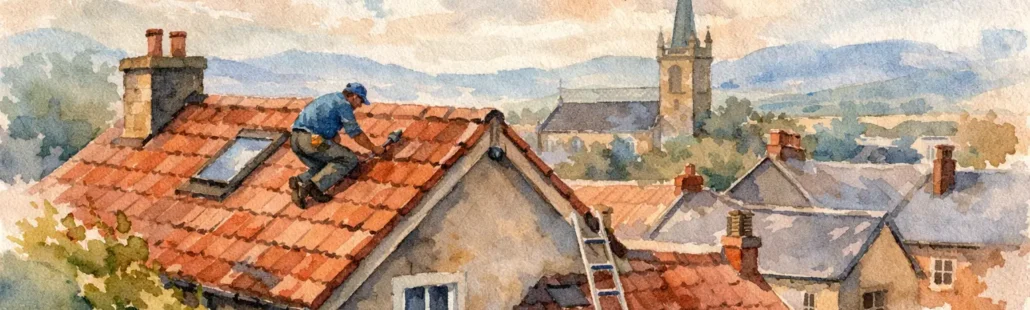
A professional contractor can inspect inaccessible areas, clear gutters safely and identify whether water is coming from the roof covering, flashing, gutter system or wall detail. FK Roofing can assess roofline concerns alongside roofing, chimney and external building repairs, which is useful when more than one issue may be contributing to damp or water ingress.
If your gutters are overflowing, your fascias are showing signs of decay or your soffits appear damaged, deal with it while the repair is still straightforward. A clear route for rainwater and a well-maintained roof edge give your home the protection it needs through every Central Scotland downpour.