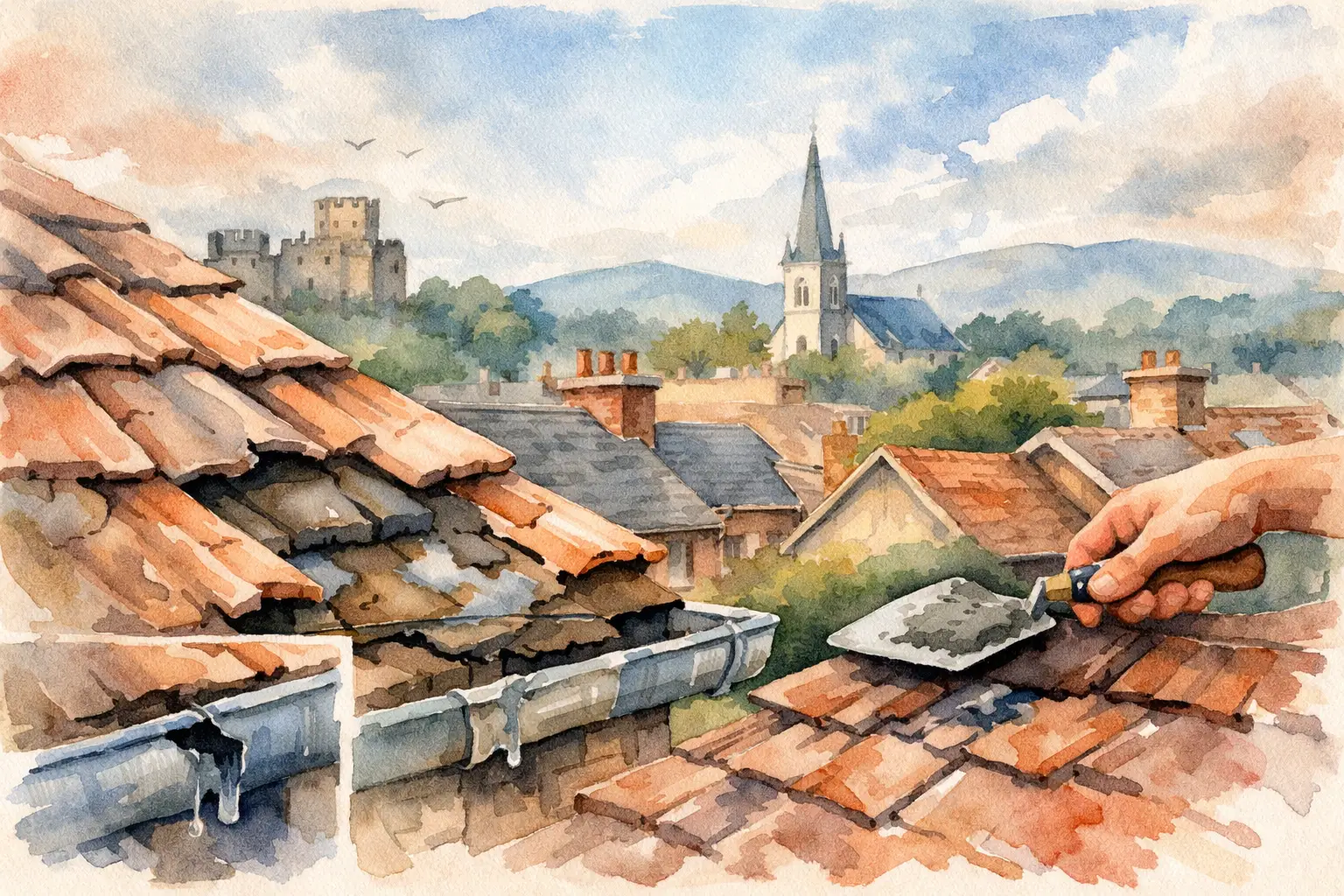
Common Roofing Problems in Falkirk and Fixes
A roof problem rarely starts with a dramatic collapse. More often, it begins with a small water stain on the ceiling, a damp patch in the loft, or a few tiles that have shifted after a spell of bad weather. When people search for common roofing problems affecting homes in Falkirk and how to fix them, they are usually trying to stop a minor issue turning into a much more expensive repair.
That makes early action the difference between a straightforward fix and a larger job involving timber, insulation, plasterwork, or chimneys. Falkirk homes deal with a mix of driving rain, wind exposure, cold winters, and ageing roofing materials, so some faults show up time and again. The good news is that most can be dealt with effectively once the real cause is identified.
Common roofing problems affecting homes in Falkirk and how to fix them
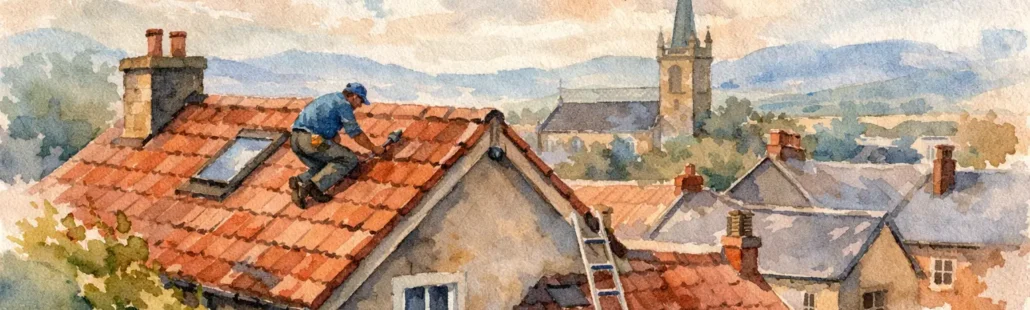
One of the most frequent problems is slipped or broken roof tiles. On pitched roofs, even a single missing tile can allow rainwater to work its way underneath the covering and into the roof structure. Wind is often the trigger, but age also plays a part. Older tiles can become brittle, and fixings can weaken over time.
The fix depends on how widespread the damage is. If only a few tiles are affected, replacing and securing them is usually enough. If there are repeated slipped tiles across one slope, that can point to failing battens, old fixings, or general roof fatigue. In those cases, a patch repair may hold for a while, but a more thorough repair often proves better value.
Leaks around flashing are another common source of trouble. Flashing is the material used to seal joints around chimneys, roof valleys, dormers, and abutments where the roof meets a wall. Lead flashing can loosen, split, or lift, especially on older roofs or where previous repairs have not been done properly.
This sort of leak can be hard for homeowners to spot because the water does not always appear directly below the fault. It may run along timbers before dripping into the loft or upper rooms. Repair usually involves replacing damaged flashing, re-securing loose sections, and making sure the surrounding masonry is sound. Simply adding sealant is rarely a lasting answer if the flashing itself has failed.
Leaks, damp and hidden water ingress
A roof leak does not always mean water is coming straight through the main roof covering. In many Falkirk properties, the issue is linked to valleys, ridge tiles, chimney stacks, or poorly maintained gutters. Water takes the easiest route, and that can make diagnosis more complicated than it first appears.
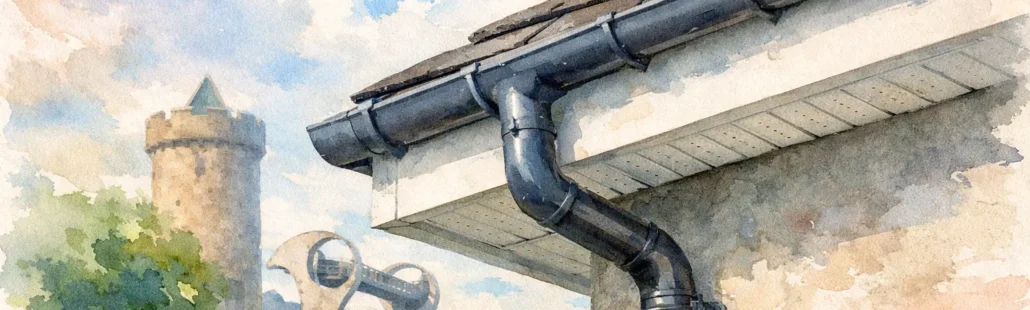
Blocked gutters and downpipes are a good example. When leaves, moss, and debris build up, rainwater overflows and runs down external walls. That can lead to damp patches, staining, and even internal moisture problems if the overflow is persistent. It also puts extra strain on fascias and soffits, which can begin to rot or deteriorate.
The fix here is usually straightforward – clear the gutters, check the alignment, and inspect the joints for leaks. If gutters are sagging or old brackets have failed, sections may need replacing. Regular maintenance matters because gutter problems are easy to ignore until they start affecting the walls and roofline.
Moss build-up on the roof is another issue homeowners often underestimate. A small amount may seem harmless, but heavy growth holds moisture against the roof covering. Over time, that can shorten the life of tiles, encourage frost damage, and block gutters as the moss breaks away.
Removing moss should be done carefully. Aggressive cleaning can cause more harm than good, especially on older tiles. A proper roof clean, followed by checks for cracked tiles and blocked drainage points, is the sensible approach. If the roof is already worn, cleaning alone will not solve underlying defects.
Storm damage and weather-related wear
Falkirk properties see their fair share of wind and rain, and storm damage is one of the clearest examples of why roofing faults should be dealt with quickly. After high winds, roofs may suffer lifted edges, dislodged ridge tiles, damaged flashing, or debris impact. Some damage is obvious from ground level, but not all of it is.
What matters most after a storm is not just replacing what has come loose, but checking the surrounding areas as well. A ridge tile that has moved may signal weakened mortar bedding elsewhere. A few lost slates might indicate wider fixing issues on an older roof. Good repair work focuses on the cause, not just the visible symptom.
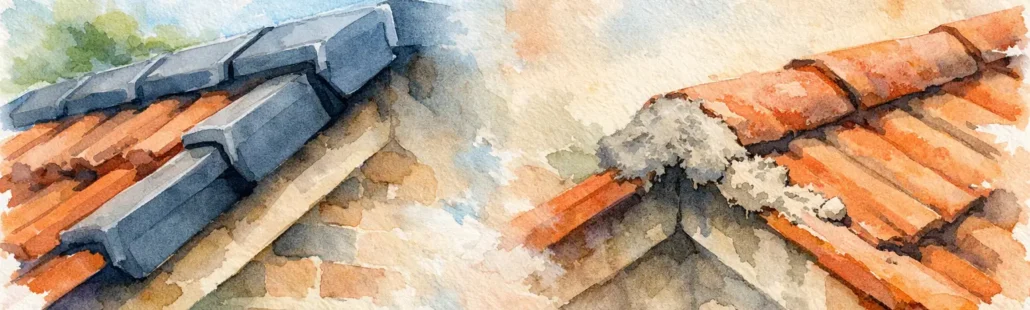
Mortar failure is especially common on ridge tiles and verges. Over time, weather exposure causes mortar to crack and break away. Once that happens, tiles become vulnerable to movement and water can start entering through the gaps. Repointing may be enough in some cases, but where the bedding has significantly failed, rebedding is usually the better repair.
Flat roofs bring a different set of problems. Ponding water, splits in the membrane, failed joints, and blistering are all common on ageing flat roof systems. Unlike a pitched roof, where water sheds quickly, a flat roof relies heavily on the condition of its covering and drainage.
Small repairs can work when the issue is isolated and the rest of the roof remains sound. If water is pooling regularly or the surface is deteriorating across larger areas, replacement often becomes the more sensible long-term option. It depends on the age of the roof, the material used, and how often problems have recurred.
Chimneys, roofline issues and structural warning signs
Chimneys are one of the most exposed parts of any roof, so it is no surprise they feature heavily in common roofing problems affecting homes in Falkirk and how to fix them. Weathered pointing, damaged flashing, loose pots, and cracked masonry can all allow water in. Left too long, chimney defects can affect both the roof and the stack itself.
Repairs might involve repointing, replacing lead flashing, renewing flaunching around chimney pots, or rebuilding unstable sections. The key point is that chimney problems are rarely just cosmetic. What starts as minor cracking can become a safety issue if masonry begins to loosen.
Fascias and soffits also deserve attention. When these roofline elements are damaged, poorly ventilated, or affected by rot, they can contribute to damp and condensation issues in the loft. They also play a role in supporting guttering, so failure here can lead to further water management problems.
The fix may be as simple as replacing localised damaged sections, but older rooflines sometimes need a more complete upgrade. That can improve both appearance and function, particularly where poor ventilation has been contributing to moisture build-up.
Condensation in the loft is often mistaken for a roof leak. In reality, the cause may be poor ventilation, inadequate insulation, or warm moist air rising from the house and becoming trapped in the roof space. The signs can look similar – damp timbers, musty smells, and moisture on felt or insulation.
This is one area where guesswork causes problems. If a leak is treated as condensation, or condensation is treated as a leak, the real issue remains. The right fix may involve improving ventilation, adjusting insulation levels, or repairing roofing defects that are allowing cold spots and moisture ingress.
When a repair is enough and when it is not
Not every roof problem calls for a full replacement. In many cases, targeted repairs are the right answer and can extend the life of a roof for years. That is particularly true when damage is localised and the roof structure is still in good condition.
However, repeated patch repairs on a roof that is already nearing the end of its service life can become poor value. If tiles are failing in several places, felt is deteriorating, and leaks keep returning, it may be more practical to consider larger remedial work. The cheapest fix today is not always the most cost-effective choice over the next few winters.
Age matters, but so does workmanship. Some roofing problems come from wear and weather, while others result from earlier repairs that were rushed or carried out to a poor standard. That is why a proper inspection matters. It gives you a clearer picture of whether the issue is isolated, developing, or part of a wider problem.
For homeowners and landlords, speed also matters. Water damage spreads quietly. A small fault in the roof can lead to damaged insulation, stained ceilings, rotten timbers, and internal repairs that cost more than the original roofing work. Fast response does not mean rushed work – it means stopping the problem before it grows.
If you have noticed slipped tiles, damp patches, leaking gutters, chimney damage, or signs of wear after a storm, getting the roof checked sooner rather than later is the sensible move. In a place like Falkirk, where roofs take a steady battering from the weather, practical repairs carried out at the right time can save a great deal of disruption later on.