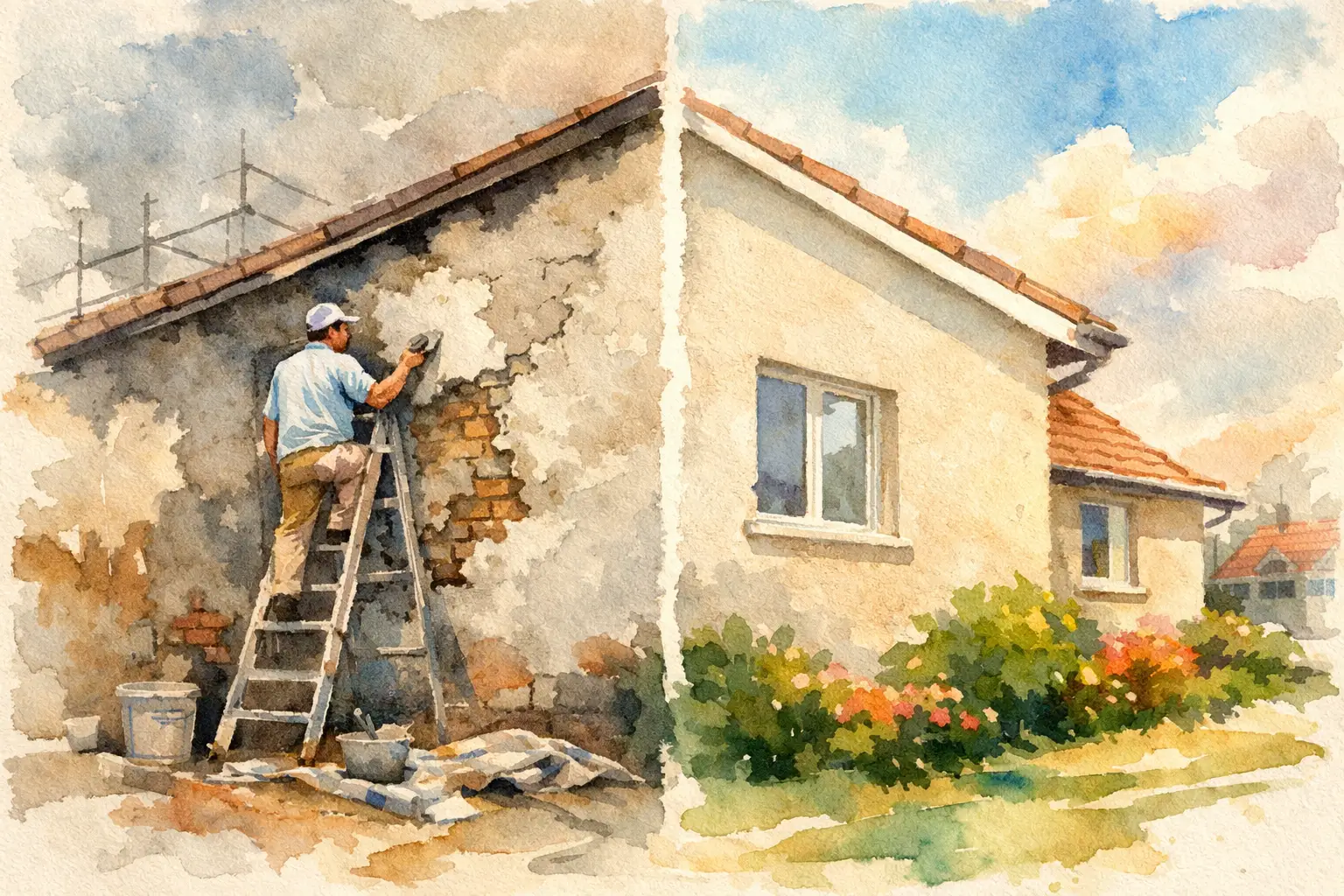
Roughcasting Repair or Replace?
A hairline crack in roughcasting can look minor until the weather gets into it. Once moisture starts working behind the finish, what looked like a cosmetic issue can turn into blown render, damp patches, or damage to the wall beneath. If you are weighing up roughcasting repair or replace, the right answer depends on the age of the finish, the extent of the damage, and what is happening underneath the surface.
For many property owners, the main question is cost. A repair is cheaper in the short term, but only if it actually solves the problem. If the roughcasting is failing across several elevations, or if the substrate has started to deteriorate, replacement often makes better financial sense than paying for repeated patch jobs.
Roughcasting repair or replace – what makes the difference?
The decision usually comes down to scale and cause. If the damage is isolated and the rest of the roughcasting is sound, repair is often the sensible route. This might apply where there are a few localised cracks, small hollow areas, minor impact damage, or sections that have loosened around windows or doors.
Replacement becomes the stronger option when the issues are widespread or when the original finish has reached the end of its serviceable life. If large areas are detached, heavily cracked, stained by trapped moisture, or visibly uneven from old repairs, patching may only delay a bigger job.
The cause matters just as much as the appearance. Roughcasting can fail because of age, poor original application, movement in the building, water ingress, or repeated freeze-thaw cycles. If the real issue is structural movement or defective roofline details, repairing the surface alone will not hold up for long.
When roughcasting repair is the right choice
A targeted repair works best when the wall underneath is dry, stable, and in good condition. In that situation, a skilled contractor can remove the failed section, prepare the background properly, and apply a matching finish that restores weather protection.
This approach is commonly suitable for isolated cracking, small patches of blown roughcasting, and local damage caused during other exterior work. It is also worth considering if the original roughcasting is relatively modern and the colour and texture can still be matched well enough.
The biggest benefit is obvious – lower upfront cost. Repairs are faster, less disruptive, and can often extend the life of the existing finish by years if the surrounding areas remain sound.
That said, there is a trade-off. Even a well-done repair may still be faintly visible, especially on older walls where weathering has changed the original appearance. If you are expecting a perfectly uniform finish across the whole elevation, a patch repair may fall short aesthetically even when it performs well technically.
Signs a repair may be enough
If the damage covers a small area, the rest of the wall feels solid, and there is no sign of widespread damp behind the finish, repair is often a practical choice. The same applies where cracks are narrow and stable rather than spreading, or where defects are limited to weak points around openings.
A proper inspection should also check whether gutters, roof edges, flashings, and seals are directing water away as they should. There is little point repairing roughcasting if rainwater is still being allowed to run down or behind the wall finish.
When replacement is the better investment
There comes a point where repairs stop being good value. If one section is patched this year, another fails next winter, and a third starts sounding hollow in spring, replacement can be the more economical route overall.
Full replacement is often the right answer when the roughcasting has widespread cracking, multiple blown areas, poor adhesion, or obvious moisture-related failure. It is also worth serious consideration if the finish is very dated and inconsistent, with old patch repairs, mismatched textures, or staining that cannot be cleaned back effectively.
Removing failed roughcasting allows the wall beneath to be properly assessed. That can reveal hidden defects such as decayed masonry joints, trapped damp, or substrate damage that would otherwise stay covered up. In some cases, the visible roughcasting issue is only the outer sign of a broader external maintenance problem.
Signs replacement is likely needed
If defects appear on several elevations, if large sections sound hollow when tapped, or if the finish is separating from the wall, replacement is usually the safer long-term option. The same applies where cracking keeps returning after previous repairs, or where the original roughcasting was poorly installed and is failing as a system rather than at one isolated point.
For landlords and homeowners planning to stay in the property, replacement can also improve kerb appeal and reduce future maintenance. Instead of managing one defect at a time, you start again with a consistent, weather-resistant finish.
Cost versus value
It is understandable to focus on the quote first. Repair almost always comes in lower than replacement, sometimes by a wide margin. But the better question is whether the work will last.
A modest repair on a fundamentally sound wall can be excellent value. A cheap patch on a failing wall is not. If there is a strong chance you will need more repairs in the next year or two, the lower initial spend can end up costing more.
Replacement costs more because it involves removing defective material, checking and preparing the background, and applying a full new finish. It is more labour-intensive and more disruptive. In return, you get a more uniform result and a chance to correct underlying issues properly.
This is why a reliable inspection matters. The cheapest option on paper is not always the most competitive once repeat call-outs and further deterioration are taken into account.
Appearance matters as well as performance
Some customers are happy as long as the wall is sound and weather-tight. Others want the exterior to look consistent, especially if the property is being improved for sale or as part of wider renovation work.
This is where repair versus replacement often shifts from a technical decision to a practical one. If the roughcasting is only slightly damaged but badly faded, stained, or patched from past work, replacement may be chosen for appearance rather than necessity alone. On the other hand, if the wall is on a less visible elevation and a close colour match is possible, a repair may make far more sense.
There is no single rule here. It depends on your budget, your expectations, and how prominent the affected area is.
Why the cause should be fixed first
Roughcasting is the protective outer layer, not the source of every problem. If cracking is being caused by movement, if moisture is entering from defective gutters, or if nearby roof or chimney issues are directing water onto the wall, those defects need attention alongside the roughcasting work.
This is one reason many property owners prefer a contractor who handles wider exterior repairs rather than one narrow trade alone. If the real issue starts higher up the building, treating the wall finish in isolation may only provide a temporary result.
In exposed parts of Central Scotland, weather puts extra pressure on external finishes. Driving rain, cold winters, and repeated freeze-thaw conditions are hard on any wall covering. A repair or replacement has a much better chance of lasting when the whole exterior is working as it should.
How to make the right call
Start with condition, not guesswork. A proper assessment should look at how much roughcasting has failed, whether the wall beneath is still sound, and what caused the damage in the first place.
If the problem is isolated, the surrounding finish is secure, and there are no signs of wider moisture issues, repair is often the smart and cost-effective option. If failure is widespread, recurring, or linked to deeper defects, replacement is usually the wiser investment.
A good contractor will not push a full replacement where a repair will do, and they should not recommend a patch if the wall is clearly past that stage. Honest advice matters here because the right answer is not always the bigger job – it is the one that protects the property properly and avoids wasted money.
If you are unsure, ask for a clear assessment of what has failed, why it has failed, and how long each option is likely to last. That gives you something more useful than a price alone. It gives you a basis for making the right decision with confidence.