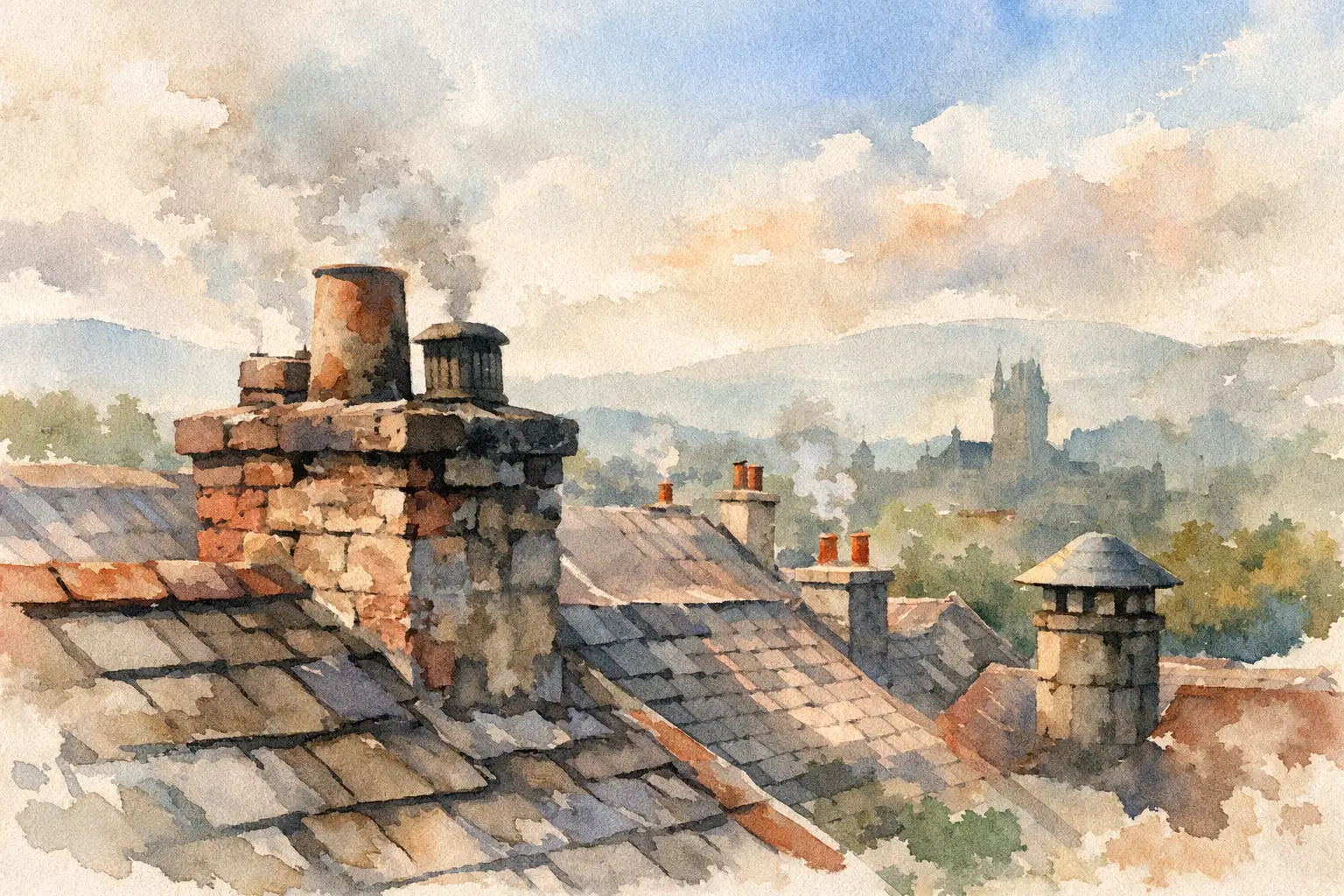
Common Chimney Problems on Falkirk Roof Inspections
A chimney can look sound from the garden while defects are developing at roof level. That is why common chimney problems found during roof inspections in Falkirk often come as a surprise to homeowners. Loose mortar, cracked flashing and damaged pots may be difficult to spot safely from the ground, yet each can allow water into the roof structure or create a risk from falling masonry.
Falkirk properties are exposed to regular rain, strong winds and winter freeze-thaw conditions. Older chimneys are particularly vulnerable, but even a newer roof can develop trouble where the chimney meets the slates or tiles. A proper inspection looks at the chimney stack and the surrounding roof as one system, rather than treating them as separate jobs.
Why chimney defects need prompt attention
Chimneys sit above the main roofline, so they receive the full force of the weather. Water can enter through failed pointing, cracked render, damaged leadwork or a poor seal around the stack. Once moisture gets behind the external surface, it may soak into the brickwork, affect roof timbers and show up as staining on ceilings or walls below.
The right repair depends on the cause and the condition of the stack. A small section of failed pointing may only need careful repointing. If bricks are spalling, the flaunching is broken and the leadwork has failed, a more substantial chimney repair may represent better value than repeated patching. The aim is to make the chimney safe, weatherproof and properly integrated with the roof.
Common chimney problems during Falkirk roof inspections
Failed or cracked mortar pointing
Mortar joints are often the first part of a chimney to deteriorate. Over time, wind, driving rain and frost wear away the surface, leaving open joints between the bricks or stone. In some cases, the mortar becomes soft enough to crumble when touched.
Open joints allow water into the stack. During cold weather, that trapped moisture can freeze and expand, causing further cracking and loosening masonry. Repointing removes defective material to an appropriate depth before new mortar is applied. It needs to be suitable for the age and construction of the chimney, particularly on traditional properties where an overly hard mortar can contribute to brick damage.
Cracked, loose or spalled bricks
Spalling occurs when the face of a brick breaks away. It is commonly caused by repeated wetting and freezing, although age, poor previous repairs and unsuitable coatings can also play a part. A few damaged bricks may be replaced locally, but widespread spalling can indicate that the chimney has been retaining moisture for some time.
Loose bricks are more urgent. A chimney stack is exposed and elevated, so falling masonry can damage the roof below or create a serious hazard around the property. During an inspection, attention should be paid to the stack corners, the top courses and any areas where brick faces are missing or visibly fractured.
Damaged chimney flashing
Flashing is the weatherproof material, usually lead, fitted where the chimney meets the roof. It directs rainwater away from the joint between the stack and the slates or tiles. If it splits, lifts, cracks or comes away from the brickwork, water can find a direct path into the loft.
Leaks caused by flashing are sometimes mistaken for a general roof problem because the signs appear indoors. Damp patches near the chimney breast, wet loft insulation or staining around the ceiling can all point to failed flashing. Repairs may involve re-dressing sound lead, renewing split sections, replacing defective soakers or cutting fresh lead into the mortar joints where necessary.
Worn or missing lead soakers
On tiled or slated roofs, soakers are small pieces of lead that sit between the roof covering and the side of the chimney. They work with the main flashing to keep water out. They are largely hidden from view, which is why defects are frequently identified only during a close roof inspection.
If soakers are missing, too short or poorly fitted, rain can track beneath the tiles or slates beside the stack. Replacing them properly can require carefully lifting the surrounding roof covering. It is detailed work, but it is far more reliable than applying surface sealant as a quick fix.
Cracked chimney pots and damaged flaunching
The chimney pot and the mortar bedding around its base, known as flaunching, are exposed to the elements at the very top of the stack. Cracked pots, loose pots and broken flaunching can allow water into the chimney and may become unstable in high winds.
A damaged pot does not always mean the entire chimney needs rebuilding. The pot can often be removed and replaced, with new flaunching laid to shed water away from the opening. However, if the upper brick courses are loose as well, rebuilding the top section may be the safer long-term option.
Defective chimney caps and cowls
A cap or cowl can help prevent rain, birds and debris entering an unused or active flue. Problems arise when a cowl is loose, corroded, blocked or unsuitable for the appliance it serves. An unsecured fitting can be dislodged in strong wind, while a blocked flue may affect ventilation and safe operation.
Where a chimney is no longer in use, capping needs to prevent water entry without trapping moisture inside the stack. Ventilation is often required to reduce condensation. The appropriate solution depends on whether the flue is active, redundant or shared with another fireplace or appliance.
Cracked render or failing chimney coatings
Rendered chimney stacks can develop fine cracks that gradually widen. Water enters through these cracks, then causes the render to lift or break away. Some coatings can also trap moisture in older masonry, making frost damage worse beneath the surface.
Local render repairs may be suitable where the underlying masonry remains sound. If there is extensive cracking or hollow-sounding render, it is sensible to assess the brickwork before simply covering the problem again. A breathable, compatible finish is often the better choice for traditional chimneys.
Leaning, movement or an unstable stack
A chimney that is visibly leaning, bulging or separating from the property needs urgent professional assessment. Movement can result from long-term water damage, weak mortar, failed internal support, storm damage or deterioration below roof level. It is not a repair to postpone until warmer weather.
Depending on the findings, the work may involve rebuilding part of the stack, installing appropriate support or carefully taking down an unsafe redundant chimney to a safe level. The least disruptive repair is not always the best option where structural stability is in question.
Signs homeowners may notice before an inspection
Some chimney problems show themselves inside the property before they are obvious outside. A damp patch around a chimney breast after heavy rain is a common warning sign, as are peeling wallpaper, a musty smell in the loft or water marks close to the roofline. Outside, moss growth concentrated around the stack, debris in gutters, cracked render and visible gaps in mortar are all worth checking.
These signs do not prove that the chimney is the cause. Roof tiles, valleys, ridge pointing and nearby gutters can produce similar symptoms. This is why a roof-level inspection is valuable: it identifies the actual route water is taking instead of relying on guesswork.
What a thorough chimney inspection should cover
A useful inspection considers the stack from top to bottom. That includes the condition of the pot and flaunching, brickwork or stonework, mortar joints, render, flashing, soakers and the surrounding roof covering. It should also consider whether the chimney is still used, whether the flue has suitable protection and whether internal damp may be connected to an external defect.
Photographs and a clear explanation of the recommended work help property owners make an informed decision. For minor defects, planned maintenance may be enough. For loose masonry, active leaks or storm damage, prompt repair is normally the safer and more cost-effective route.
Avoid temporary fixes that conceal the cause
Roof sealants and surface coatings can appear attractive when a leak needs a quick answer. They occasionally have a limited role, but they are rarely a substitute for renewing failed flashing, replacing damaged bricks or repointing open joints. A repair that simply covers a crack may trap moisture and make the next repair more difficult.
Equally, chimney work should not be carried out from a ladder without proper access and safety measures. The risk is not only to the person doing the work. Incorrectly handled lead, loose pots or disturbed brickwork can leave the roof less secure than before.
If your chimney has been affected by weather, shows signs of water ingress or has not been checked for several years, arranging a professional roof inspection gives you a clear view of its condition. FK Roofing can assess the stack alongside the rest of the roof and advise on a practical repair that protects the property for the seasons ahead.