Is Moss on Roof Harmful? What Homeowners Need
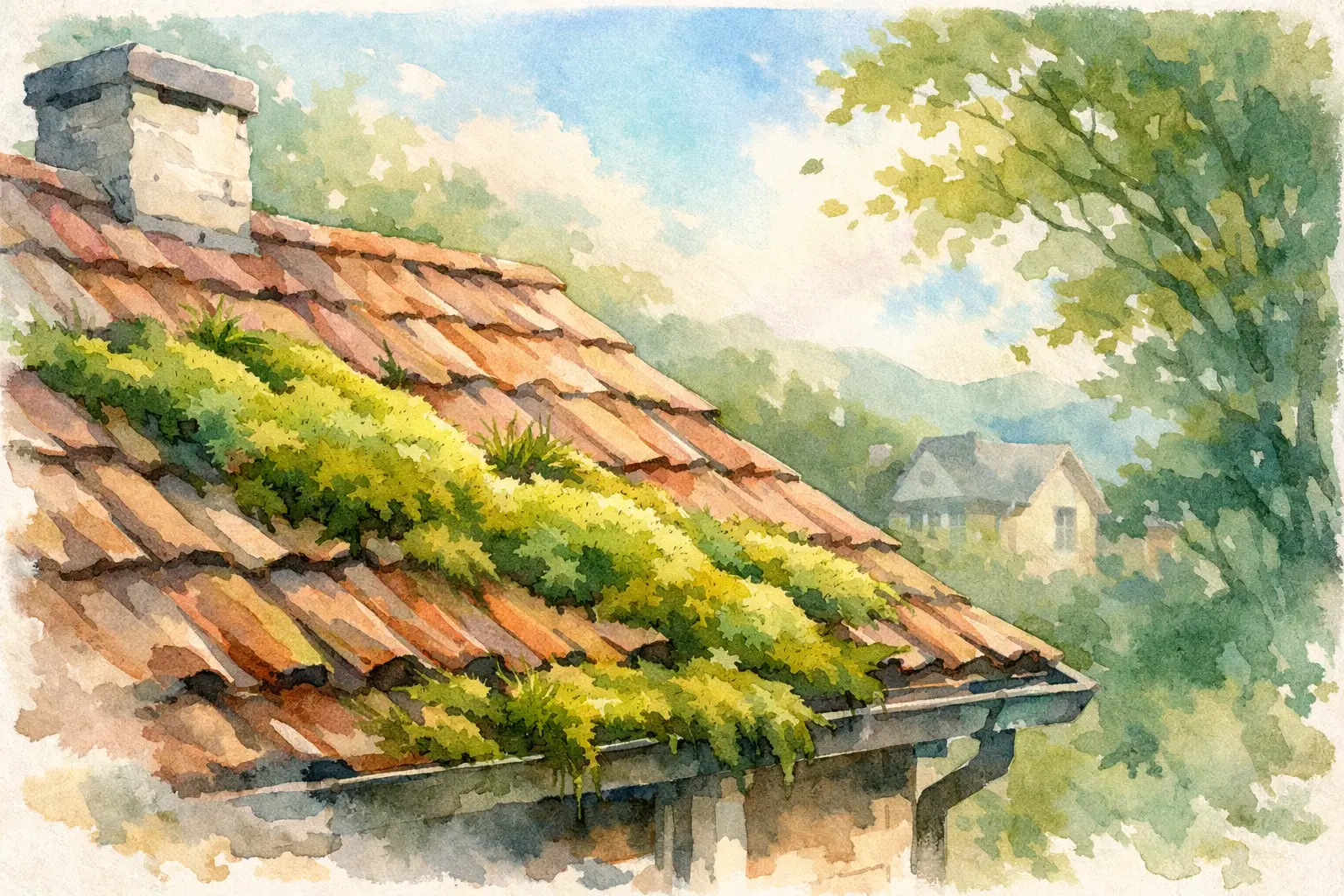
A patch of green moss can make a roof look older than it is, but is moss on roof harmful in every case? Not necessarily. A light growth on a sound, well-pitched roof may be more of a maintenance issue than an emergency. However, thick moss that holds moisture, blocks gutters or gets beneath tiles can contribute to expensive problems if it is left to build up.
In Falkirk and across Central Scotland, frequent rain, shaded gardens and cooler weather create ideal conditions for moss to grow. The right response depends on the type of roof, its age, the amount of growth and whether there are already signs of damage. Acting early is usually simpler and more affordable than waiting for a leak to reveal the issue.
Is moss on a roof harmful to tiles and slates?
Moss itself does not eat through roof tiles or slates. The concern is what happens around it. Moss works like a sponge, retaining rainwater against the roof surface for longer than it would otherwise remain there. On a roof in good condition, this may not cause an immediate problem. On older, porous, cracked or poorly fixed materials, repeated dampness can speed up deterioration.
As moss becomes thicker, it can spread under the lower edges of tiles and slates. During cold weather, trapped water may freeze and expand. Over time, this can loosen tiles, disturb their alignment or expose the underlay beneath. Small gaps are enough for wind-driven rain to find its way into a roof space.
Concrete tiles are often more prone to visible moss growth because their surface becomes more porous as they age. Natural slate is generally hard-wearing, but moss can still build up around the fixings and edges of slates. Every roof should be assessed on its own condition rather than treated with a one-size-fits-all approach.
The greatest risk is trapped moisture
The main issue with moss is not its appearance. It is the moisture it retains and the way it interferes with rainwater running freely off the roof. A roof is designed to shed water quickly. A heavy layer of moss slows that process and keeps vulnerable areas damp.
This becomes more significant where roof coverings are already nearing the end of their serviceable life. If tiles are cracked, mortar is failing around ridge tiles, or flashing at a chimney is worn, moss can make those faults harder to spot and allow them to worsen unnoticed.
Moss in gutters can cause leaks and damp
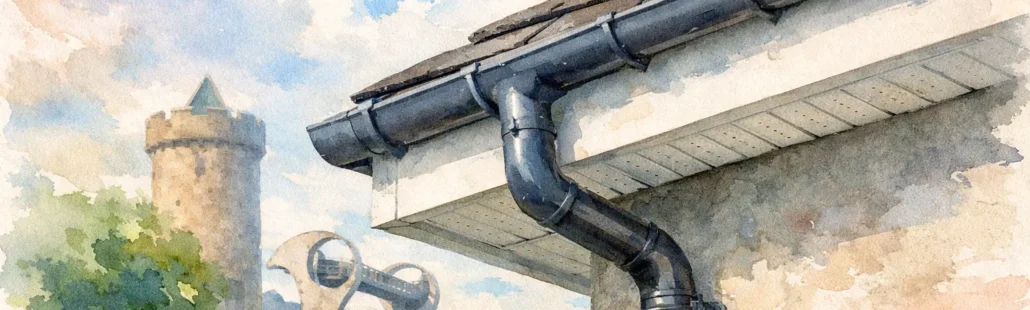
Much of the moss on a roof eventually breaks away and lands in the gutters. This is often where a relatively minor roof-cleaning issue becomes a property maintenance problem. Moss combines with leaves, silt and standing water to form a dense blockage, particularly at downpipes and gutter outlets.
When gutters overflow, rainwater can run down external walls, soak into fascias and soffits, and splash repeatedly against brickwork or roughcast. It may also cause staining, damp patches and deterioration around window openings. In colder weather, overflowing water can freeze, adding weight to gutters and putting strain on brackets and joints.
A clear gutter system is particularly important on properties surrounded by mature trees or those with shaded roof slopes. Checking gutters after autumn and after prolonged wet weather helps prevent an avoidable issue from becoming a repair job.
When moss is a warning sign
Moss is more likely to need professional attention when it is thick, widespread or accompanied by other roof defects. It should not be assumed that every green roof needs an urgent clean, but a closer inspection is sensible if you notice the following:
- Moss packed beneath tile edges or gathered heavily in roof valleys
- Gutters overflowing, sagging or regularly blocking after rain
- Loose, slipped, cracked or missing tiles and slates
- Damp marks in the loft, on ceilings or near external walls
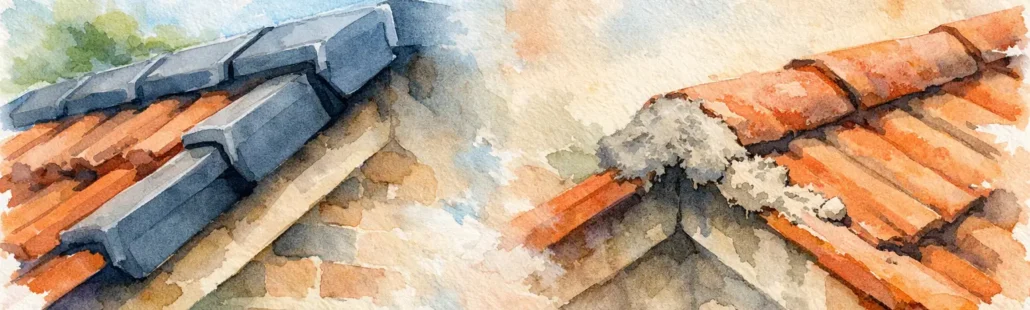
- Crumbling ridge mortar, damaged chimney flashing or deteriorating fascias
These signs suggest water may not be draining as it should, or that the roof already has openings which need repair. Cleaning alone will not solve a defective roof. Any loose tiles, damaged underlay, failed flashing or worn mortar should be dealt with before or alongside moss removal.
Why roof moss grows in some places more than others
Moss needs moisture and shade, which is why it often appears first on north-facing roof slopes. Nearby trees can make the problem worse by reducing sunlight, dropping debris and keeping the roof damp after rainfall. Overhanging branches may also brush against tiles in high winds.
Older roofs often develop growth more quickly because weathering creates a rougher surface where spores can settle. Poor ventilation and slow drainage in valleys or around roof features can also create persistently damp patches.
This does not mean a mossy roof has been neglected. It is a common issue on homes throughout Scotland. It does mean the roof needs sensible maintenance suited to its material and condition.
Should you remove moss from a roof?
In most cases, removing thick moss is worthwhile because it reduces moisture retention, helps water drain properly and makes it easier to inspect the roof covering. The method matters as much as the decision to clean.
Aggressive pressure washing is not suitable for many tiled and slate roofs. It can dislodge tiles, strip protective surface finishes, force water beneath the coverings and scatter debris into gutters and downpipes. The risk is higher on ageing roofs, where tiles may already be brittle or fixings weakened.
A careful manual removal method, followed where appropriate by a suitable biocidal treatment, is often the safer option. Moss should be lifted away without damaging the roof surface, while gutters are cleared and the roof is checked for faults that may need repair. Treatments can help slow regrowth, but they are not permanent. The shaded side of a roof may need periodic attention.
Do not make roof cleaning a risky DIY job
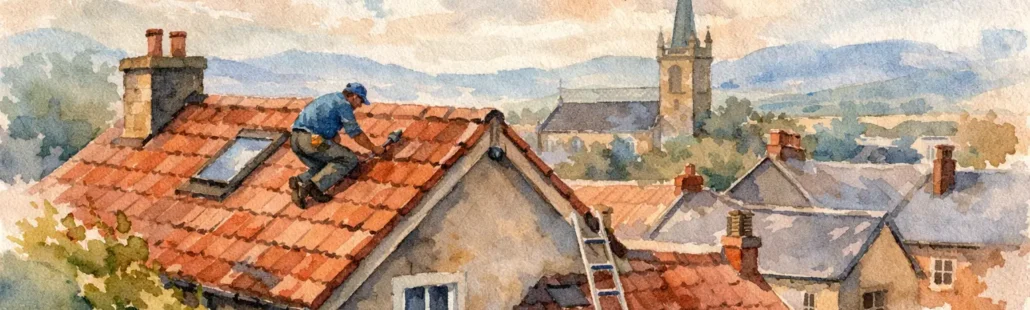
Working at height is hazardous, especially on wet mossy tiles. Walking directly on a roof can crack tiles, loosen slates and create a serious fall risk. Ladders also need correct footing, support and access arrangements.
For small amounts of moss near a safely accessible gutter, a homeowner may be able to clear loose debris using appropriate equipment from ground level. For widespread roof growth, blocked valleys or any indication of damage, it is safer to arrange a professional inspection. A roofer can distinguish between surface growth and a problem that needs repairs before cleaning begins.
How to prevent moss returning quickly
Moss spores are carried by wind, so no roof can be guaranteed never to develop moss again. Prevention is about reducing the conditions that allow it to take hold and become dense.
Keep gutters and downpipes clear so water does not back up at the eaves. Trim back overhanging branches where practical, allowing more daylight and airflow across the roof. Remove leaf debris from valleys and behind chimneys, as these areas hold moisture and often become the starting point for moss growth.
Regular visual checks from ground level are useful too. Look for dark damp areas, uneven tile lines, overflowing gutters and moss collecting at the bottom of a roof slope. An annual inspection is a sensible precaution for older roofs, while homes beneath trees may benefit from checks more often.
Cleaning is not always the first repair
If a roof is leaking or tiles are loose, cleaning should not be used to cover up the problem. A proper assessment should identify the cause of the fault first. In some cases, a small repair to flashing, ridge tiles, a roof valley or broken slates will protect the property more effectively than a full clean.
Likewise, if a roof covering is extensively worn, heavily porous or reaching the end of its lifespan, repeated cleaning may offer only a short-term improvement. The honest answer may be targeted repairs or a planned replacement, depending on the findings and your budget.
For homeowners and landlords, the practical approach is straightforward: do not panic at the first sign of green growth, but do not ignore a thick build-up either. A professional roof check can establish whether moss is simply cosmetic or contributing to blocked gutters, loose tiles and moisture-related damage. FK Roofing can assess the condition of your roof, explain the options clearly and provide a free, no-obligation quote for the work that is genuinely needed.