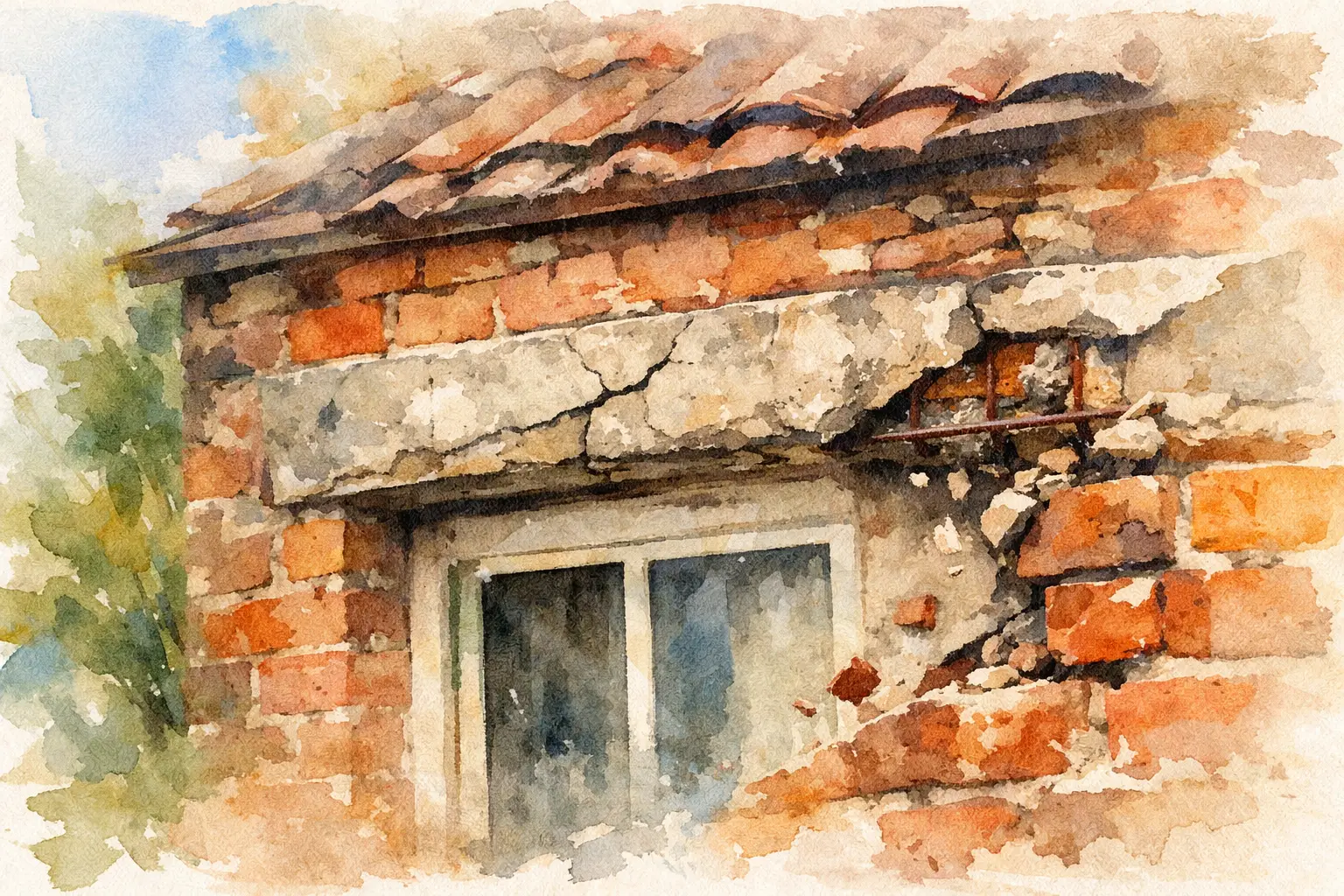
When Do Lintels Need Replacing? Key Signs
A crack above a window is easy to dismiss, particularly if it has been there for years. But if you are asking when do lintels need replacing, the sensible answer is: before movement around an opening turns into damaged brickwork, sticking windows, water ingress or a safety concern. Lintels carry the masonry above doors, windows and garage openings, so their condition should never be judged on appearance alone.
A professional inspection can establish whether the lintel is still doing its job, needs targeted repair or has deteriorated far enough to require replacement. Acting early is usually less disruptive and helps protect the surrounding wall as well as the opening itself.
What a lintel does and why failure matters
A lintel is a horizontal support installed above an opening in a wall. It transfers the weight of the bricks, blockwork or stone above to the masonry at either side. Older properties may have timber, stone or steel lintels, while many modern homes use concrete or steel cavity lintels.
When a lintel weakens, the wall above can begin to move. That movement often shows itself as cracking, but the real issue is the loss of support behind it. Rain, frost and Scotland’s changing weather can accelerate deterioration where external walls, render, pointing or roof drainage are already allowing moisture into the structure.
Not every crack means the lintel has failed. Settlement, thermal movement and poor previous repairs can also cause cracking. The important point is to identify the cause rather than filling the crack and hoping it stays closed.
When do lintels need replacing rather than repairing?
Lintels need replacing when they can no longer safely support the masonry above, or when corrosion, rot, cracking or distortion has reduced their strength beyond a practical repair. The decision depends on the lintel material, the load it carries, the condition of the surrounding wall and whether movement is continuing.
A small area of damaged render above a sound lintel may only need local repair and weatherproofing. A steel lintel with light surface corrosion may be treatable if the steel section remains sound and the cause of damp is fixed. However, a lintel that has sagged, split, severely rusted or allowed the brickwork to drop should be assessed for replacement without delay.
Replacement is also often the better long-term option where an older timber lintel has decayed, a concrete lintel has cracked deeply, or rusting steel has expanded and forced the brickwork apart. Patching the visible damage may improve the look of the wall for a while, but it does not restore the missing structural support.
Warning signs around doors and windows
The clearest warning signs usually appear in the wall directly above or beside the opening. Keep an eye on changes rather than relying on one quick look. A crack that widens, returns after repair or is accompanied by movement needs professional attention.
Stepped cracks in brickwork or blockwork
Diagonal or stepped cracks that follow mortar joints from the corner of a window or door can indicate movement around the opening. They are particularly concerning if the crack is wider at one end, has opened recently or runs through bricks rather than only along the mortar.
A single hairline crack is not always urgent, especially in render. Even so, it is worth monitoring and checking for related signs, such as gaps around the frame or loose masonry above it.
Rust stains, bulging bricks and damaged pointing
Steel lintels can corrode when water reaches them through failed pointing, cracked render, poor seals or leaking gutters. Rust expands as it forms. This can push bricks upwards or outwards, crack mortar joints and create a horizontal line of damage above a window.
Rust staining is not merely cosmetic. It can be an early clue that the lintel and the wall around it are being affected by moisture. Addressing the water source is essential whether the lintel is repaired or replaced.
Cracks through concrete or stone lintels
Concrete lintels can develop cracks as they age, particularly if reinforcement inside has corroded or the lintel has been overloaded. Stone lintels may split, crumble at their bearing ends or show signs of sagging. Deep cracks, loose pieces or visible deflection should not be ignored.
The bearing ends matter as much as the centre of the lintel. If the masonry supporting either end has deteriorated, the lintel may not be transferring loads safely even if it appears reasonably straight from the ground.
Doors and windows that no longer fit properly
A window that suddenly sticks, a door that catches at the top, or gaps opening between a frame and the wall can point to movement in the opening. Frames can also distort because of their own age or installation, so this sign needs to be considered alongside the condition of the masonry.
Where movement is affecting both the frame and the wall above, a lintel inspection is a sensible next step.
Damp patches and internal cracking
Water can enter through cracks above an opening, damaged seals or failed external finishes. Inside, you may notice damp marks, flaking paint or cracking at the corners of window reveals. These signs do not automatically prove lintel failure, but they do show that the wall’s weather protection needs attention.
Why water management is often part of the repair
A replacement lintel will not solve the problem for long if rainwater is still reaching the wall. Overflowing gutters, slipped roof tiles, defective flashings, cracked roughcasting and worn pointing can all direct water towards vulnerable openings.
This is why lintel work should look beyond the beam itself. The surrounding masonry may need rebuilding, repointing or rendering, and the area above may need improved weatherproofing. On homes with roofline defects, repairing fascias, soffits or guttering can prevent repeated saturation of the wall below.
For property owners, the practical benefit of using one experienced exterior contractor is that the cause and the visible damage can be assessed together. FK Roofing regularly deals with the connected issues that allow external walls to deteriorate, from roof drainage and masonry repairs to lintel replacement.
What professional lintel replacement involves
Replacing a lintel is structural work, not a job for removing a few bricks and fitting a new support without planning. The masonry above the opening must be properly supported while the failed lintel is removed. The new lintel must be suitable for the width of the opening, the wall construction and the load it will carry.
The work normally involves carefully opening the wall above the frame, supporting the load, removing unsound material, fitting the new lintel with adequate bearing at each end, and rebuilding the masonry. The finish is then made good with matching pointing, render or roughcast where required.
In some cases, building regulations approval or structural guidance may be required, particularly where the opening is widened, the wall carries significant loads or there are wider concerns about movement. A competent contractor will advise what applies before work begins rather than treating every opening as identical.
There is some disruption, and dust control matters, especially around occupied homes and commercial premises. However, planned work is usually far easier to manage than an emergency repair after masonry has become loose or water damage has spread indoors.
Can a lintel be repaired instead?
Yes, but only when the support remains structurally adequate. Local repointing, crack repair, replacing a small area of spalled concrete, treating minor steel corrosion and renewing seals can all be appropriate in the right circumstances.
The trade-off is simple: repair is less invasive where the lintel is sound, but it becomes false economy when the underlying section has lost strength. A proper assessment should explain what is damaged, why it happened and whether the proposed work removes the cause as well as the symptom.
Avoid covering cracks with fresh render before the source of movement is understood. It may make the wall look better temporarily while allowing moisture or structural deterioration to continue unseen.
When to arrange an inspection
Arrange an inspection promptly if bricks above an opening are loose, the lintel is visibly sagging, cracks are widening, or rust is forcing the wall apart. If there is any risk of falling masonry, keep people away from the area and seek urgent professional advice.
For less obvious issues, take dated photographs every few weeks and note whether doors, windows or cracks are changing. This helps distinguish an old, stable defect from active movement. A local contractor familiar with the weather exposure and building styles found across Falkirk and Central Scotland can then assess the opening in context.
A sound lintel is largely invisible, which is exactly how it should be. If the wall above a door or window is giving you reasons to look twice, getting a clear diagnosis now is the best way to protect the property and avoid a larger repair later.