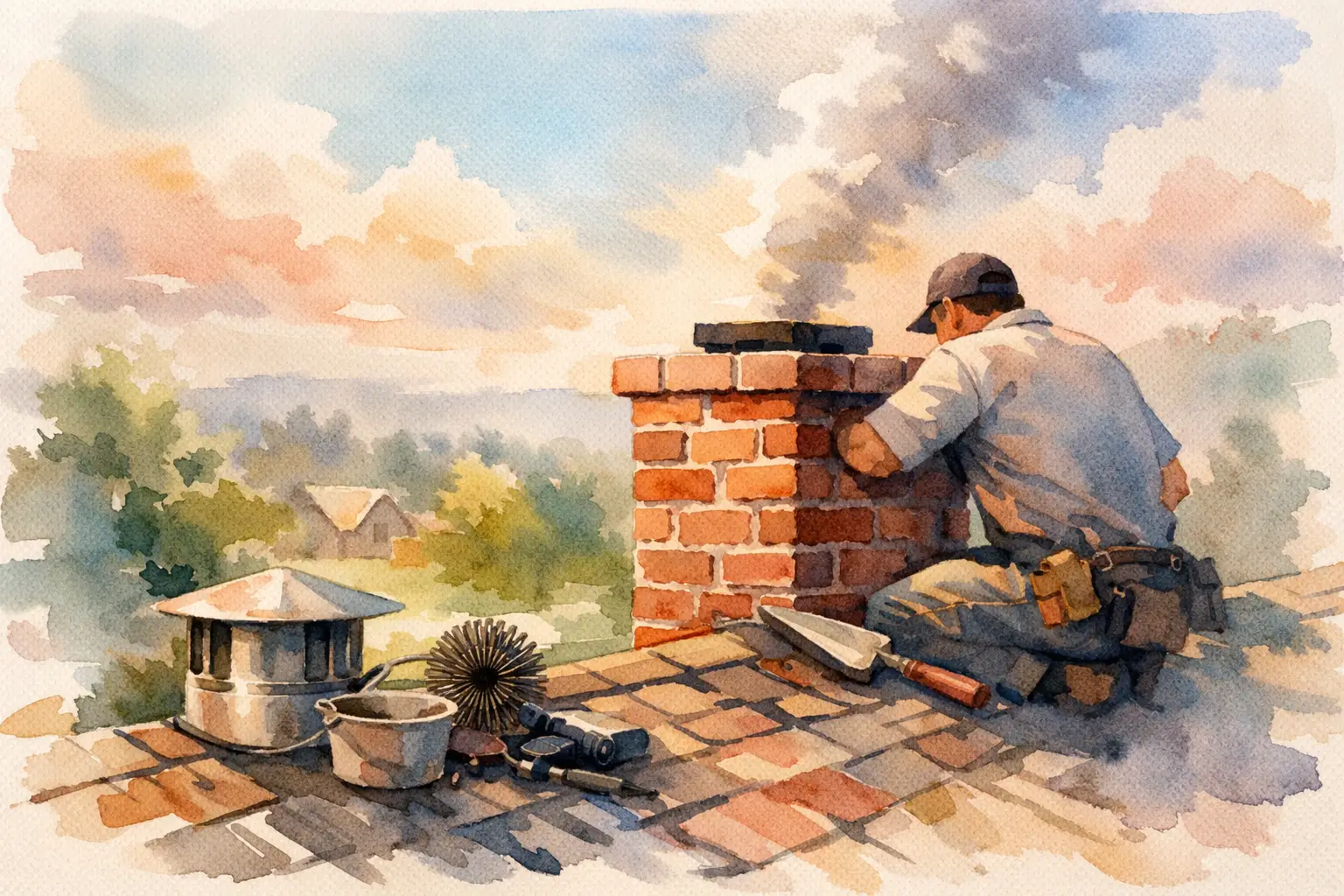
7 Benefits of Professional Chimney Repairs
A cracked chimney rarely stays a small problem for long. What starts as a few loose mortar joints or a damp patch near the breast can quickly turn into water damage, falling masonry, draughts and costly roof repairs. That is why the benefits of professional chimney repairs go well beyond appearance – they protect the structure of your property and deal with problems at the right stage.
For many homeowners, chimneys are easy to ignore because they sit above eye level and often seem solid from the ground. In reality, they take a constant battering from rain, frost, wind and temperature changes. Over time, bricks weaken, flaunching cracks, leadwork lifts, and mortar begins to fail. When repairs are handled properly, you are not just patching a visible defect. You are preventing wider damage to the roof and the building beneath it.
Why the benefits of professional chimney repairs matter
A chimney is one of the most exposed parts of any roofline. Unlike some external defects that remain cosmetic for a while, chimney damage often creates a route for water to enter the property. Once moisture gets in, it can affect rafters, ceilings, internal plaster and adjoining roof coverings.
Professional repair work matters because chimney issues are rarely limited to one obvious fault. A stain on an upstairs wall may be caused by failed pointing, damaged flashing, porous brickwork, cracked cement work at the top, or a combination of all four. A proper inspection looks at the full condition of the stack and the surrounding roof area, which makes the repair more accurate and longer lasting.
There is also the safety aspect. Loose masonry at height is not something to leave to chance. If a chimney has started to lean, shed mortar or drop pots and fragments, the risk is not only to the house but to anyone below.
Professional repairs stop water damage at the source
One of the biggest advantages of getting chimney repairs carried out by an experienced contractor is that leaks are dealt with properly. Water rarely behaves in a neat or obvious way. It can enter around damaged flashing, soak through deteriorated mortar, or run down from cracked flaunching before appearing somewhere else inside the property.
A professional does not just seal over the area that looks wet. They identify how the water is getting in and whether the issue involves flashing, repointing, rebuilding sections of the stack, replacing damaged bricks or renewing the cement work around the pots. That matters because short-term patch repairs often fail after the next spell of bad weather.
In parts of Central Scotland where driving rain and repeated freeze-thaw cycles are common, that distinction becomes even more important. A chimney that is left porous through winter can deteriorate much faster than many owners expect.
You protect the roof as well as the chimney
Chimney faults do not stay neatly confined to the stack. When mortar drops, flashing loosens or bricks begin to break down, the surrounding roof can suffer as well. Slates or tiles near the base of the chimney may shift, underlay can become exposed to moisture, and timber beneath can begin to decay.
This is one of the less obvious benefits of professional chimney repairs. Good repair work protects more than one element of the property. By sorting the chimney before the damage spreads, you reduce the risk of needing broader roof repairs later.
That is especially useful for older properties where several external features are ageing at the same time. If a contractor can assess the chimney in the context of the wider roofline, problems are easier to spot early and easier to manage sensibly.
The work is safer and more reliable
Chimney repair is high-level external work, and that brings risks. Access, stability, weather conditions and the condition of the masonry all need to be handled properly. What looks like a simple repair from ground level may involve unstable brickwork, hidden cracks or sections that need to be dismantled and rebuilt safely.
Professional contractors have the experience to judge whether a chimney can be repaired in place, needs partial rebuilding or should be taken down to a safe level. They also know when associated components such as lead flashing, caps or pots need attention at the same time.
Reliability matters just as much as safety. A poor-quality repair can trap moisture, use unsuitable materials or leave weak areas untouched. That often leads to repeat call-outs and more expense. When the job is done correctly, the chimney is stronger, more weather-resistant and less likely to cause recurring trouble.
Better repairs can improve energy efficiency and comfort
Not every chimney problem leads to obvious leaking. Some create draughts, cold spots and heat loss instead. Open joints, damaged brickwork and degraded internal flues can all affect how warm and dry a property feels, especially in older homes.
Professional chimney repairs can help reduce those issues by closing up routes where wind and moisture enter the building fabric. If flashing has lifted or gaps have developed around the stack, warm indoor air may be escaping while cold air works its way in. The result is a house that feels harder to heat and less comfortable during colder months.
This benefit does depend on the condition of the rest of the roof and loft space. Chimney work alone will not solve every insulation problem. But where the stack has become a weak point in the building envelope, targeted repairs can make a noticeable difference.
Proper chimney repairs help preserve property value
Buyers and surveyors tend to notice chimney defects quickly. Leaning stacks, worn pointing, visible cracking and stained internal walls all raise questions about maintenance and possible structural issues. Even if the rest of the property is in good order, a neglected chimney can make the whole exterior look less cared for.
The value of professional repairs is not just that the chimney looks tidier. It is that the work gives confidence the issue has been dealt with properly. A well-maintained roofline suggests that the owner has stayed on top of the building rather than letting defects mount up.
For landlords and property owners planning future sale or refinance, this can be particularly worthwhile. Fixing chimney problems early is usually more cost-effective than trying to explain or discount them later.
The long-term savings are often greater than the repair cost
Some owners delay chimney work because the damage does not yet seem urgent. That is understandable, especially if the issue is not causing an active leak. But chimney defects have a habit of getting more expensive with time.
Repointing a stack is one level of repair. Rebuilding part of it after prolonged water ingress and frost damage is another. If moisture has already affected nearby roof timbers, ceilings or plasterwork, the bill increases again. Professional repair at the right moment helps avoid that escalation.
This is one of the clearest benefits of professional chimney repairs. You pay to solve the actual problem before it spreads into several connected ones. That is usually the more economical route, even when budgets are tight.
What a professional chimney repair service should assess
A good chimney repair service does more than quote for the crack you can see. The inspection should consider the stack as a whole, including brick condition, pointing, lead flashing, flaunching, chimney pots and any signs of movement or water penetration around the roof junction.
There is no single fix for every chimney. Some need localised repointing, while others require replacement bricks, new leadwork or partial rebuilding. In some cases, removing an unsafe stack to below roof level is the best option. The right answer depends on the age of the chimney, the severity of the deterioration and whether the chimney is still in use.
That is why experienced advice matters. The aim should be a repair that fits the actual condition of the property, not a one-size-fits-all patch.
When to act on chimney problems
Visible cracks, missing mortar, damp staining near the chimney breast, loose flashing and debris on the ground are all signs the stack needs attention. You may also notice leaks after heavy rain or hear wind movement around the chimney area during bad weather.
Even without obvious internal symptoms, an ageing chimney is worth checking if the roof has not been inspected for some time. Problems found early are usually simpler to repair. Once sections become unstable or prolonged water ingress sets in, the scope of work tends to grow.
For homeowners and landlords, the practical approach is straightforward. If the chimney is showing wear, have it assessed before the next storm makes the decision for you. Proper repairs give you a safer roofline, a drier home and fewer expensive surprises down the line.