Can Moss Damage Roof Tiles? What Homeowners Should Know
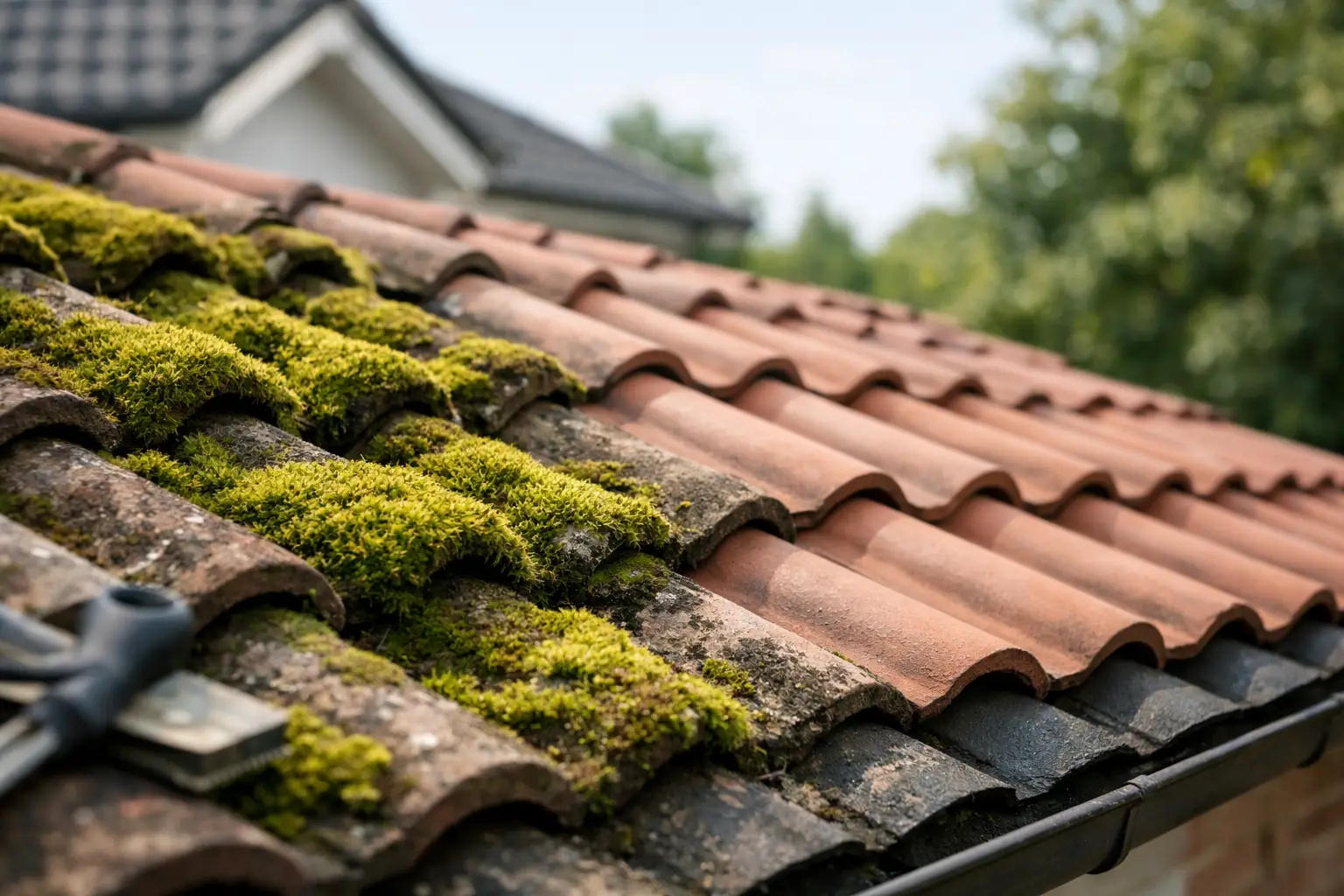
A green roof can look like a minor cleaning job from the ground. But when homeowners ask, can moss damage roof tiles, the honest answer is yes – particularly when it is thick, established, and left through repeated wet and freezing weather.
Moss does not usually destroy a sound roof overnight. The concern is what happens over time: it holds moisture against tiles, blocks water flow, works its way beneath laps and collects in gutters. In Falkirk and across Central Scotland, where roofs see frequent rain, frost and wind, those small pressures can turn into cracked tiles, leaks and avoidable repair costs.
Can moss damage roof tiles directly?
Moss is a plant with shallow root-like structures rather than true roots. It does not bore through a concrete, clay or slate tile in the way people sometimes imagine. A well-made, well-fitted roof tile is designed to withstand rain and normal weather exposure.
The problem is that moss creates the wrong conditions around the tile. It forms a damp layer that takes longer to dry after rainfall. On an older roof, that persistent moisture can speed up surface wear, expose existing weaknesses and increase the effects of frost.
When water held in moss freezes, it expands. This freeze-thaw action can put added stress on already weathered tiles, mortar joints and ridge bedding. A tile with a small crack may then split further. Moss can also lift slightly at tile edges as it thickens, allowing wind-driven rain a better route beneath the roof covering.
So, can moss damage roof tiles? It depends on the roof’s age, tile condition, pitch and the amount of growth. Light surface moss on a newer roof is less urgent than dense growth on ageing concrete tiles with blocked gutters and signs of damp inside the loft.
The risks are often bigger than the moss itself
The most common damage linked to moss is indirect. A roof is a system: tiles, underlay, battens, flashings, valleys, ridges and gutters all need to move water safely away from the property. Moss disrupts that system.
Blocked gutters and downpipes
Rain washes loose moss down the roof, where it gathers in gutters, outlets and downpipes. Once a gutter overflows, water can run down external walls, soak fascias and soffits, stain brickwork or roughcasting, and find its way into vulnerable joints.
This is particularly troublesome during heavy rainfall. Water backing up at the eaves can also reach the lower edge of the roof covering, where timber components are more vulnerable to prolonged damp.
Water trapped in valleys and around flashings
Roof valleys, chimneys, skylights and abutments collect more debris than open tile slopes. Moss and leaf matter can hold water in these areas and slow drainage. If flashing is already loose or mortar around a chimney is failing, the added moisture can reveal a leak that might otherwise have remained hidden.
Tiles becoming loose or damaged during storms
Dense moss can conceal cracked, slipped or worn tiles. It may also stop tiles sitting as cleanly as they should. Strong winds do not need much of an opening to get beneath a tile edge. Once wind uplift begins, a local issue can quickly become a wider repair.
Extra weight when saturated
A thin layer of moss is not likely to overload a structurally sound roof. However, heavy, waterlogged growth adds weight and retains moisture, especially in shaded areas. On an older roof with sagging sections, weakened battens or long-standing damp issues, it is another unnecessary load.
Which roofs are most affected by moss?
Moss can grow on most roof types, but it thrives where conditions stay cool, damp and shaded. North-facing slopes, roofs below overhanging trees and properties close to woodland are common problem areas. A low-pitched roof can also dry more slowly than a steeply pitched one.
Older concrete tiles often provide a more textured surface for moss to grip as they weather. Natural slate can also develop moss, especially where its surface is rough or the roof is shaded, although the cleaning method must be chosen carefully to avoid damaging the slate or disturbing its fixings.
Roofs with poor drainage are at greater risk. If gutters are overflowing, valleys are full of debris or rainwater regularly tracks across tiles rather than draining cleanly, moss has the moisture it needs to spread.
Signs that moss needs professional attention
Not every patch of green growth calls for immediate roof work. It is sensible, however, to arrange an inspection if moss is thick enough to obscure tile edges, falling into gutters in clumps or spreading around valleys and chimneys.
Other warning signs include damp patches in the loft, staining on ceilings, slipped or cracked tiles, loose ridge mortar, overflowing gutters and water marks on fascias. These symptoms do not always mean moss is the cause, but they should not be ignored.
From the ground, look for uneven areas of growth and obvious debris at gutter level. Avoid climbing onto the roof yourself. Roof tiles can crack under foot, and wet moss makes surfaces extremely slippery. A close inspection by an experienced roofer can identify whether the roof needs cleaning only, local tile repairs or attention to gutters, flashings or mortar.
Why aggressive moss removal can cause damage
The urge to pressure wash a mossy roof is understandable, but it can create more problems than it solves. High-pressure cleaning may strip the weathered surface from concrete tiles, force water beneath tiles, dislodge ridge mortar and damage flashings. On slate roofs, it can crack slates or loosen their fixings.
Scraping also needs care. Used correctly, manual removal can clear heavy moss without harming the roof. Used carelessly, it can chip tiles, disturb their alignment or leave debris blocking the gutters below.
A professional approach starts with the roof material and its condition, rather than treating every roof the same. The safest method may involve controlled manual removal, gutter clearance and an appropriate treatment to reduce regrowth. If tiles are brittle, broken or nearing the end of their serviceable life, repairs should come before any cleaning work.
What a proper roof clean should include
Roof cleaning should be part of maintenance, not a cosmetic shortcut. The aim is to remove growth while protecting the roof covering and making sure water can drain correctly afterwards.
A thorough job will normally include an assessment of tile condition, ridge and verge mortar, flashings, valleys, gutters and downpipes. Loose or damaged tiles should be dealt with as part of the work, rather than covered up by a clean surface.
It should also include safe access. Ladders, roof ladders, scaffolding or access equipment may be needed depending on the property. This is not just about working safely; it helps prevent avoidable damage caused by walking directly across tiles.
At FK Roofing, roof cleaning can be assessed alongside any required tile, gutter, chimney or fascia repairs. That joined-up approach helps homeowners deal with the cause of recurring moss, rather than simply clearing it away for one season.
How to reduce moss returning
You cannot prevent moss entirely in a damp climate, but a few maintenance habits can slow its return. Keep gutters and downpipes clear so rainwater drains quickly. Trim back branches where practical, particularly where they keep a roof slope in deep shade or drop leaves onto it.
Regular roof checks are worthwhile after winter and following severe storms. Catching a slipped tile, cracked flashing or blocked valley early is usually simpler and less disruptive than waiting for a ceiling stain to appear.
Avoid fitting unproven products or carrying out DIY chemical treatments without advice. Some substances can affect surrounding planting, run into drainage systems or leave uneven marks on tiles. The right treatment depends on the roof material, nearby surfaces and how water drains from the property.
When cleaning is not enough
Moss removal will not fix worn underlay, rotten battens, failing mortar or damaged flashing. If water has been getting beneath the tiles for some time, the roof may need targeted repairs once the growth has been cleared.
This is why a roof that looks heavily moss-covered should not be judged on appearance alone. Cleaning may be the sensible answer, but it may also reveal cracked tiles, loose ridges or chimney defects that need prompt attention. A clear inspection and no-obligation quote give you the information needed to choose the right level of work.
A little moss is rarely an emergency. Thick growth, blocked drainage and signs of water ingress are different. Dealing with them early protects the roof, keeps small repairs manageable and gives you greater confidence when the next spell of wet weather arrives.